The untold history of Afro-German children adopted by African American families after World War II In the aftermath of World War II, hundreds of Afro-German children were born to white German mothers and Black American soldiers stationed in occupied Germany. Many were placed in orphanages. Beginning in the late 1940s, African American families in the United States adopted these children, creating one of the earliest large-scale waves of transnational adoption in modern history.Drawing on archival records from Germany and the United States, Black press coverage, military correspondence, and personal testimonies, A Child from Abroad reconstructs how these children became the focus of debates about race, democracy, citizenship, and family during the early Cold War. At a moment when the United States claimed global leadership of the "free world," the presence of mixed-race children in defeated Germany—and their adoption by African American families—exposed the contradictions of segregation at home and racial ideology abroad.By placing adoption at the center of Cold War and civil rights history, Silke Hackenesch reveals how seemingly private family decisions were deeply political acts. African American adoptive parents challenged racial boundaries, reimagined kinship, and asserted claims to belonging that transcended national borders. At the same time, German officials, U.S. military authorities, and international welfare organizations struggled to define the racial and national status of these children.Ultimately, A Child from Abroad offers a new perspective on postwar Germany, the global dimensions of Black freedom struggles, and the enduring politics of race and belonging.
Feminist protagonists, high-profile protest movements, and legislative achievements have anchored our collective memory of the struggle for women’s equality. Simultaneously, the activism for women’s rights has been multi-layered, complex, and often fractioned. This volume focuses on the everyday actions and thought of women whose mundane actions articulated bottom-up challenges to prevailing power structures. Centering supposedly "ordinary" women and their daily lives, the collection uncovers histories of inconspicuous forms of feminist activism in unexpected places and illustrates the breadth of women’s history. The contributions analyze community outreach, letter writing, peer mobilization, and entwining seemingly unrelated forms of grassroots activism with women’s rights. The volume presents original research on key conceptual fields, such as labor, education, economic agency, media, and motherhood. In foregrounding female quotidian agency, the authors challenge conventional narratives that center trailblazers or "waves" of feminist activism, instead exploring the radical in the ordinary.
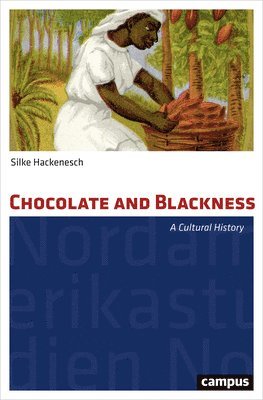
This book draws out a number of unexpected connections between chocolate and blackness as both idea and reality. Silke Hackenesch builds her argument around four main focal points. First is the modes of production of chocolate—the economic realities of the business and the material connection between blackness and chocolate. Second is the semantics of chocolate, while its iconography is analyzed third. Finally, she addresses the use of chocolate as a racial signifier, showing that it is deployed differently by African Americans and Afro-Germans, for example.