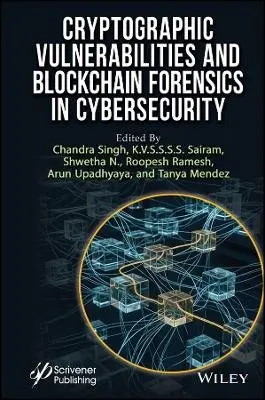
This essential guide equips cybersecurity professionals, investigators, and blockchain architects with the theoretical insights and practical, battle-tested tools needed to expose cryptographic flaws, investigate decentralized cybercrimes, and stay ahead of the next generation of blockchain threats. As blockchain adoption accelerates across the financial, governmental, and industrial sectors, new avenues for cybercrime have emerged, ranging from smart contract exploits and token theft to the obfuscation of illicit transactions through decentralized platforms. This book explores the intersection of cryptographic security flaws and the growing complexities of blockchain technology within the context of modern cyber threats. It critically examines how cryptographic protocols, while foundational to digital trust, can also harbor subtle implementation weaknesses that cybercriminals exploit to compromise systems or evade detection. Adopting an interdisciplinary approach, the book blends principles of cryptography, blockchain architecture, digital forensics, and cybersecurity law. It provides both theoretical frameworks and practical tools for investigating blockchain-based cyber incidents, such as tracing cryptocurrency transactions on public ledgers, identifying forensic markers in smart contract breaches, and analyzing side-channel attacks on cryptographic algorithms. The book also addresses the real-world implications of these vulnerabilities, including regulatory gaps, privacy concerns, and the ethical use of forensic techniques in decentralized ecosystems, through case studies drawn from actual investigations that help bridge theory and practice. By highlighting the dynamic interplay between innovation and risk in the blockchain domain, this book equips readers with the skills and mindset necessary to confront the next generation of cryptographic and blockchain-based cyber threats. Chandra Singh is an Assistant Professor in the Department of Electronics and Communication at the Nitte Mahalinga Adyantaya Memorial Institute of Technology, Nitte, India, with more than six years of experience. He has published nine books, 15 book chapters, more than 20 research articles in reputed peer-reviewed national and international journals, five international patents, and six national patents. His areas of interest include optical networking and communication, wireless communication, intelligent systems, IoT, and robotics. K.V.S.S.S.S. Sairam, PhD is a Professor and Head of the Department of Electronics and Communication Engineering at the Nitte Mahalinga Adyantaya Memorial Institute of Technology, Nitte, India. He has published more than 60 papers in international journals and conferences of repute and five books, and has been granted five patents and two grants. His research areas are optical communications, optical networks, and wireless communication. Shwetha N., PhD is an Assistant Professor in the Department of Electronics and Communication Engineering at the Dr. Ambedkar Institute of Technology, Bengaluru. With more than a decade of experience in academics and research, she has published more than 34 research articles in reputed peer-reviewed national and international journals, presented ten papers at national and international conferences, and holds two national patents. Her research interests span nature-inspired algorithms, image and video processing, and audio and speech signal processing. Roopesh Ramesh, PhD is an Assistant Professor in the Department of Electronics and Communication Engineering at the Dr. Ambedkar Institute of Technology, Bengaluru, with more than six years of experience in academics and research. He has published three journal articles, presented more than ten papers in national and international conferences, and attended more than five conferences, seminars, and workshops. His research interests include cooperative communications, 5G, 6G and beyond 6G communications, wireless communications, hybrid communications, and power line communications.