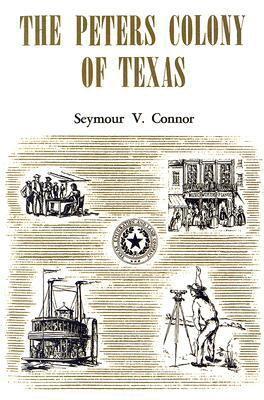
The Texas State Historical Association is pleased to partner with the Collin County Historical Society to make Seymour V. Connor's ""The Peters Colony of Texas"" available once again. This classic work of Texas history, long out of print, was praised by John H. Jenkins in ""Basic Texas Books"" as ""the best study of one of the largest land grants in Texas history."" The TSHA first published ""The Peters Colony of Texas"" in 1959. The Peters Colony, totaling 16,000 square miles of North Texas, now includes twenty-six counties. Jenkins called it ""a masterpiece of weaving together the threads of an extremely difficult historical puzzle with only the meagerest of source materials."" For many years the book, with its documentation of early migration to Texas, was available to the public only in noncirculating library collections and an occasional appearance on the rare book market. The TSHA and the Collin County Historical Society are pleased to offer a paperback edition of ""The Peters Colony of Texas"" to bring this significant work of Texas history back to public attention.
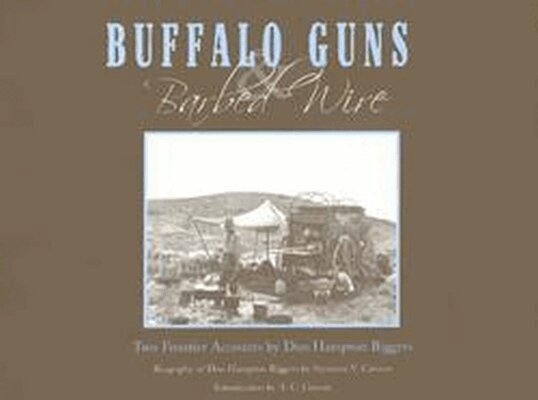
Newspaperman Don Hampton Biggers witnessed the last years of the West Texas frontier and grew intrigued with the buffalo hunters, the early cattlemen, and the stories they told. As the twentieth century began, he was collecting and publishing the recollections of old-timers who had participated in making Texas history. This book combines two of Biggers' works, ""History That Will Never Be Repeated"" (1901) and ""Pictures of the Past"" (1902) both rare and coveted by collectors of Texana. The two, republished in 1991 as a Book Club of Texas special edition and trade clothbound edition, are now available in paperback for the first time. For Pictures of the Past the author wove old buffalo hunters stories into descriptions of the herds, the slaughter, Indian incidents, Fort Griffin, the battle at Adobe Walls, and much more. ""History That Will Never Be Repeated"" records lore of the cattle industry in West Texas from 1876. In these vivid accounts by cowboys and ranchers are some of the most emblematic events of the American Westriding line, working roundup, turning a drift herdrecalled not for their romance but for their hardship and for the sheer endurance required of the men who lived them. The remarkable period photography of George Robertson and Erwin E. Smith illustrates the book in duotone throughout.