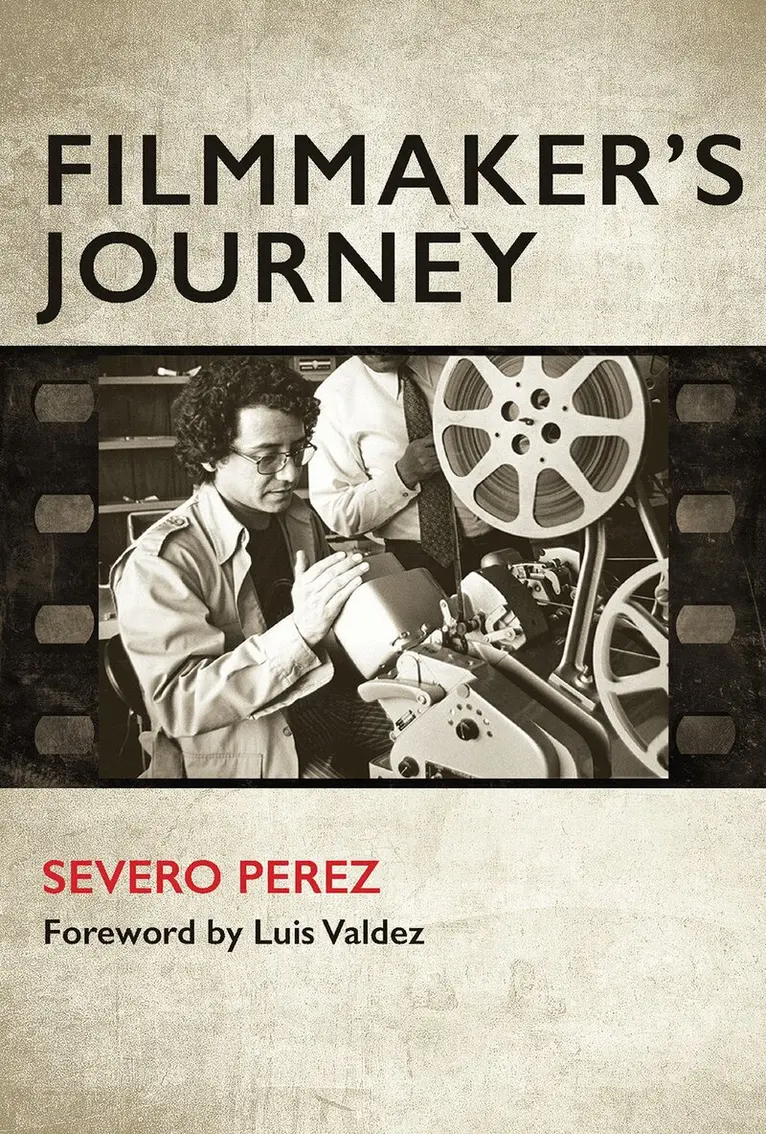
Born in San Antonio, Texas, in 1941, acclaimed filmmaker Severo Perez moved to Los Angeles in 1972 to pursue a career in the motion picture industry. His films have won awards, including five CINE Golden Eagles. Perez is also an accomplished playwright and novelist. Filmmaker’s Journey offers valuable insights into the life and work of this influential and visionary artist. Perez’s 1995 film . . . and the Earth Did Not Swallow Him, perhaps his best-known work, is adapted from TomÁs Rivera’s classic 1971 Chicano novel . . . y no se lo tragÓ la tierra. The film follows the lives of a South Texas family of migrant farmworkers in the 1950s. Perez’s nuanced, powerful film beautifully evokes the substance and spirit of Rivera’s work, and it has won international critical acclaim, including top honors at film festivals worldwide. Some of these include the Sol Award at the 1995 CineSol Latino Film Festival, Best Feature Film at the San Diego Independent Film Festival, and Best Feature Film at the Minneapolis Rivertown Film Festival. Filmmaker’s Journey recounts Perez’s winding path toward building a career as an independent filmmaker. Beginning with the events accompanying the first week of production for . . . and the Earth Did Not Swallow Him—which coincided with the riots incited by the Rodney King verdict on April 29, 1992—then picking up the thread of his Westside San Antonio upbringing and his early fascination with making movies, Perez recounts his experiences with the small art houses, the obscure film collectives, and the move to Los Angeles that would eventually launch his forty-five-year career producing programming for PBS, cable, and network television.
The year is 1961. Seventy-year-old Cosimo Infante Cano, a Cuban-born artist in need of inspiration, follows his lover to Texas in what was to be a temporary sabbatical from their life in France. Unexpectedly, he finds himself stranded in San Antonio, nearly penniless, with little more than the clothes on his back and an extraordinary pocket watch. His long hair and eccentric attire make him an odd sight in what he has been told is a conservative cultural backwater.Cosimo's French and Cuban passports put a cloud of suspicion over him as events elsewhere in the world play out. Algeria is in open revolt against France. Freedom Riders are being assaulted in Mississippi, and the Bay of Pigs debacle is front-page news. Cosimo confronts nightmares and waking terrors rooted in the horror he experienced during the Great War of 1914-1918. His friends-students, librarians, shopkeepers, laborers, lawyers, bankers, and even a parrot-coalesce around this elderly French artist as he attempts to return to what remains of his shattered life.His new friends feel empathy for his impoverished condition, but his unconventional actions and uncompromising ethics confuse them. He creates charming drawings he refuses to sell and paints a house simply for the pleasure of making a difference. In the process he forever alters the lives of those who thought they were helping him.