529 kr
Skickas inom 10-15 vardagar
529 kr
Skickas inom 10-15 vardagar
734 kr
Läs direkt efter köp
Transcultural Negotiations of Gender probes into how gender is negotiated along the two axes of ‘belonging’ and ‘longing’– the twin desires of being located within a cultural milieu, while yearning for either what has passed by or what is yet to come. It also probes into the category of ‘transculturality’ itself, by examining how not only does it pertain to the coming together of cultures from diverse spatial locations, but how shifts over time and changing performative modes and technological means of articulation, within what may be presumed to be the same culture, can also lead to the ‘transcultural’.
The volume comprises four sections. Part I, ‘(Be)longing in Time’, examines negotiation of gender through transcultural acts of myths, rituals and religious practices being revised and revisited over time. Part II, ‘(Be)longing in Space’, studies how gender is renegotiated when people from different spaces interact, as also when public spaces and domains themselves become sites of such negotiations. In Part III, ‘Performing (Be)longing’, such transcultural negotiations are located in the context of changing modes of performance, considering particularly that gender itself is performative. The final section, ‘Modernity, Technology and (Be)longing’, traces how gender becomes transculturally negotiated in a space like India, with the advent of modernity and its companion technology.
545 kr
Skickas inom 10-15 vardagar
282 kr
Skickas inom 7-10 vardagar
1 312 kr
Skickas inom 7-10 vardagar
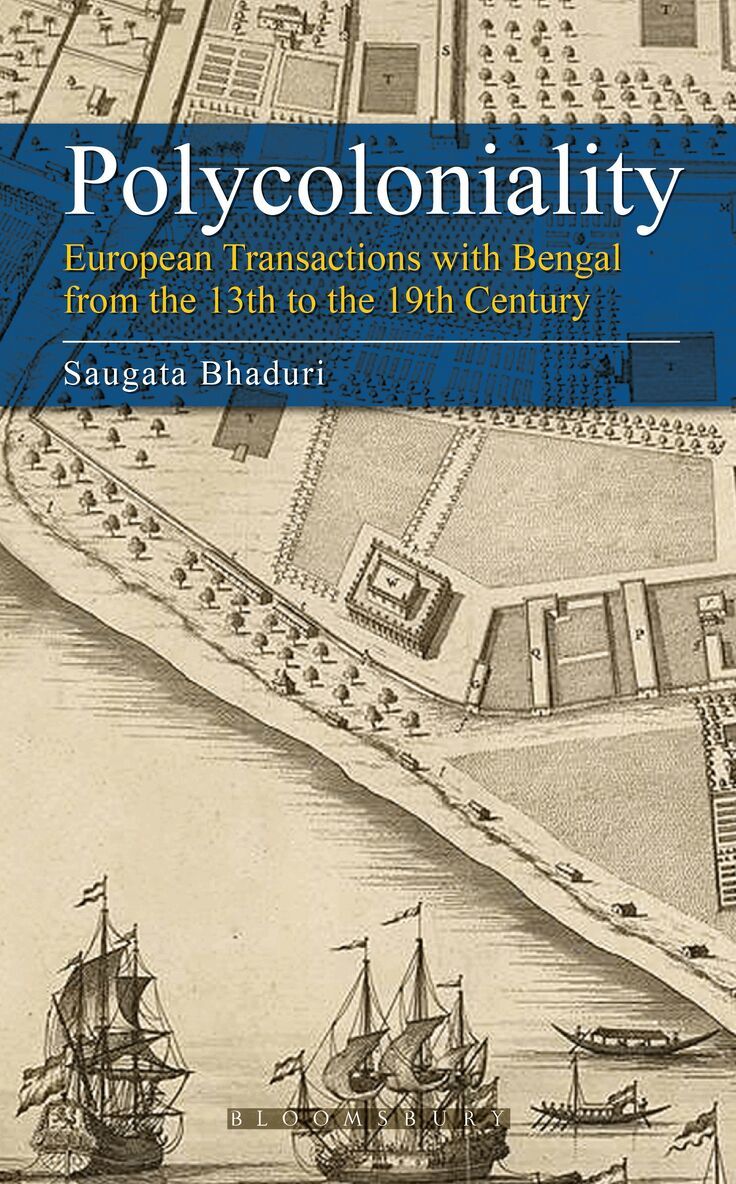
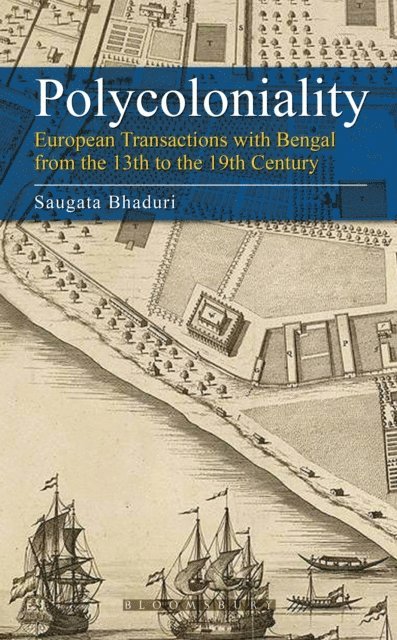
Polycoloniality is a study of the activities of non-British European powers and players — primarily the Portuguese, the Dutch, the French, the Danish, the ‘Germans’ (representatives of the Austrian and Prussian empires), the Swedish and the Greek — in Bengal from the late 13th to the early 19th century, and their role in shaping Bengal's brush with 'colonial modernity' prior to, and possibly more foundationally than, the English.Much of the traditional historiography of colonialism, in South Asia in general and Bengal in particular, and the resultant postcolonial commonsense, is woefully mononational, with the focus being almost exclusively on England and its colonial exploits. This is obviously factually incorrect and inadequate, with the multiple European nations named above having had simultaneous colonial contact with Bengal from the 16th century, and there having been a steady flow of Europeans, primarily Italians, to Bengal from at least the late 13th century. More importantly, it is these multiple European players, rather than the English, who can be credited with the setting up of the first cosmopolitan cities in Bengal, its first colleges and universities, the beginnings of print culture in Bengali, the foundations of the modern linguistic, literary and cultural registers of Bengal, the first instances of social and political reforms, etc.Apart from an elaboration of all the above, can Polycoloniality, or a re-look at Bengal’s colonial history through the lens of plurality, also offer a template to understand the multinational forms of current new-imperialism more fittingly than postcolonial commonsense can?
1 451 kr
Läs direkt efter köp
1 451 kr
Läs direkt efter köp