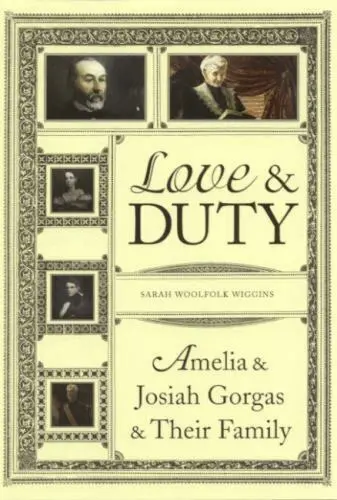
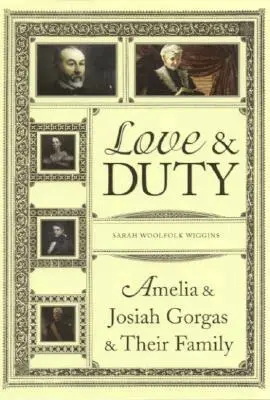
The intricate personal relationships of a notable Alabama family. Known respectively as the chief of the Confederate Ordnance Bureau and as the university librarian, Josiah and Amelia Gorgas were important members of the University of Alabama and regional communities. Their marriage spanned the Civil War and its aftermath and epitomized the Victorian concept of separate spheres for husband and wife. They were two strong personalities who deeply respected and complemented each other. Love and Duty focuses on the couple's relationship as well as their relationships with other Gorgas family members. Because the large but close-knit family was highly literate and often separated, they produced an extraordinary quantity and quality of correspondence and related manuscripts that span three generations. Family members corresponded with each other almost daily. In these letters and in journals, they commented on contemporary events, gave advice, philosophized about life, death, love, marriage, parenting, war, and defeat. These thousands of documents provide a remarkable window into the private world of a 19th-century southern family. Wiggins examines Josiah's and Amelia's attitudes toward a vast range of topics, but most notably family, which was everything to the couple.
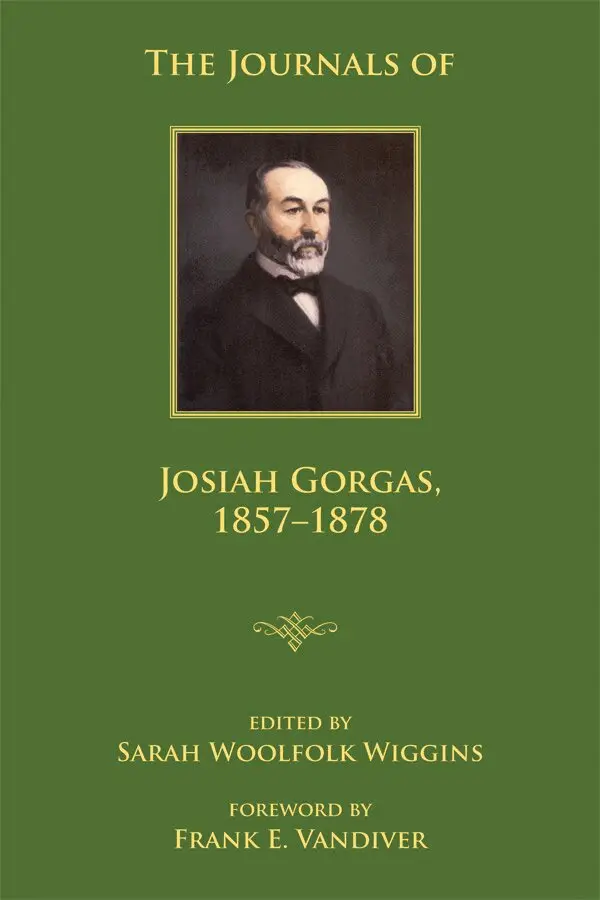
Josiah Gorgas was best known as the highly regarded Chief of Confederate Ordnance. Born in 1818, he attended West Point, served in the U.S. Army, and later, after marrying Amelia Gayle, daughter of a former Alabama governor, joined the Confederacy. After the Civil War he served as president of The University of Alabama until ill health forced him to resign. His journals, maintained between 1857 and 1878, reflect the family's economic successes and failures, detail the course of the South through the Civil War, and describe the ordeal of Reconstruction. Few journals cover such a sweep of history. An added dimension is the view of Victorian family life as Gorgas explored his feelings about aspects of parental responsibility and transmission of values to children--a rarely documented account from the male perspective. His son, called Willie in the journals, was William Crawford Gorgas (1854-1920), who was noted for his fight to control yellow fever and who became surgeon general of the United States. In his foreword to the volume, Frank E. Vandiver states: ""Wiggins has done much more than present a well-edited version of Gorgas's diaries and journals; she has interpreted them in full Gorgas family context and in perspective of the times they cover. . . . Wiggins informs with the sort of editorial notes expected of a careful scholar, but she enlightens with wide knowledge of American and southern history. . . . Josiah Gorgas [was] an unusually observant, passionate man, a 'galvanized Rebel' who deserves rank among the true geniuses of American logistics.
Known respectively as the chief of the Confederate Ordnance Bureau and as the university librarian, Josiah and Amelia Gorgas were important members of the University of Alabama and regional communities. Their marriage spanned the Civil War and its aftermath and epitomized the Victorian concept of separate spheres for husband and wife. They were two strong personalities who deeply respected and complemented each other. ""Love and Duty"" focuses on the couple's relationship as well as their relationships with other Gorgas family members. Because the large but close-knit family was highly literate and often separated, they produced an extraordinary quantity and quality of correspondence and related manuscripts that span three generations. Family members corresponded with each other almost daily. In these letters and in journals, they commented on contemporary events, gave advice, philosophized about life, death, love, marriage, parenting, war, and defeat. These thousands of documents provide a remarkable window into the private world of a 19th-century southern family. Wiggins examines Josiah's and Amelia's attitudes toward a vast range of topics, but most notably family, which was everything to the couple.