2 210 kr
Skickas inom 10-15 vardagar
2 210 kr
Skickas inom 10-15 vardagar
2 652 kr
Skickas inom 10-15 vardagar
626 kr
Skickas inom 10-15 vardagar
2 061 kr
Skickas inom 10-15 vardagar
668 kr
Skickas inom 10-15 vardagar
611 kr
Skickas inom 10-15 vardagar
673 kr
Skickas inom 10-15 vardagar
2 444 kr
Skickas inom 10-15 vardagar
715 kr
Skickas inom 10-15 vardagar
305 kr
Skickas inom 7-10 vardagar
384 kr
Skickas inom 10-15 vardagar
2 602 kr
Skickas inom 10-15 vardagar
460 kr
Läs direkt efter köp
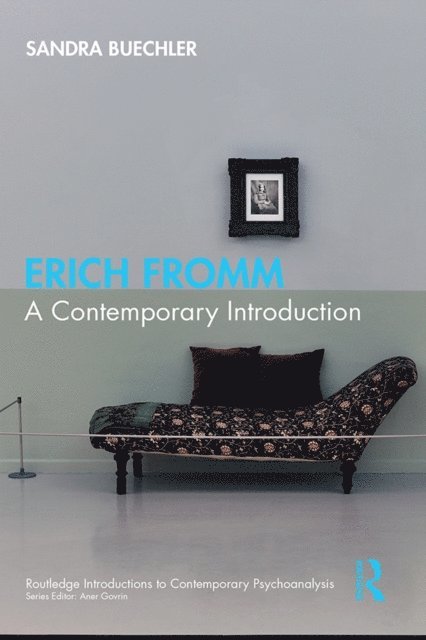
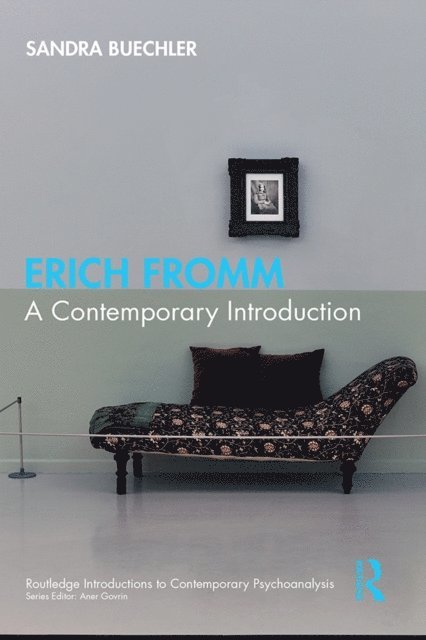
In this passionate volume, Sandra Buechler introduces Erich Fromm''s groundbreaking contributions to psychoanalysis, sociology, philosophy, political action, and social criticism. | Buechler explores how Fromm''s thinking and interdisciplinary vision are able to frame discussions of dilemmas in contemporary society. She offers a comprehensive biography of Fromm, before delving into his role as analyst, author, activist, sociologist and philosopher. From her own experience as a psychoanalyst, and from the testimony of Fromm''s many ardent followers, Buechler illuminates Fromm''s capacity to inspire. She considers how Fromm''s writing equips students, beginning clinicians and more experienced professionals to understand what can give meaning to their efforts on behalf of troubled individuals, their riven communities, and the wider world. |
Assuming no prior knowledge of Fromm''s work, this books offers students in clinical and social psychology, sociology, and philosophy a vital insight into his theoretical contributions. It will also be of interest to psychoanalysts, psychologists and social workers.
445 kr
Läs direkt efter köp
In this passionate volume, Sandra Buechler introduces Erich Fromm''s groundbreaking contributions to psychoanalysis, sociology, philosophy, political action, and social criticism. | Buechler explores how Fromm''s thinking and interdisciplinary vision are able to frame discussions of dilemmas in contemporary society. She offers a comprehensive biography of Fromm, before delving into his role as analyst, author, activist, sociologist and philosopher. From her own experience as a psychoanalyst, and from the testimony of Fromm''s many ardent followers, Buechler illuminates Fromm''s capacity to inspire. She considers how Fromm''s writing equips students, beginning clinicians and more experienced professionals to understand what can give meaning to their efforts on behalf of troubled individuals, their riven communities, and the wider world. |
Assuming no prior knowledge of Fromm''s work, this books offers students in clinical and social psychology, sociology, and philosophy a vital insight into his theoretical contributions. It will also be of interest to psychoanalysts, psychologists and social workers.
663 kr
Läs direkt efter köp
In this refreshingly honest and open book, Sandra Buechler looks at therapeutic process issues from the standpoint of the human qualities and human resourcefulness that the therapist brings to each clinical encounter. Her concern is with the clinical values that shape the psychoanalytically oriented treatment experience. How, she asks, can one person evoke a range of values--curiosity, hope, kindness, courage, sense of purpose, emotional balance, the ability to bear loss, and integrity--in another person and thereby promote psychological change? For Buechler, these core values, and the emotions that infuse them, are at the heart of the clinical process. They permeate the texture and tone, and shape the content of what therapists say. They provide the framework for formulating and working toward treatment goals and keep the therapist emotionally alive in the face of the often draining vicissitudes of the treatment process.
Clinical Values: Emotions That Guide Psychoanalytic Treatment is addressed to therapists young and old. By focusing successively on different emotion-laden values, Buechler shows how one value or another can center the therapist within the session. Taken together, these values function as a clinical compass that provides the therapist with a sense of direction and militates against the all too frequent sense of "flying by the seat of one''s pants." Buechler makes clear that the values that guide treatment derive from the full range of the clinician''s human experiences, and she is candid in relating the personal experiences--from inside and outside the consulting room--that inform her own matrix of clinical values and her own clinical approach. A compelling record of one gifted therapist''s pathway to clinical maturity, Clinical Values has a more general import: It exemplifies the variegated ways in which productive clinical work of any type ultimately revolves around the therapist''s ability to make the most of being "all too human."
886 kr
Läs direkt efter köp
Winner of the 2009 Gradiva Award for Outstanding Psychoanalytic Publication!
Within the title of her book, Making a Difference in Patients'' Lives, Sandra Buechler echoes the hope of all clinicians. But, she counters, experience soon convinces most of us that insight, on its own, is often not powerful enough to have a significant impact on how a life is actually lived. Many clinicians and therapists have turned toward emotional experience, within and outside the treatment setting, as a resource. How can the immense power of lived emotional experience be harnessed in the service of helping patients live richer, more satisfying lives?
Most patients come into treatment because they are too anxious, or depressed, or don’t seem to feel alive enough. Something is wrong with what they feel, or don’t feel. Given that the emotions operate as a system, with the intensity of each affecting the level of all the others, it makes sense that it would be an emotional experience that would have enough power to change what we feel. But, ironically, the wider culture, and even psychoanalysts, seem to favor "solutions" that aim to mute emotionality, rather than relying on one emotion to modify another. We turn to pharmaceutical, cognitive, or behavioral change to make a difference in how life feels. Because we are afraid of emotional intensity, we cut off our most powerful source of regulation.
In clear, jargon-free prose that utilizes both clinical vignettes and excerpts from poetry, art, and literature, Buechler explores how the power to feel can become the power to change. Through an active empathic engagement with the patient and an awareness of the healing potential inherent in each of our fundamental emotions, the clinician can make a substantial difference in the patient’s capacity to embrace life.
803 kr
Läs direkt efter köp
"Still practicing" has several meanings. Still practicing suggests that the balance of heartaches and joys must not deter us from pursuing a clinical practice. At the same time, still practicing suggests that for the clinician "practice" never "makes perfect." We continue to refine our clinical instruments over our entire working lives.
Framed by her previous work on the concept of emotional balance, Sandra Buechler investigates how vicissitudes in a clinical career can have a profound and lasting impact on the clinician''s emotional balance, and considers how the clinician''s resilience is maintained in the face of the personal fallout of a lifetime of clinical practice. At each juncture, from training to early phases of clinical experience, through mid and late career, she asks, what can help us maintain a vital interest in our work? How do we not burn out?
Aimed at the nexus of the personal and theoretical, Still Practicing concentrates on the sadness, feelings of shame, and satisfactions inherent in practice, and encourages newcomers and veterans alike to make career choices mindful of their potential long-term impact on their feelings about being therapists. It poses a question vital to the life of the clinician: How can we strike a balance between the work''s inevitable pain and its potential joy?
2 419 kr
Skickas inom 10-15 vardagar
696 kr
Läs direkt efter köp
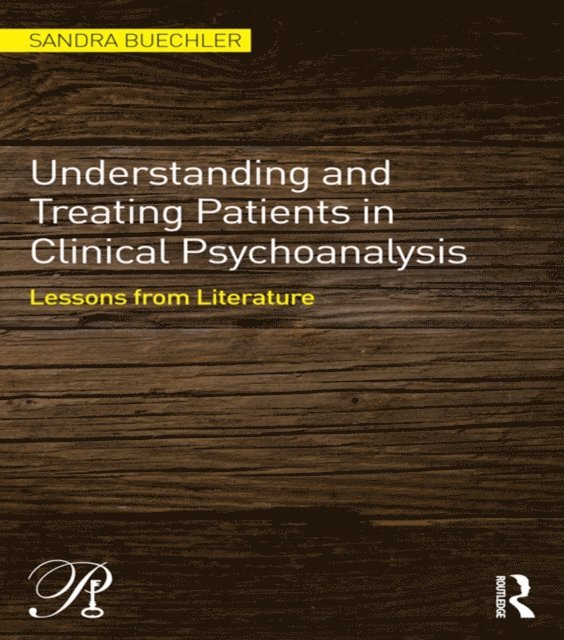
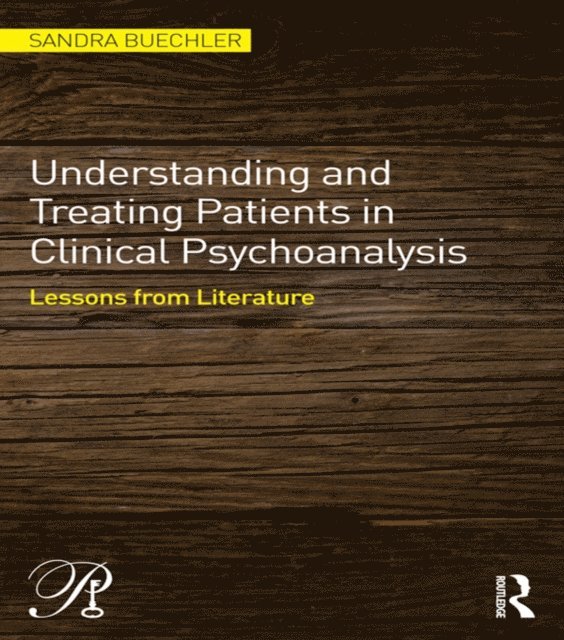
Understanding and Treating Patients in Clinical Psychoanalysis: Lessons from Literature describes the problematic ways people learn to cope with life’s fundamental challenges, such as maintaining self-esteem, bearing loss, and growing old. People tend to deal with the challenges of being human in characteristic, repetitive ways. Descriptions of these patterns in diagnostic terms can be at best dry, and at worst confusing, especially for those starting training in any of the clinical disciplines. To try to appeal to a wider audience, this book illustrates each coping pattern using vivid, compelling fiction whose characters express their dilemmas in easily accessible, evocative language. Sandra Buechler uses these examples to show some of the ways we complicate our lives and, through reimagining different scenarios for these characters, she illustrates how clients can achieve greater emotional health and live their lives more productively.
Drawing on the work of Dostoevsky, Tolstoy, Munro, Mann, James, O’Connor, Chopin, McCullers, Carver, and the many other authors represented here, Buechler shows how their keen observational short fiction portrays self-hurtful styles of living. She explores how human beings cope using schizoid, paranoid, grandiose, hysteric, obsessive, and other defensive styles. Each is costly, in many senses, and each limits the possibility for happiness and fulfillment.
Understanding and Treating Patients in Clinical Psychoanalysis offers insights into what living with and working with problematic behaviors really means through a series of examples of the major personality disorders as portrayed in literature. Through these fictitious examples, clinicians and trainees, and undergraduate and graduate students can gain a greater understanding of how someone becomes paranoid, schizoid, narcissistic, obsessive, or depressive, and how that affects them, and those around them, including the mental health professionals who work with them.
698 kr
Läs direkt efter köp
Psychoanalytic Approaches to Problems in Living examines how psychoanalysts can draw on their training, reading, and clinical experience to help their patients address some of the recurrent challenges of everyday life. Sandra Buechler offers clinicians poetic, psychoanalytic, and experiential approaches to problems, drawing on her personal and clinical experience, as well as ideas from her reading, to confront challenges familiar to us all.
Buechler addresses issues including difficulties of mourning, aging, living with uncertainty, finding meaningful work, transcending pride, bearing helplessness, and forgiving life''s hardships. For those contemplating a clinical career, and those in its beginning stages, she suggests ways to prepare to face these quandaries in treatment sessions. More experienced practitioners will find echoes of themes that have run through their own clinical and personal life experiences. The chapters demonstrate that insights from a poem can often guide the clinician as well as concepts garnered from psychoanalytic theory and other sources. Buechler puts her questions to T. S. Eliot, Rainer Maria Rilke, Elizabeth Bishop, W. S. Merwin, Stanley Kunitz and many other poets and fiction writers. She "asks" Sharon Olds how to meet emergencies, Erich Fromm how to live vigorously, and Edith Wharton how to age gracefully, and brings their insights to bear as she addresses challenges that make frequent appearances in clinical sessions, and other walks of life.
With a final section designed to improve training in the light of her practical findings, Psychoanalytic Approaches to Problems in Living is an essential book for all practicing psychoanalysts and psychoanalytic psychotherapists.

709 kr
Läs direkt efter köp
Psychoanalytic Approaches to Problems in Living examines how psychoanalysts can draw on their training, reading, and clinical experience to help their patients address some of the recurrent challenges of everyday life. Sandra Buechler offers clinicians poetic, psychoanalytic, and experiential approaches to problems, drawing on her personal and clinical experience, as well as ideas from her reading, to confront challenges familiar to us all.
Buechler addresses issues including difficulties of mourning, aging, living with uncertainty, finding meaningful work, transcending pride, bearing helplessness, and forgiving life''s hardships. For those contemplating a clinical career, and those in its beginning stages, she suggests ways to prepare to face these quandaries in treatment sessions. More experienced practitioners will find echoes of themes that have run through their own clinical and personal life experiences. The chapters demonstrate that insights from a poem can often guide the clinician as well as concepts garnered from psychoanalytic theory and other sources. Buechler puts her questions to T. S. Eliot, Rainer Maria Rilke, Elizabeth Bishop, W. S. Merwin, Stanley Kunitz and many other poets and fiction writers. She "asks" Sharon Olds how to meet emergencies, Erich Fromm how to live vigorously, and Edith Wharton how to age gracefully, and brings their insights to bear as she addresses challenges that make frequent appearances in clinical sessions, and other walks of life.
With a final section designed to improve training in the light of her practical findings, Psychoanalytic Approaches to Problems in Living is an essential book for all practicing psychoanalysts and psychoanalytic psychotherapists.

264 kr
Skickas inom 7-10 vardagar