822 kr
Skickas inom 10-15 vardagar
822 kr
Skickas inom 10-15 vardagar
2 801 kr
Skickas inom 10-15 vardagar
963 kr
Läs direkt efter köp
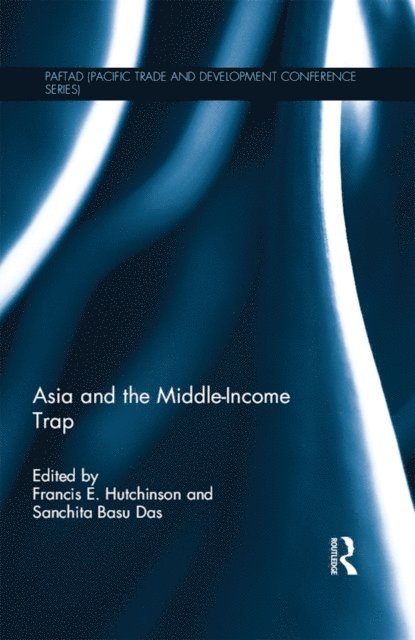
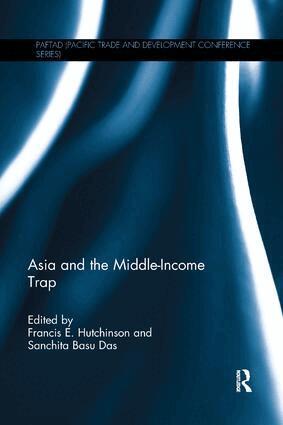
The term ‘Middle-Income Trap’ refers to countries which stagnate economically after reaching a certain level of per capita income on the basis of labour- and capital-intensive growth, and are struggling to transition towards more skill-intensive and technology-driven development. It has resonance for the increasing number of countries in Asia who have either languished in middle-income status for extended periods of time, or are worried about growth slow-downs.
This book sets outs the conceptual underpinnings of the Middle-Income Trap and explores the various ways it can be defined. It also focuses on the debate surrounding the Middle-Income Trap which questions the appropriate institutional and policy settings for middle-income countries to enable them to continue past the easy phase of economic growth. The book engages with this debate by investigating the role of institutions, human capital, and trade policy in helping countries increase their income levels and by highlighting factors which enable the shift to higher and qualitatively better growth. It questions how the large emerging economies in Asia such as China, Indonesia, and India are currently grappling with the challenges of transitioning from labour-intensive to technology- and knowledge-intensive production, and discusses what can be learnt from the countries that have been able to escape the trap to attain high-income status.
Providing a conceptual framework for the Middle-Income Trap, this book will be of interest to students and scholars of Asian Economics, Comparative Economics and Asian Studies.
963 kr
Läs direkt efter köp
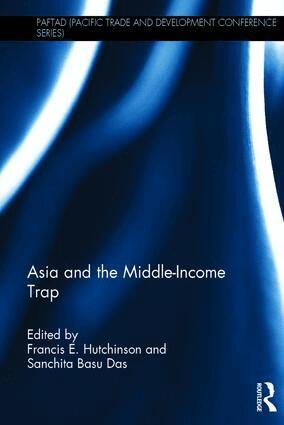
The term ‘Middle-Income Trap’ refers to countries which stagnate economically after reaching a certain level of per capita income on the basis of labour- and capital-intensive growth, and are struggling to transition towards more skill-intensive and technology-driven development. It has resonance for the increasing number of countries in Asia who have either languished in middle-income status for extended periods of time, or are worried about growth slow-downs.
This book sets outs the conceptual underpinnings of the Middle-Income Trap and explores the various ways it can be defined. It also focuses on the debate surrounding the Middle-Income Trap which questions the appropriate institutional and policy settings for middle-income countries to enable them to continue past the easy phase of economic growth. The book engages with this debate by investigating the role of institutions, human capital, and trade policy in helping countries increase their income levels and by highlighting factors which enable the shift to higher and qualitatively better growth. It questions how the large emerging economies in Asia such as China, Indonesia, and India are currently grappling with the challenges of transitioning from labour-intensive to technology- and knowledge-intensive production, and discusses what can be learnt from the countries that have been able to escape the trap to attain high-income status.
Providing a conceptual framework for the Middle-Income Trap, this book will be of interest to students and scholars of Asian Economics, Comparative Economics and Asian Studies.
498 kr
Läs direkt efter köp
515 kr
Skickas inom 10-15 vardagar
694 kr
Läs direkt efter köp
312 kr
Skickas inom 10-15 vardagar
410 kr
Läs direkt efter köp
484 kr
Läs direkt efter köp
347 kr
Skickas inom 10-15 vardagar
636 kr
Läs direkt efter köp
471 kr
Skickas inom 10-15 vardagar
951 kr
Läs direkt efter köp
683 kr
Skickas inom 10-15 vardagar
523 kr
Skickas inom 7-10 vardagar
720 kr
Läs direkt efter köp
355 kr
Skickas inom 10-15 vardagar
362 kr
Läs direkt efter köp
355 kr
Skickas inom 10-15 vardagar
533 kr
Läs direkt efter köp
239 kr
Skickas inom 10-15 vardagar
352 kr
Läs direkt efter köp
355 kr
Skickas inom 10-15 vardagar
123 kr
Tillfälligt slut