2 774 kr
Skickas inom 7-10 vardagar
2 774 kr
Skickas inom 7-10 vardagar
3 382 kr
Läs direkt efter köp
This volume focuses on the fundamentals of additive manufacturing and its components, explains why and what we do, outlines what is crucial to the user, offers details on important applications such as in the aerospace, automotive, or medical areas, and the difficult certification process.
This book explores the advancements in additive manufacturing which produces solid, free-form, nearly net-shaped objects. This refers to items that are easy to use, out-of-the-box, and not bound by the design constraints of modern manufacturing techniques. AM expands the definition of 3D printing to encompass a variety of procedures that begin with a three-dimensional computer model, incorporate an AM production procedure, and result in a useful product. The AM process can be confusing due to the rapid rise of competing techniques for fabricating 3D parts. This volume provides a thorough review of the basic components and procedures involved in additive manufacturing. It outlines a road map for where to begin, what to study, how everything goes together, and how AM might enable ideas outside traditional processing to realize those ideas in AM. Furthermore, this book investigates the benefits of AM including affordable access to 3D solid modeling software. With this software, learning is achieved without having to invest in costly industrial equipment.
AM encompasses a variety of techniques, including those that use high-intensity beams to fuse powder or wire, and hybrid techniques that combine additive and subtractive manufacturing techniques. AM-related processes have developed at breakneck speed, giving rise to a deluge of acronyms and terminology, not to mention the emergence, acquisition, and demise of new businesses. By combining ideas and aspirations, better methods will be revealed that result in useful products that will serve and contribute to a lasting future.
Although expensive commercial additive manufacturing equipment can cost hundreds of thousands to millions of dollars, a lack of access to equipment does not preclude the study of the technology. 3D printing services will undoubtedly become more reasonable for small- and medium-sized organizations as their prices decline. Hybrid 3D plastic printing technologies and low-cost hobbyist 3D weld deposition systems are already in development which will make the best 3D printers accessible and affordable. This book will assist the reader in determining what is required to begin, which software, supplies, and procedures best suit, and where to obtain additional information.
Audience
The book will be used by engineers and R&D researchers involved in advanced additive manufacturing technology, postgraduate students in various disciplines such as mechanical, manufacturing, biomedical, and industrial engineering, etc. It will also serve as a reference manual for manufacturing and materials engineers involved in additive manufacturing and product development.
3 382 kr
Läs direkt efter köp
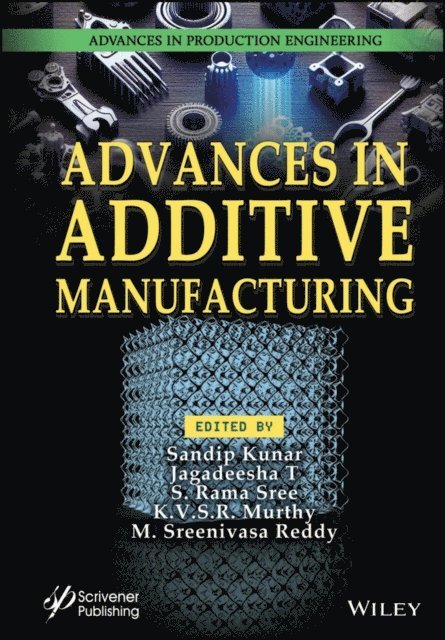
This volume focuses on the fundamentals of additive manufacturing and its components, explains why and what we do, outlines what is crucial to the user, offers details on important applications such as in the aerospace, automotive, or medical areas, and the difficult certification process.
This book explores the advancements in additive manufacturing which produces solid, free-form, nearly net-shaped objects. This refers to items that are easy to use, out-of-the-box, and not bound by the design constraints of modern manufacturing techniques. AM expands the definition of 3D printing to encompass a variety of procedures that begin with a three-dimensional computer model, incorporate an AM production procedure, and result in a useful product. The AM process can be confusing due to the rapid rise of competing techniques for fabricating 3D parts. This volume provides a thorough review of the basic components and procedures involved in additive manufacturing. It outlines a road map for where to begin, what to study, how everything goes together, and how AM might enable ideas outside traditional processing to realize those ideas in AM. Furthermore, this book investigates the benefits of AM including affordable access to 3D solid modeling software. With this software, learning is achieved without having to invest in costly industrial equipment.
AM encompasses a variety of techniques, including those that use high-intensity beams to fuse powder or wire, and hybrid techniques that combine additive and subtractive manufacturing techniques. AM-related processes have developed at breakneck speed, giving rise to a deluge of acronyms and terminology, not to mention the emergence, acquisition, and demise of new businesses. By combining ideas and aspirations, better methods will be revealed that result in useful products that will serve and contribute to a lasting future.
Although expensive commercial additive manufacturing equipment can cost hundreds of thousands to millions of dollars, a lack of access to equipment does not preclude the study of the technology. 3D printing services will undoubtedly become more reasonable for small- and medium-sized organizations as their prices decline. Hybrid 3D plastic printing technologies and low-cost hobbyist 3D weld deposition systems are already in development which will make the best 3D printers accessible and affordable. This book will assist the reader in determining what is required to begin, which software, supplies, and procedures best suit, and where to obtain additional information.
Audience
The book will be used by engineers and R&D researchers involved in advanced additive manufacturing technology, postgraduate students in various disciplines such as mechanical, manufacturing, biomedical, and industrial engineering, etc. It will also serve as a reference manual for manufacturing and materials engineers involved in additive manufacturing and product development.
2 585 kr
Skickas inom 7-10 vardagar
2 934 kr
Läs direkt efter köp
2 999 kr
Läs direkt efter köp
2 393 kr
Skickas inom 7-10 vardagar
2 950 kr
Läs direkt efter köp
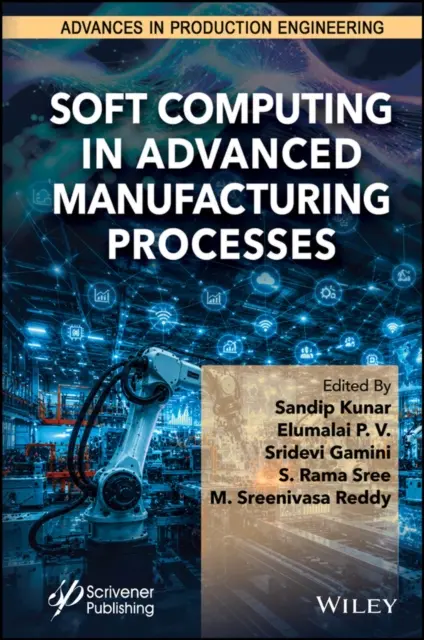
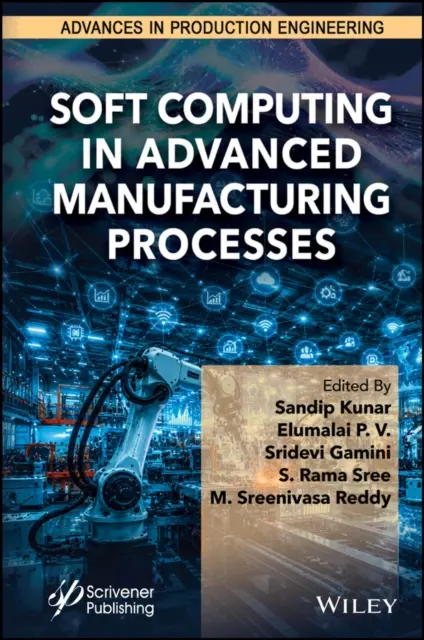
Transform your manufacturing operations for the Industry 4.0 era with this essential guide, which delivers the practical AI and soft computing strategies you need to master complexity, optimize efficiency, and build resilient, smart production systems.
The advancement of manufacturing technologies has consistently been linked to progress in modern computational methods. In recent years, the integration of soft computing techniques has emerged as an essential factor in improving the adaptability, intelligence, and efficiency of manufacturing processes. Unlike traditional deterministic approaches, soft computing methods are capable of managing complexity, uncertainty, and imprecision that are integral in current manufacturing systems, enabling more effective optimization, decision-making, and process control. This book provides an in-depth exploration of how soft computing techniques are transforming the landscape of modern manufacturing. Integrating intelligent computation with engineering principles, the book demonstrates how these methods enhance decision-making, optimize complex processes, and enable adaptive control across diverse manufacturing operations. Covering applications in machining, process planning, scheduling, quality assurance, and fault diagnosis, it bridges the gap between traditional manufacturing and the new era of Industry 4.0. It emphasizes the role of artificial intelligence, machine learning, and data-driven technologies in achieving precision, flexibility, and sustainability. Through detailed case studies, comparative analyses, and practical insights, the book provides readers with both theoretical foundations and implementation strategies. Ideal for engineers, researchers, and professionals in academia and industry, this book serves as a comprehensive guide to leveraging soft computing for smarter, more efficient, and resilient manufacturing systems, paving the way toward a future of intelligent and sustainable production.
Readers will find the volume:
Integrates cutting-edge soft computing methods such as fuzzy logic, neural networks, and genetic algorithms for intelligent manufacturing solutions; Demonstrates real-world applications in process optimization, quality control, and predictive maintenance; Bridges the gap between traditional manufacturing and Industry 4.0 through adaptive and data-driven approaches.Audience
Mechanical, industrial, and manufacturing engineers, materials scientists, and automation specialists across both academia and industry working in areas such as smart manufacturing, artificial intelligence in production, and Industry 4.0 technologies.