
Häftad, Engelska, 2013
345 kr
Skickas inom 3-6 vardagar
345 kr
Skickas inom 3-6 vardagar
316 kr
Skickas inom 7-10 vardagar
197 kr
Skickas inom 7-10 vardagar

205 kr
Skickas inom 7-10 vardagar

115 kr
Skickas inom 7-10 vardagar
51 kr
Läs direkt efter köp
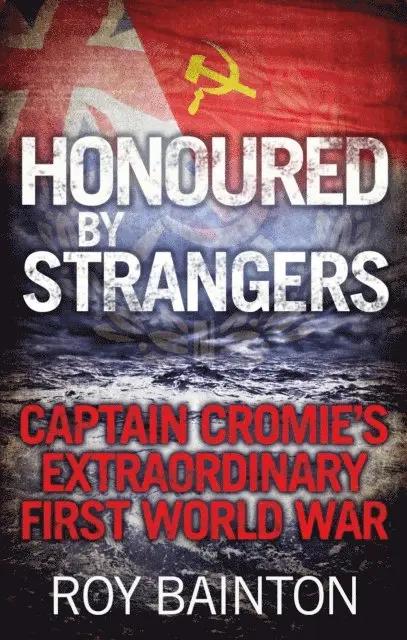
For many years the story of Cromie has been overshadowed by histories of the greater tragedy found on the Western Front in World War I. Yet, like T E Lawrence, Cromie''s individual exploits reveal a classic British hero: noble, tenacious and beloved by all who served under him. Churchill called him a man of exceptional gifts. Cromie became a submarine commander at the remarkably young age of 24. By this time he had already seen action in the Boxer Rebellion, received the China Medal and had been mentioned in despatches. His compassion and care for his men gained him the Royal Humane Society''s Bronze Medal, when he almost lost his life attempting to save a drowning sailor. In 1915 he was chosen to head a flotilla of submarines to attack German shipping in the Baltic Sea. Here, he achieved great success despite the hazardous nature of the climate and the threat of the German navy. He was decorated three times by the Czarof Russia and received the DSO. During his three years in the Baltic he became fluent in Russian. He only survived the difficulties of the Bolshevik Revolution in 1917 because of his consummate skills as a mediator and diplomat. His murder in the British Embassy in 1918 at the age of 37 remained a tragic mystery for many years – until now. Bainton''s extensive research has revealed why Cromie has previously been omitted from official histories of that difficult period. The circumstances surrounding his murder exposed facts about his complex character, his relationship with the Bolsheviks and the British Establishment - and importantly the story uncovers the duplicity of the allies as they struggled to formulate a reaction to the tidal wave of the Russian Revolution.
45 kr
Läs direkt efter köp
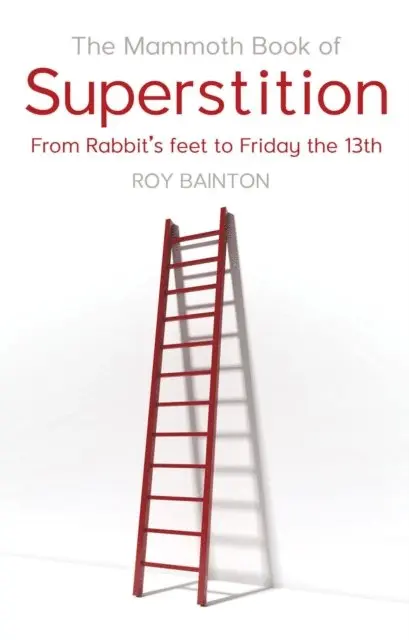
Rather than providing a dictionary of superstitions, of which there are already numerous excellent, exhaustive and, in many cases, academic works which list superstitions from A to Z, Bainton gives us an entertaining flight over the terrain, landing from time to time in more thought-provoking areas. He offers an overview of humanity''s often illogical and irrational persistence in seeking good luck and avoiding misfortune. While Steve Roud''s two excellent books - The Penguin Dictionary of Superstitions and his Pocket Guide - and Philippa Waring''s 1970 Dictionary concentrate on the British Isles, Bainton casts his net much wider. There are many origins which warrant the full back story, such as Friday the thirteenth and the Knights Templar, or the demonisation of the domestic cat resulting in ''cat holocausts'' throughout Europe led by the Popes and the Inquisition. The whole is presented as a comprehensive, entertaining narrative flow, though it is, of course, a book that could be dipped into, and includes a thorough bibliography. Schoenberg, who developed the twelve-tone technique in music, was a notorious triskaidekaphobe. When the title of his opera Moses und Aaron resulted in a title with thirteen letters, he renamed it Moses und Aron. He believed he would die in his seventy-sixth year (7 + 6 = 13) and he was correct; he also died on Friday the thirteenth at thirteen minutes before midnight.As Sigmund Freud wrote, ''Superstition is in large part the expectation of trouble; and a person who has harboured frequent evil wishes against others, but has been brought up to be good and has therefore repressed such wishes into the unconscious, will be especially ready to expect punishment for his unconscious wickedness in the form of trouble threatening him from without.''
From Rabbits' Feet to Friday the 13th
301 kr
Skickas inom 10-15 vardagar
170 kr
Skickas inom 7-10 vardagar
40 kr
Läs direkt efter köp

170 kr
Läs direkt efter köp

286 kr
Skickas inom 10-15 vardagar