170 kr
Läs direkt efter köp
170 kr
Läs direkt efter köp
236 kr
Skickas inom 3-6 vardagar
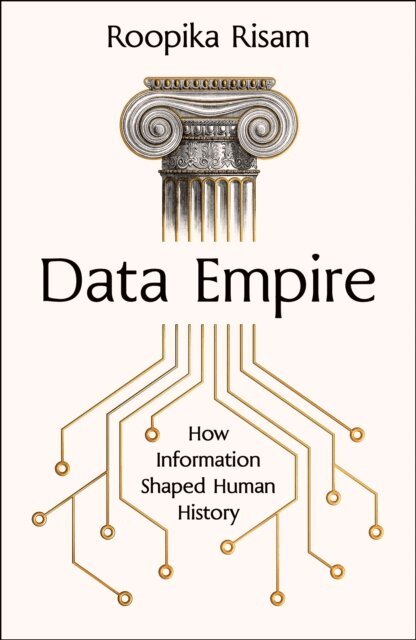
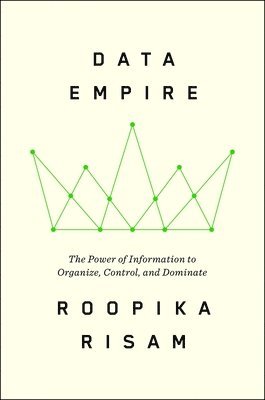
FEATURED IN BARACK OBAMA'S SUMMER READING LIST 2026A NEW SCIENTIST AND NPR SUMMER READING PICKAS RECOMMENDED BY THE FINANCIAL TIMES Data shaped empires. Now it's shaping our future. A groundbreaking 11,000 year global history from clay tablets to the algorithmic state, perfect for readers of Nexus and The Age of Surveillance Capitalism.'The new history of mankind demanded by our times' Jaron Lanier, author of Ten Arguments for Deleting Your Social Media Right Now 'Breathtaking in its scope and enormously fulfilling in its depth' Lewis Dartnell, author of Being HumanFrom targeted advertising to mass surveillance, data shapes the course of our lives. How did it gain the power it now holds over us?Since the dawn of civilization, people gained power by keeping count. From ancient censuses to maps and ledgers, data decided who belonged, who owed, and who could be sacrificed. Today, a handful of private brokers increasingly define what we see and what is real.Provocative, humane and sweeping in scope, Data Empire challenges us to decide whether we will allow a new set of data empires to hardwire inequality into the next century, or fight for the benefit of all. It s time to decide. Will technology serve democracy or replace it?'Essential reading for understanding the opportunities and dangers of the technological revolution now transforming our world' Jonathan Kennedy, author of Pathogenesis'This brilliant, readable book offers a striking new historical perspective' Corinne Fowler, author of Our Island Stories
280 kr
Skickas
250 kr
Skickas inom 11-20 vardagar
BARACK OBAMA'S 2026 SUMMER READING PICK
An NPR, New Scientist, Nautilus, and Next Big Idea Club Best Book of the Month
';Here is the new history of mankind demanded by our times.' Jaron Lanier, author of Who Owns the Future?';A must-read.'NPR, ';15 Books Our Critics Can't Wait to Read This Summer'
';Essential reading for understanding the opportunities and dangers of the technological revolution now transforming our world.' Jonathan Kennedy, author of Pathogenesis
From clay tablets to the algorithmic state, a groundbreaking new lens on human history arguing that information has always been the seed of power, for readers of Nexus and The Age of Surveillance Capitalism.
Long before writing existed, at the dawn of civilization in Mesopotamia, rulers pressed marks into clay to keep track of land, people and grain. To rule, they had to keep count. It is no accident, then, that the first written name in human history was neither a god nor a king, but an accountant.
As ships and navigation expanded our horizons, a new age of European empires took control of more than 80 percent of the world's surface using censuses, maps and ledgers to decide who belonged, who owed, and who could be sacrificed. Today, we live in the third great era, when trading our information for access can feel harmless or inevitable yet from targeted advertising to border policing and mass surveillance, data shapes the course of our lives.
With our earliest tools like ancient cave markings and knotted strings, to colonial record-keeping and the algorithmic state, Data Empire reveals how data has always been the seed of power: a technology of control that has shaped civilizations and upheld empires. Empire was never just about weapons or ships. It was built on collecting information on us, to rule us. Both a sweeping history and a sharp critique, Data Empire is a call to recognize the power data holdsand to imagine what resistance looks like in an age defined by it. In looking at the history of data, readers will understand:
Data made civilization possible: Long before algorithms and AI, systems of counting, recording, and organizing information enabled everything from agriculture to taxation. The infrastructures of data are as old as cities themselves, and they are the precondition for large-scale human coordination.Every system of data is also a system of power: From clay tablets in Mesopotamia to colonial censuses to modern databases, data determines who is visible, who is legible, and who can be governed.The modern data state was built in moments of crisis: In the twentieth century, governments became vast information-processing systems. What we now think of as data' was created in response to economic collapse and geopolitical conflict.The ';data' we know now is built on much older inequalities: Today's digital systems inherit the logics of earlier recordkeeping regimes, including those shaped by colonialism, racial classification, and forms of government that extract from land and from populations. The biases we see in algorithms are not new but continuations of a long history.We are living through a transformation in who controls dataand therefore power: For most of history, data infrastructures were largely state-driven. Today, they are increasingly owned and operated by private corporations, even as they structure public life. This shift raises urgent questions about accountability, sovereignty, and the future of public life.2 871 kr
Skickas inom 10-15 vardagar
740 kr
Skickas inom 10-15 vardagar
450 kr
Skickas inom 11-20 vardagar
1 570 kr
Skickas inom 10-15 vardagar
857 kr
Läs direkt efter köp
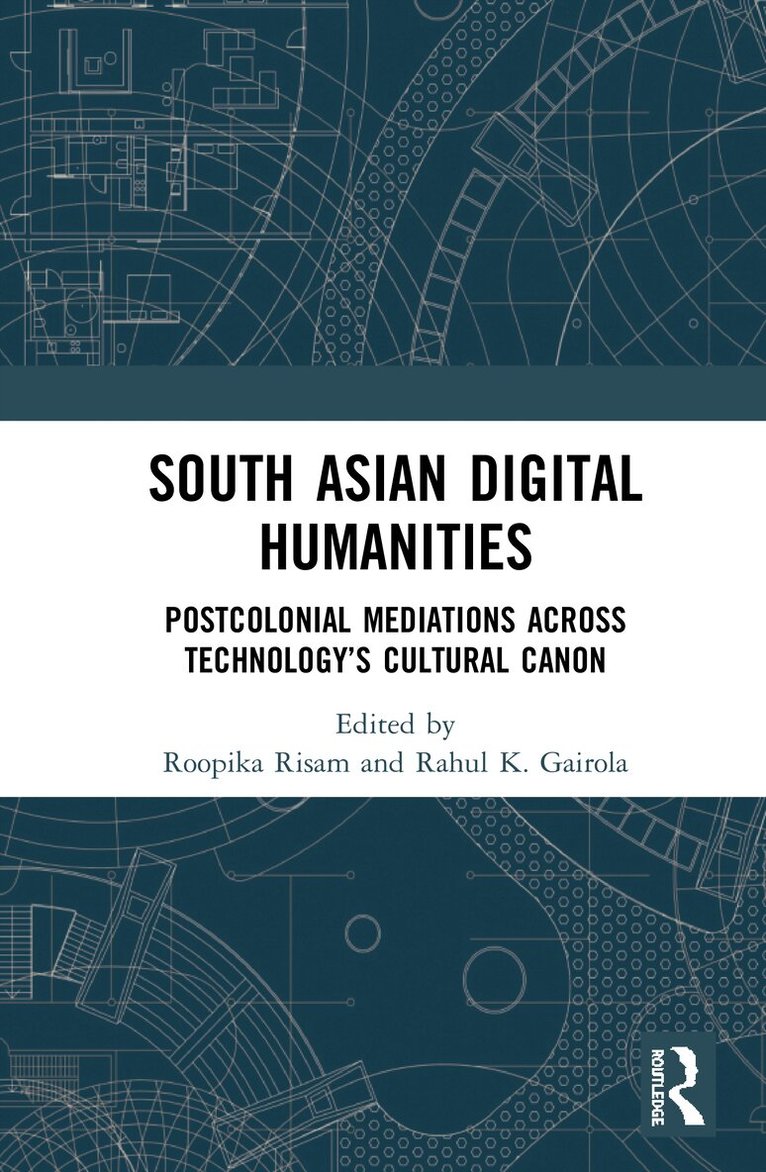
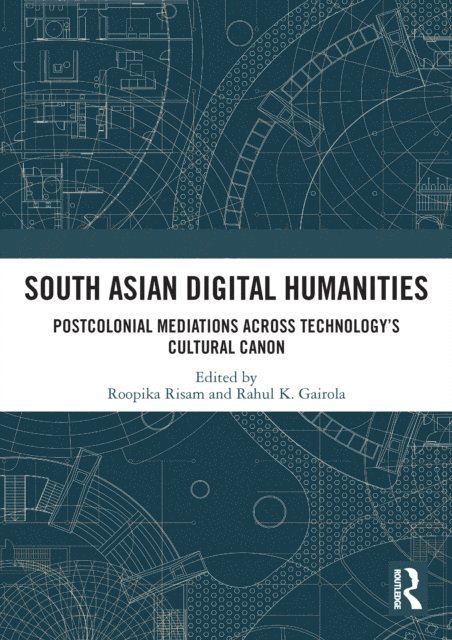
The digital cultural record has a powerful role to play in both new and future strategies of creating new homes within the digital milieu. For example, the development and establishment of new digital archives around South Asian studies not only allows us to create new archives of the past but also to remember and commemorate the past differently. New maps transform how we understand space and place. And new digital comfort zones facilitate connections for those whose family and loved ones are only accessible online. Such interventions are essential to the recuperation of the integrity and soul of a people who have lived through and continue to shoulder the fraught and painful legacies of the British Empire and the communal bloodshed wrought by its demise.
Building on the important history of digital humanities scholarship in South Asia and its diasporas that precedes this work, this book contends that South Asian studies is further positioned to offer a new genealogy of digital humanities, demonstrated through this assemblage of essays that reveal how the digital continues to shape notions of home, belonging, nation, identity, memory, and diaspora through a variety of humanistic methodologies and digital techniques.
South Asian Digital Humanities thus demonstrates that postcolonial digital humanities has great possibility for creating some of the most important social justice scholarship in South Asian studies of the past century. It offers these essays as innovative interventions that complicate the digital cultural record while lodging a ''homelanding'' for South Asians within it, positioning digital humanities as a method through which South Asian studies can strategically participate in the ongoing struggle for representation within digital knowledge production.
This book was originally published as a special issue of South Asian Review.
876 kr
Läs direkt efter köp
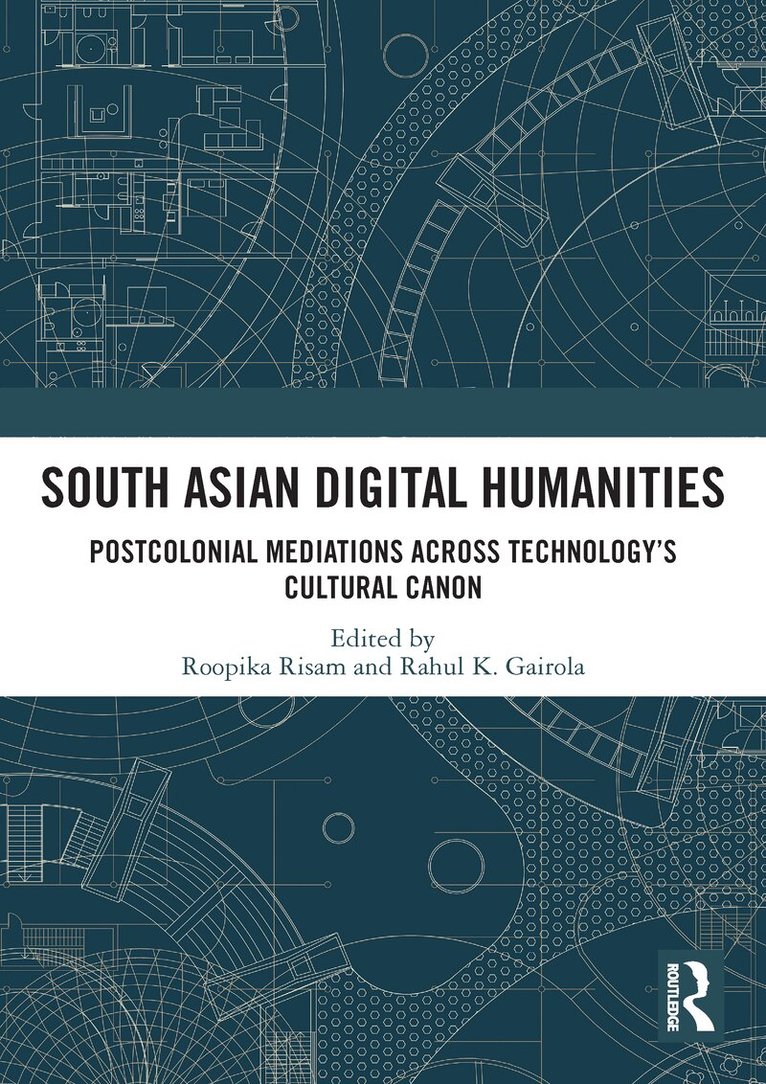
The digital cultural record has a powerful role to play in both new and future strategies of creating new homes within the digital milieu. For example, the development and establishment of new digital archives around South Asian studies not only allows us to create new archives of the past but also to remember and commemorate the past differently. New maps transform how we understand space and place. And new digital comfort zones facilitate connections for those whose family and loved ones are only accessible online. Such interventions are essential to the recuperation of the integrity and soul of a people who have lived through and continue to shoulder the fraught and painful legacies of the British Empire and the communal bloodshed wrought by its demise.
Building on the important history of digital humanities scholarship in South Asia and its diasporas that precedes this work, this book contends that South Asian studies is further positioned to offer a new genealogy of digital humanities, demonstrated through this assemblage of essays that reveal how the digital continues to shape notions of home, belonging, nation, identity, memory, and diaspora through a variety of humanistic methodologies and digital techniques.
South Asian Digital Humanities thus demonstrates that postcolonial digital humanities has great possibility for creating some of the most important social justice scholarship in South Asian studies of the past century. It offers these essays as innovative interventions that complicate the digital cultural record while lodging a ''homelanding'' for South Asians within it, positioning digital humanities as a method through which South Asian studies can strategically participate in the ongoing struggle for representation within digital knowledge production.
This book was originally published as a special issue of South Asian Review.
1 583 kr
Skickas inom 10-15 vardagar
383 kr
Skickas inom 7-10 vardagar
1 226 kr
Kommande
291 kr
Kommande
564 kr
Skickas inom 3-6 vardagar