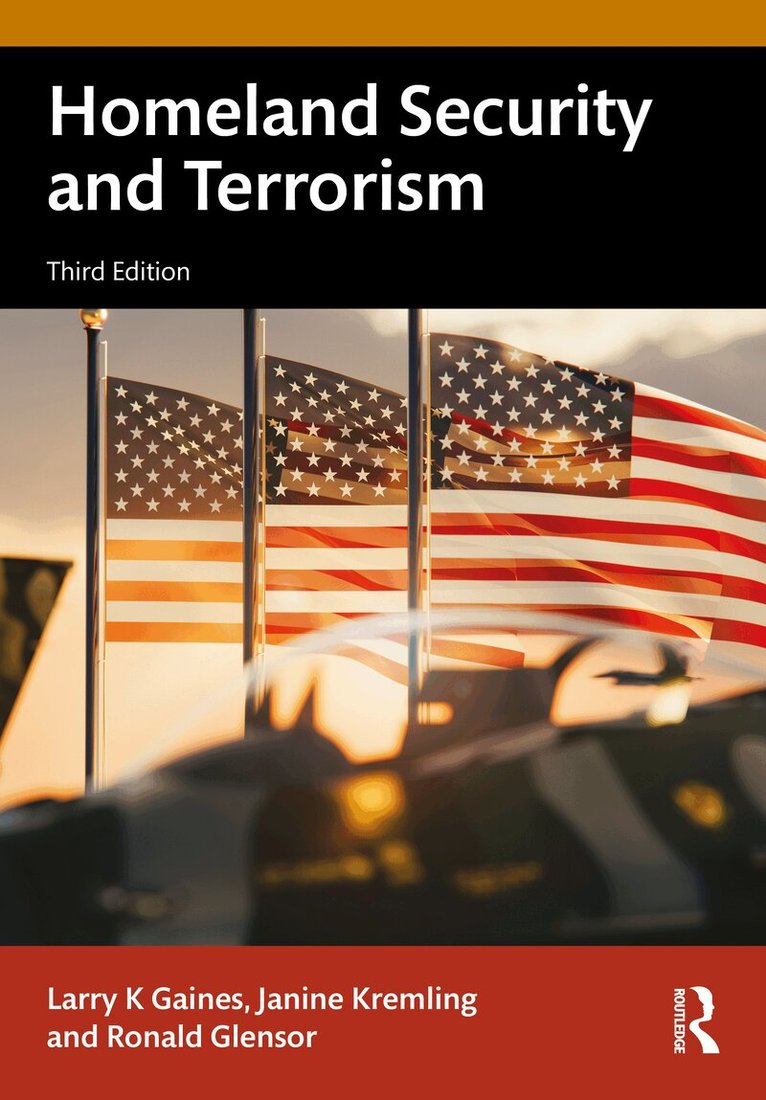
This book provides a comprehensive overview of homeland security and terrorism. Organized in a four-part format, it examines the foundation for homeland security, homeland security and terrorism, defeating terrorists and their activities, and Homeland Security’s response to terrorist threats. Acknowledging that homeland security is primarily a response to terrorism, the text examines the threats and operations of terrorist organizations before moving on to U.S. counterterrorism efforts. Homeland security measures are assessed alongside laws and presidential directives from the early 2000s to the present day. The Third Edition includes analysis of hotly contested issues such as immigration and border security, cybercrime and cybersecurity, the disaster response system (FEMA), and U.S. government guidance on protecting critical infrastructure and key assets from acts of terrorism. Each chapter includes key terms, discussion questions, marginal web links, and analysis boxes that encourage students to think critically and analyze current problems inherent to homeland security and terrorism. This text meets requirements for entry-level introductory courses in homeland security and is essential for advanced undergraduate or entry-level graduate students in criminology, intelligence analysis, public policy, public affairs, international affairs, or law programs.
This book provides a comprehensive overview of homeland security and terrorism. Organized in a four-part format, it examines the foundation for homeland security, homeland security and terrorism, defeating terrorists and their activities, and Homeland Security’s response to terrorist threats. Acknowledging that homeland security is primarily a response to terrorism, the text examines the threats and operations of terrorist organizations before moving on to U.S. counterterrorism efforts. Homeland security measures are assessed alongside laws and presidential directives from the early 2000s to the present day. The Third Edition includes analysis of hotly contested issues such as immigration and border security, cybercrime and cybersecurity, the disaster response system (FEMA), and U.S. government guidance on protecting critical infrastructure and key assets from acts of terrorism. Each chapter includes key terms, discussion questions, marginal web links, and analysis boxes that encourage students to think critically and analyze current problems inherent to homeland security and terrorism. This text meets requirements for entry-level introductory courses in homeland security and is essential for advanced undergraduate or entry-level graduate students in criminology, intelligence analysis, public policy, public affairs, international affairs, or law programs.
Community and Problem-Oriented Policing: Addressing Crime and Disorder addresses the evolving field of policing by emphasizing community-focused strategies to combat crime and disorder. Featuring new and emerging strategies and technologies, the Eighth Edition equips students with critical thinking skills, practical knowledge, and hands-on tools to tackle real-world challenges in the field.