543 kr
Skickas inom 7-10 vardagar
543 kr
Skickas inom 7-10 vardagar
895 kr
Skickas inom 7-10 vardagar
1 283 kr
Skickas inom 10-15 vardagar
591 kr
Skickas inom 7-10 vardagar
568 kr
Läs direkt efter köp
695 kr
Skickas inom 10-15 vardagar
2 426 kr
Skickas inom 10-15 vardagar
911 kr
Skickas inom 7-10 vardagar
294 kr
Läs direkt efter köp
292 kr
Läs direkt efter köp
308 kr
Skickas inom 7-10 vardagar
2 602 kr
Skickas inom 10-15 vardagar
847 kr
Skickas inom 10-15 vardagar
2 145 kr
Skickas inom 10-15 vardagar
564 kr
Skickas inom 10-15 vardagar
2 114 kr
Skickas inom 10-15 vardagar
589 kr
Läs direkt efter köp
589 kr
Läs direkt efter köp
808 kr
Läs direkt efter köp
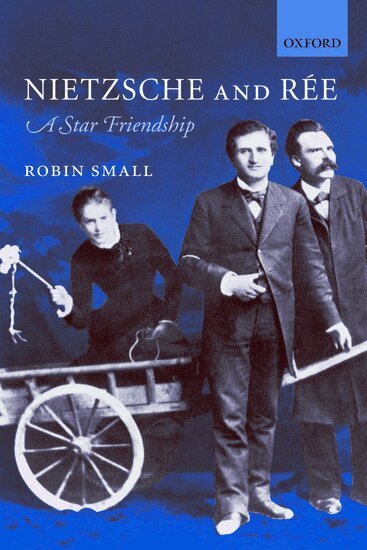
This title was first published in 2001. Friedrich Nietzsche has always been recognized as an original thinker, one who stands apart from and outside the philosophical schools and tendencies of his time. This is the way he continually presented himself. Many readers have accepted this self-interpretation at face value. Yet there is another side to Nietzsche''s thinking which shows not only an awareness of contemporary writers, but an engagement with their ideas which is often both intense and sustained. The intention of this study is to explore this side in detail, by surveying various themes in his philosophical thinking with such links in mind. It is important to avoid one misunderstanding though: this book is not designed to show that Nietzsche derived his ideas from various other thinkers. In that sense, it is not necessarily about "sources" or even about "influences". Rather, it shows that his independence and originality developed in dialogue with other thinkers.
986 kr
Läs direkt efter köp
972 kr
Läs direkt efter köp
561 kr
Skickas inom 10-15 vardagar
608 kr
Läs direkt efter köp
595 kr
Läs direkt efter köp
2 138 kr
Skickas inom 10-15 vardagar
529 kr
Skickas inom 10-15 vardagar
708 kr
Läs direkt efter köp
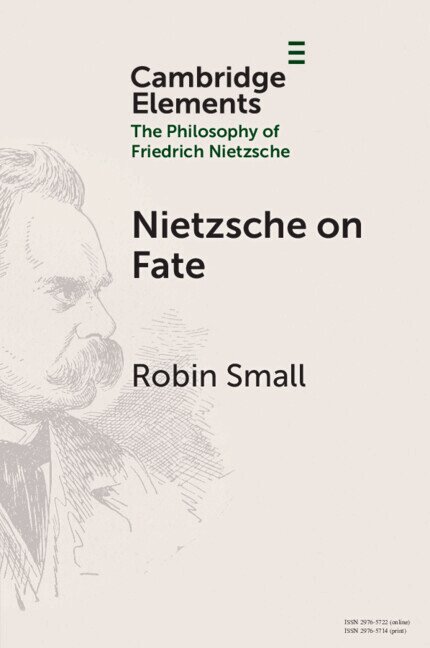
This book offers a succinct guide to Friedrich Nietzsche’s contributions to educational thought, placing them within the context of his overall philosophy and adding biographical background information that sheds light on his thinking. Topics discussed in detail include theories of knowledge and life, concepts of teaching and learning, and practice and policy issues in modern education. Friedrich Nietzsche (1844–1900) was a major Western thinker with much to say about education, both directly and indirectly. A fierce critic of the schools and universities of his time, he affirms the centrality of ‘culture’ and the exceptional individual as the true aim of education. For Nietzsche, the human predicament is characterised by the tension between knowledge and life. The task of education is to reconcile these demands, but that requires a radical rethinking of knowledge and a re-evaluation of morality. Nietzsche’s new conception of truth replaces facts with interpretations, and certaintywith bold experiment. His new virtues arise out of the ‘sublimation’ of drives that are condemned by traditional morality. An education of the future promotes these aspects of individual development. Even so, Nietzsche seems to think that, in the end, it is up to each of us to engage in a broader task of self-realisation, for which he has a cryptic formula:
“Become what you are.”
529 kr
Skickas inom 10-15 vardagar
690 kr
Läs direkt efter köp
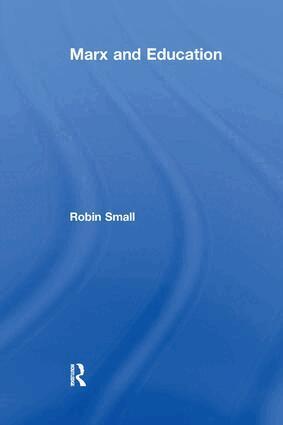
This book is an introduction to Karl Marx (1818–1883) as a radical educational thinker. Marx’s own schooling and education are examined and we see how his interest in educational issues was informed by his own experience. Educational themes in Marx’s thinking are identified: the role of education within capitalist society, the contribution of education to human development and the character of education in a future society. These are placed in a historical setting by the author and related to public debates over educational policy.
Throughout his career, Marx identified education as key to the prospects of the working class. The story of this engagement adds a new dimension to the picture of his work as a philosopher, political economist and socialist revolutionary. The aspects of education that concerned Marx matched prominent features of his theoretical and political activity, and educational themes provided him with a critical application for many of his most important ideas.
The author explores Marx’s work on the British factory school system, his use of evidence from the reports of school inspectors, and the contemporary movement that led to the establishment of modern systems of public schooling. The final chapter relates Marx’s thinking to questions about the place of education in today’s society, showing how relevant it is for the twenty-first century.
These discussions contain new scholarship, draw on original sources and are written in a clear and readable style. Students in education courses at universities and colleges, educational researchers and teachers will find this examination of Karl Marx’s ideas concerning education both engaging and enlightening.