688 kr
Skickas inom 7-10 vardagar
688 kr
Skickas inom 7-10 vardagar
1 648 kr
Skickas inom 7-10 vardagar
1 573 kr
Skickas inom 7-10 vardagar
674 kr
Skickas inom 7-10 vardagar
1 588 kr
Skickas inom 7-10 vardagar
2 311 kr
Skickas inom 10-15 vardagar
2 540 kr
Skickas inom 10-15 vardagar
2 540 kr
Skickas inom 10-15 vardagar
2 540 kr
Skickas inom 10-15 vardagar
2 188 kr
Skickas inom 10-15 vardagar
994 kr
Skickas inom 10-15 vardagar
523 kr
Skickas inom 7-10 vardagar
1 168 kr
Skickas inom 7-10 vardagar
510 kr
Läs direkt efter köp
510 kr
Läs direkt efter köp
784 kr
Skickas inom 10-15 vardagar
784 kr
Skickas inom 10-15 vardagar
837 kr
Skickas inom 10-15 vardagar
788 kr
Skickas inom 10-15 vardagar
493 kr
Skickas inom 7-10 vardagar
924 kr
Läs direkt efter köp
924 kr
Läs direkt efter köp
918 kr
Läs direkt efter köp
924 kr
Läs direkt efter köp
1 074 kr
Läs direkt efter köp
988 kr
Läs direkt efter köp
918 kr
Läs direkt efter köp
924 kr
Läs direkt efter köp
6 974 kr
Skickas inom 10-15 vardagar
1 157 kr
Läs direkt efter köp
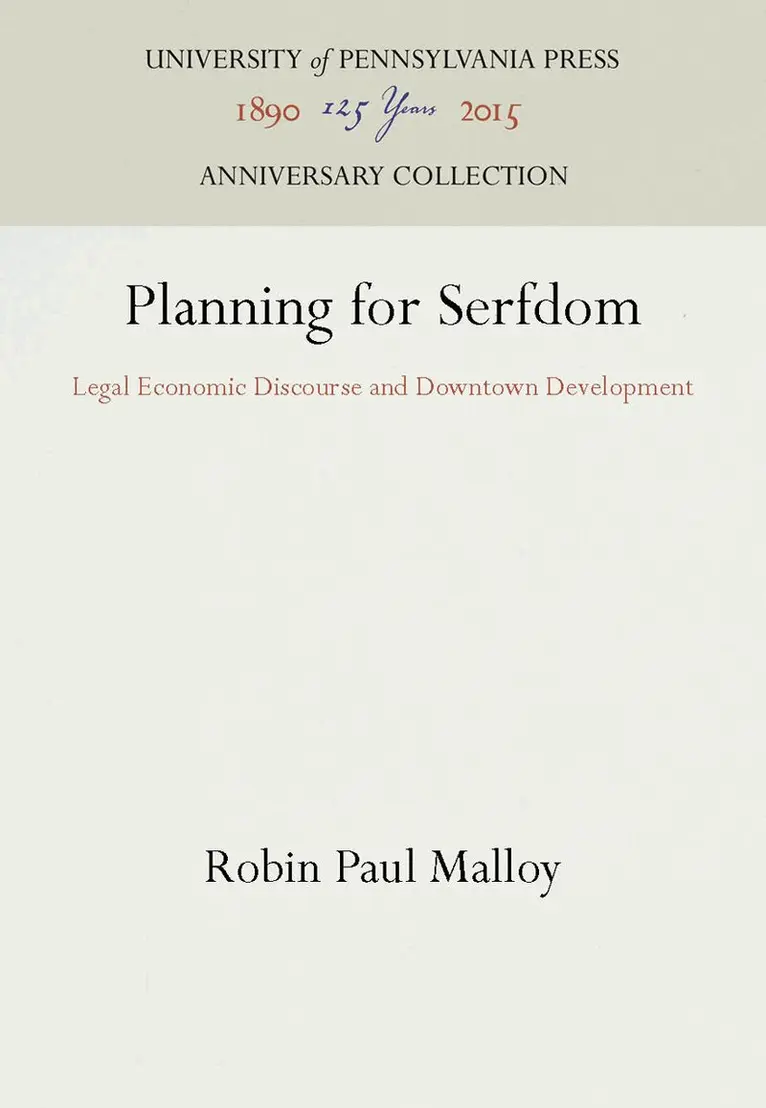
Robin Paul Malloy examines efforts at urban development and revitalization as prototypical examples of a monumental transformation in American law. His investigation reveals that America has rejected a belief in the marketplace, individual freedom, and autonomy, and has instead opted for an ideological commitment to concepts contrary to the rhetoric upon which this country was founded. The urban landscape and its ideological infrastructure are being corrupted by greedy special interest groups and a political system unable to avoid its own excesses.This book is unique in its blending of legal and economic analysis. With a detailed and fresh new interpretation of Adam Smith, Malloy undertakes to challenge some of the most highly promoted urban panning devices and concludes that American law and values are in transformation. He also examines the legal and economic arrangements that have led America down this path of ideological drift and focuses on examples of urban revitalization efforts in several cities, including Indianapolis, Boston, Pittsburgh, St. Louis, and Louisville.Recommendations for change are provided. Fundamentally, however, he concludes that change must begin with the reinvigoration of individual values—values that respect individual freedom, liberty, and human dignity—values being readily displaced by the current ideological drift of American legal and economic culture.Planning for Serfdom is an important and controversial book that will be of interest to scholars and students of law, economics, politics, and philosophy.