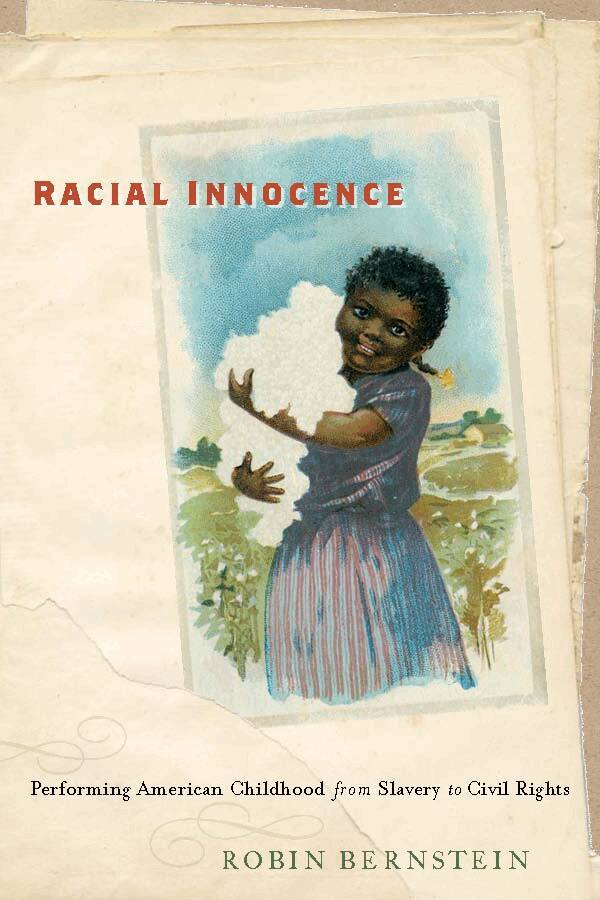
2013 Book Award Winner from the International Research Society in Children's Literature2012 Outstanding Book Award Winner from the Association for Theatre in Higher Education 2012 Winner of the Lois P. Rudnick Book Prize presented by the New England American Studies Association 2012 Runner-Up, John Hope Franklin Publication Prize presented by the American Studies Association2012 Honorable Mention, Distinguished Book Award presented by the Society for the Study of American Women Writers Dissects how "innocence" became the exclusive province of white children, covering slavery to the Civil Rights eraBeginning in the mid nineteenth century in America, childhood became synonymous with innocence—a reversal of the previously-dominant Calvinist belief that children were depraved, sinful creatures. As the idea of childhood innocence took hold, it became racialized: popular culture constructed white children as innocent and vulnerable while excluding black youth from these qualities. Actors, writers, and visual artists then began pairing white children with African American adults and children, thus transferring the quality of innocence to a variety of racial-political projects—a dynamic that Robin Bernstein calls "racial innocence." This phenomenon informed racial formation from the mid nineteenth century through the early twentieth. Racial Innocence takes up a rich archive including books, toys, theatrical props, and domestic knickknacks which Bernstein analyzes as "scriptive things" that invite or prompt historically-located practices while allowing for resistance and social improvisation. Integrating performance studies with literary and visual analysis, Bernstein offers singular readings of theatrical productions from blackface minstrelsy to Uncle Tom's Cabin to The Wonderful Wizard of Oz; literary works by Joel Chandler Harris, Harriet Wilson, and Frances Hodgson Burnett; material culture including Topsy pincushions, Uncle Tom and Little Eva handkerchiefs, and Raggedy Ann dolls; and visual texts ranging from fine portraiture to advertisements for lard substitute. Throughout, Bernstein shows how "innocence" gradually became the exclusive province of white children—until the Civil Rights Movement succeeded not only in legally desegregating public spaces, but in culturally desegregating the concept of childhood itself.
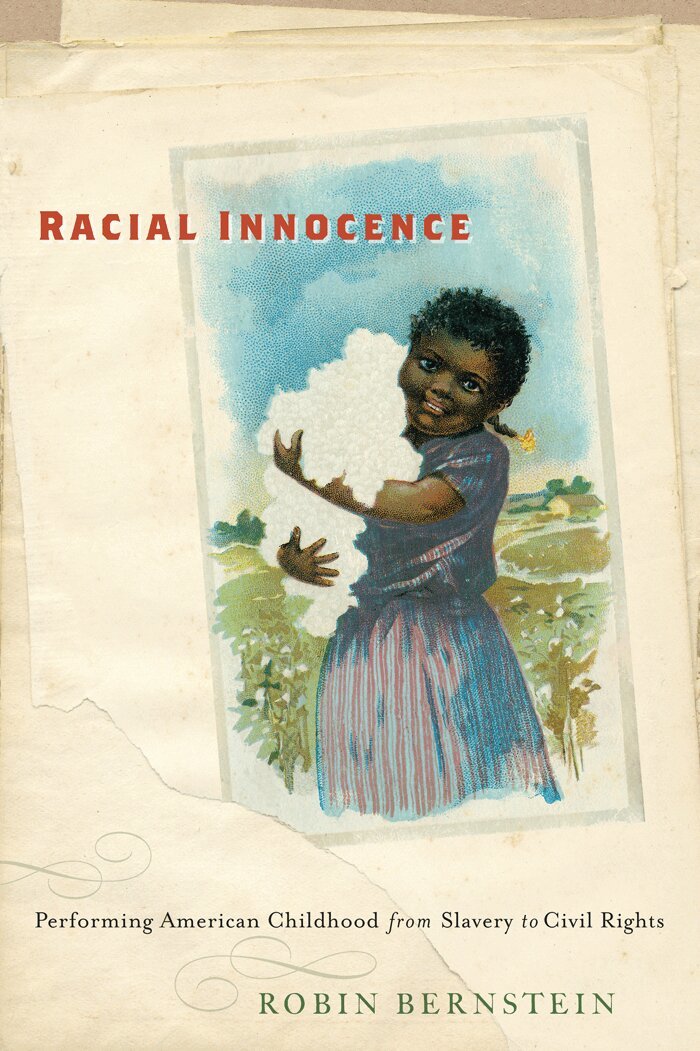
2013 Book Award Winner from the International Research Society in Children's Literature2012 Outstanding Book Award Winner from the Association for Theatre in Higher Education 2012 Winner of the Lois P. Rudnick Book Prize presented by the New England American Studies Association 2012 Runner-Up, John Hope Franklin Publication Prize presented by the American Studies Association2012 Honorable Mention, Distinguished Book Award presented by the Society for the Study of American Women Writers Dissects how "innocence" became the exclusive province of white children, covering slavery to the Civil Rights eraBeginning in the mid nineteenth century in America, childhood became synonymous with innocence—a reversal of the previously-dominant Calvinist belief that children were depraved, sinful creatures. As the idea of childhood innocence took hold, it became racialized: popular culture constructed white children as innocent and vulnerable while excluding black youth from these qualities. Actors, writers, and visual artists then began pairing white children with African American adults and children, thus transferring the quality of innocence to a variety of racial-political projects—a dynamic that Robin Bernstein calls "racial innocence." This phenomenon informed racial formation from the mid nineteenth century through the early twentieth. Racial Innocence takes up a rich archive including books, toys, theatrical props, and domestic knickknacks which Bernstein analyzes as "scriptive things" that invite or prompt historically-located practices while allowing for resistance and social improvisation. Integrating performance studies with literary and visual analysis, Bernstein offers singular readings of theatrical productions from blackface minstrelsy to Uncle Tom's Cabin to The Wonderful Wizard of Oz; literary works by Joel Chandler Harris, Harriet Wilson, and Frances Hodgson Burnett; material culture including Topsy pincushions, Uncle Tom and Little Eva handkerchiefs, and Raggedy Ann dolls; and visual texts ranging from fine portraiture to advertisements for lard substitute. Throughout, Bernstein shows how "innocence" gradually became the exclusive province of white children—until the Civil Rights Movement succeeded not only in legally desegregating public spaces, but in culturally desegregating the concept of childhood itself.
The work is situated in Mpumalanga province, South Africa, on the escarpment bordering Mozambique and Eswatini. A place where lush cliffs abruptly pierce the hot, red earth of the lowlands. Itserves as a geo-physical symbol for the edge of the South African frontier. A collision point that has inspired countless folk tales and the beginnings of the modern-day story of gold in South Africa.Today, plantations of foreign trees blanket the landscape while mills churn steam as they pulp pine into paper. In the valleys below, gold mines that have been chiming steel against rock for the past one hundred years ring their ceaseless chorus. The surrounding terrain is littered with relics of another time — the remnants of a forgotten pre-colonial society and wild descendants of horses abandoned during wars and a failed gold rush.MAPALAKATA looks at the transient nature of ‘visitors’ to the landscape, drawing attention to how the history of the region is continually rewritten as different groups of people attempt to erase the narratives bound to their predecessors, each driven to occupy the space for the resources that it holds. This process leaves an archive of physical artefacts scattered across the landscape, which become ephemeral traces of the histories that have played out.Through a photographic investigation of these remnants of the past and the people who presently inhabit these spaces, this work aims to engage with the nuances of present social conditions in South Africa and consider how place roots itself in the consciousness of those who inhabit it.“The name Mapalakata once meant traders. Men who came inland with cloth and beads, their packs heavy with salt and brass. They followed the flow of rivers, trading what they could carry for gold and hides and grain. The world they moved through was a web of bargains. Even now the region works with the same logic.” Desmond LathamThe book includes written contributions from South African writers Lidudumalingani and Desmond Latham.
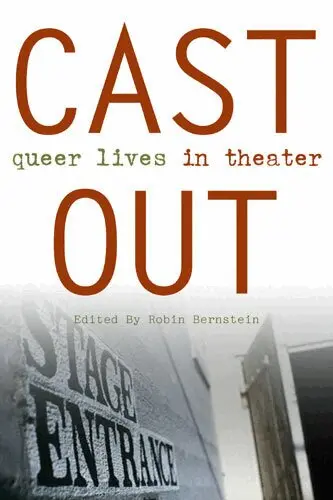
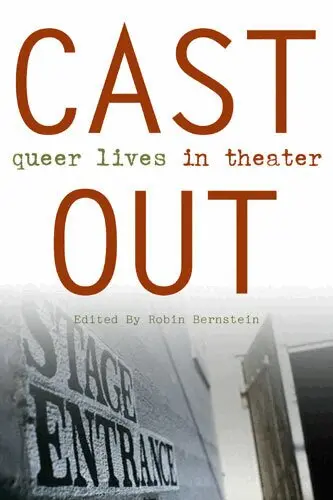
"Robin Bernstein's Cast Out is my latest must have, an important new mapping of the intersection of gender and performance studies."-Holly HughesCast Out is a collection of memoirs and interviews by twenty-two leading performers, playwrights, technicians, producers, critics, educators, and passionate spectators.Cast Out also offers a backstage pass to the personal and creative lives of some of the most important and influential theater artists of the past fifty years: Edward Albee discusses the homophobic critical attacks he endured in the 50s and 60s; Cherry Jones talks about the first time she accepted a Tony Award-and her decision, in that moment, to come out; Peggy Shaw speaks of the drag queen who first inspired her stage career; Craig Lucas issues an impassioned call for theater practitioners and other artists to unite for the sake of art, creativity, and social change. Also included are memoirs by and interviews with Kate Bornstein, Lisa Kron, Tim Miller, and George C. Wolfe, among others. These diverse voices dispel the cliché of theater as a "safe haven" and replace the stereotype with a nuanced group portrait of the ways in which theater and queerness intersect.Featuring writing by:Edward AlbeeKate BornsteinRichard BrachoBree CovenTerry GallowayKarleen Pendleton JiménezCherry JonesLisa KronCraig LucasTim MillerJim ProvenzanoPeggy ShawGeorge C. Wolfeand more
"Robin Bernstein's Cast Out is my latest must have, an important new mapping of the intersection of gender and performance studies."-Holly HughesCast Out is a collection of memoirs and interviews by twenty-two leading performers, playwrights, technicians, producers, critics, educators, and passionate spectators.Cast Out also offers a backstage pass to the personal and creative lives of some of the most important and influential theater artists of the past fifty years: Edward Albee discusses the homophobic critical attacks he endured in the 50s and 60s; Cherry Jones talks about the first time she accepted a Tony Award-and her decision, in that moment, to come out; Peggy Shaw speaks of the drag queen who first inspired her stage career; Craig Lucas issues an impassioned call for theater practitioners and other artists to unite for the sake of art, creativity, and social change. Also included are memoirs by and interviews with Kate Bornstein, Lisa Kron, Tim Miller, and George C. Wolfe, among others. These diverse voices dispel the cliché of theater as a "safe haven" and replace the stereotype with a nuanced group portrait of the ways in which theater and queerness intersect.Featuring writing by:Edward AlbeeKate BornsteinRichard BrachoBree CovenTerry GallowayKarleen Pendleton JiménezCherry JonesLisa KronCraig LucasTim MillerJim ProvenzanoPeggy ShawGeorge C. Wolfeand more