

Häftad, Engelska, 2004
169 kr
Skickas inom 3-6 vardagar
169 kr
Skickas inom 3-6 vardagar

157 kr
Skickas inom 11-20 vardagar

128 kr
Läs direkt efter köp

334 kr
Skickas inom 7-10 vardagar
556 kr
Skickas inom 3-6 vardagar
411 kr
Läs direkt efter köp
Brave New Digital Classroom examines the most effective ways to utilize technology in language learning. The author deftly interweaves the latest results of pedagogical research with descriptions of the most successful computer-assisted language learning (CALL) projects to show how to implement technology in the foreign-language curriculum to assist the second language acquisition process. Directed at elementary to postsecondary language teachers, the book is ideal for graduate-level courses on pedagogy and an invaluable reference for experienced researchers, CALL developers, and administrators.
This new enhanced ebook edition features the full text plus eight videos, including three talks by the author; an interview with Claire Kramsch on using the internet to teach culture; Phil Hubbard on criteria for evaluating CALL software; Rick Kern discussing telecollaboration and CMC exchanges with two students; Gabriel Guillén on tandem learning and social networks; and Paul Rama on games and gaming.

2 189 kr
Skickas inom 7-10 vardagar

628 kr
Skickas inom 7-10 vardagar
1 425 kr
Skickas inom 7-10 vardagar
390 kr
Skickas inom 3-6 vardagar
470 kr
Läs direkt efter köp
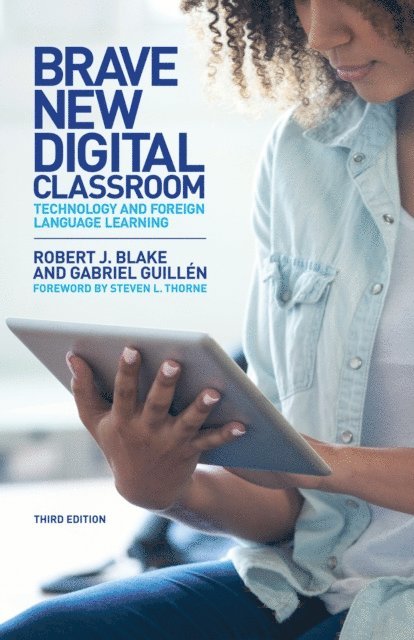
Robert Blake, now with Gabriel Guillén, updates his successful book (1st ed. 2008, 2nd ed. 2013) on how to teach foreign languages using technology. Brave New Digital Classroom touches on all of the key concepts and challenges of teaching with technology, focusing on issues specific to FLL or L2 learning and CALL. Originally referred to as computer-assisted language learning, CALL has come to encompass any kind of learning that uses digital tools for language learning.
This edition reframes the conversation to account for how technology has been integrated into our lives. Blake and Guillén address the ways technology can help with L2, how to choose the right digital tools, how to use those tools effectively, and how technology can impact literacy and identity. The book is primed for use in graduate courses: terminology is in bold and a comprehensive glossary is included; each chapter finishes with a short list of references for further reading on the topic and discussion questions. The authors provide short interview videos (free via GUP website) to enhance discussions on each chapter’s topic.