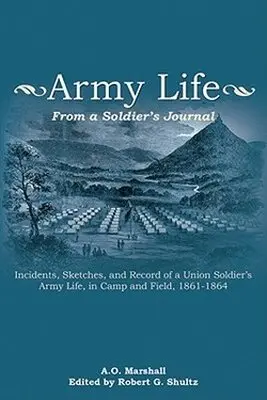
This work presents an engaging account of a young Union soldier. In 1884, when Albert O. Marshall published ""Army Life"", a memoir of his service as a private in the Thirty-Third Illinois Regiment, twenty years had passed since his 1861 discharge. At publication, Marshall left the journal untouched, and today it is a journal that is rare in what it is not. This memoir is not a complete story of the Thirty-Third (known as the 'Normal Regiment' because many of its soldiers were from Illinois State Normal University), nor is it a complete roster of regiment members, nor a list of killed and wounded. ""Army Life"" is not, even, a purely military account written from an officer's point of view. It is the story of a twenty-year-old private whose engaging writing belies his age but also allows his youth to shine through. Marshall tells of the battles he fought and the games he played, of his friends, fellow soldiers, and officers, and of the regiment's activities in Missouri and Arkansas, at Vicksburg, and in Louisiana and on the Texas Gulf Coast. Enhanced with careful editing and thorough annotations, this journal Marshall carried faithfully to every mustering out is a rich and important Civil War memoir.
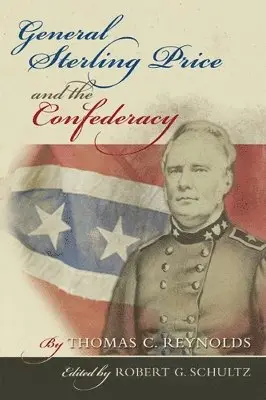
Sterling Price began his career as commander of the Missouri State Guard, then served as a major general in the Confederate army during the Civil War. Because of his early conditional unionism - he was for the Union, but not to the extent of suppressing the rights of individual states - Price was not completely trusted in Missouri by either Governor Claiborne Jackson or Lieutenant Governor Thomas C. Reynolds. Nor was he trusted by Jefferson Davis, president of the new Confederate States of America. Price led by example, sharing hardships with his men and inspiring them with his fearlessness. They fought for him in the battles of Wilson's Creek, Lexington, and Pea Ridge. Price's 'last hurrah' was the autumn 1864 raid into Missouri. However, Reynolds, who traveled with the men, was furious that the raid failed to bring Missouri into the Confederacy. In 1867, Reynolds began writing his version of events. The manuscript was never completed, possibly because of the death of Sterling Price in St. Louis. In 1898, the Reynolds text was discovered and donated to the Missouri Historical Society. For historians, the Reynolds manuscript has proved to be a proverbial gold mine of information. This is especially true because Price's personal papers were lost in a fire in the 1880s. Now for the first time, the entire, although unfinished, manuscript is available. It is important not only for its appraisal of Sterling Price but also for Reynolds' views of the inner workings of the Confederate government and in particular the challenges that faced the Trans-Mississippi Department of the Confederacy.