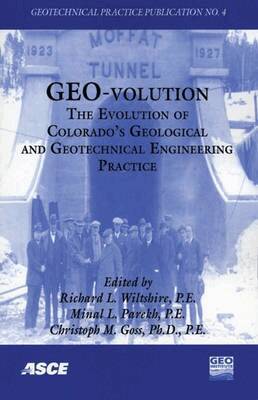
GEO-volution: The Evolution of Colorado's Geological and Geotechnical Engineering Practice contains 14 summary papers and practical case studies, presented at the 2006 bicentennial Geotechnical Seminar in Denver, Colorado on November 10, 2006, that describe how the ""state of the geo-practice"" evolved in Colorado. The papers offer perspective on Colorado's unique geology, geotechnical and geological engineering for the challenging ground conditions present in Colorado, emerging trends in the local engineering practice, and current solutions to Colorado's diverse geo-problems.
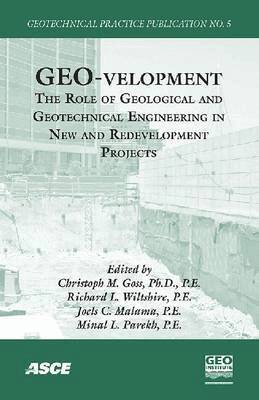
GEO-velopment: The Role of Geological and Geotechnical Engineering in New and Redevelopment Projects is a collection of papers presented at the 2008 Biennial Geotechnical Seminar held in Denver, Colorado, November 7, 2008. This one-day seminar was organized by the Geotechnical Group of the ASCE-Colorado Section, the Association of Environmental and Engineering Geologists-Rocky Mountain Section, and the Colorado Association of Geotechnical Engineers. From downtown Denver to the beet plants of eastern Colorado, from the sprawling Front Range suburbs to the Rocky Mountain High Country, these papers seek to solve complex geotechnical and environmental challenges. The topics include: downtown redevelopment; construction on sugar beet waste and expansive soils; dam remediation including spillways and sinkholes; soil-cement uplift pressures; internal erosion in dams; ancient Mesa Verde reservoir embankments; Brownfield redevelopment; research in soil moisture retention curves and intrinsic dampening; retaining walls including asset management; and airport runway upgrade. This proceedings will be valuable to anyone in geotechnical engineering, especially those working in Colorado or similar geologic settings.
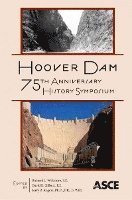
Proceedings of the Hoover Dam 75th Anniversary History Symposium, held in Las Vegas, Nevada, October 21-22, 2010. Sponsored by the History and Heritage Committe of ASCE.This collection contains 20 papers that commemorate the dedication of the Hoover Dam, which many regard as the world's greatest dam design and construction project of the 20th century. These papers cover wide-ranging topics and provide readers with an understanding of the dam's outstanding engineers and magnificent engineering and architecture.The Hoover Dam is still the highest concrete dam in the Western Hemisphere. Between 1939 and 1949, it was the world's largest hydropower installation. Even today, it produces more than four billion kilowatt-hours of electricity each year, making it one of the largest hydropower installations in the United States.Topics include:politics, economics, technology, and historyconcrete technologyengineering, hydraulics, and structuralcivil engineers, architecture, and construction
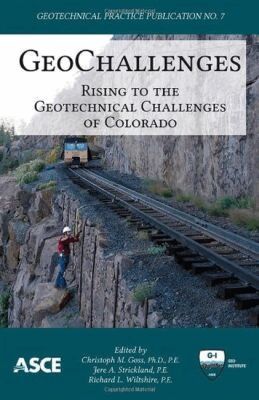
Proceedings of the 2012 Biennial Geotechnical Seminar held in Denver, Colorado, on November 9, 2012. This Geotechnical Practice Publication contains 16 papers that address the complex geotechnical challenges in geologic hazards, nondestructive evaluation, geo-construction, and the ground itself. Topics include: debris flow assessment and mitigation; rockfall rating systems; dam sinkhole evaluation; seismic imaging for landslide remediation; photogrammetry for mapping discontinuities, river morphology, and concrete damage; mine subsidence under levees; laramie formation claystone behaviour; underdrains for construction on expansive soils; reinforced soil structures; bedrock settlement under dams; energy foundations; drilled shaft foundations; and tunnel rehabilitation. This Geotechnical Practice Publication focuses on Colorado and the Rocky Mountain West s specific geotechnical practice and experience. It will be valuable to anyone in geotechnical engineering, especially those working in Colorado or similar geologic settings.
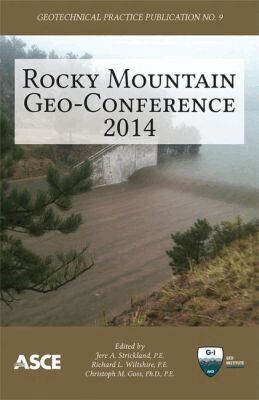
Contains 11 papers that address the complex geotechnical challenges in geologic hazards, nondestructive evaluation, geo-construction, and the ground itself.