553 kr
Skickas inom 7-10 vardagar
553 kr
Skickas inom 7-10 vardagar
810 kr
Skickas inom 7-10 vardagar
1 626 kr
Skickas inom 7-10 vardagar
475 kr
Läs direkt efter köp
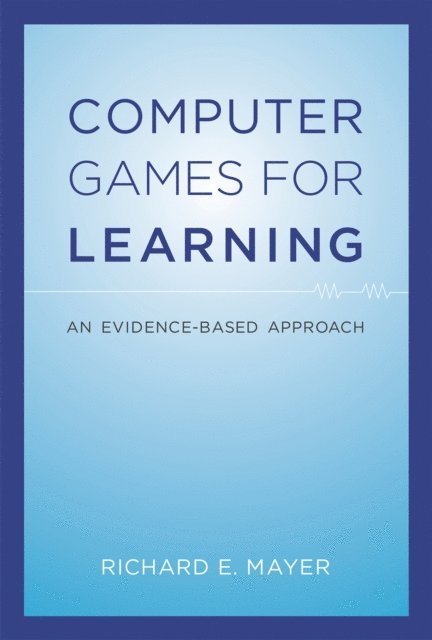
A comprehensive and up-to-date investigation of what research shows about the educational value of computer games for learning.
Many strong claims are made for the educational value of computer games, but there is a need for systematic examination of the research evidence that might support such claims. This book fills that need by providing, a comprehensive and up-to-date investigation of what research shows about learning with computer games.
Computer Games for Learning describes three genres of game research: the value-added approach, which compares the learning outcomes of students who learn with a base version of a game to those of students who learn with the base version plus an additional feature; the cognitive consequences approach, which compares learning outcomes of students who play an off-the-shelf computer game for extended periods to those of students who do not; and the media comparative approach, which compares the learning outcomes of students who learn material by playing a game to those of students who learn the same material using conventional media.
After introductory chapters that describe the rationale and goals of learning game research as well as the relevance of cognitive science to learning with games, the book offers examples of research in all three genres conducted by the author and his colleagues at the University of California, Santa Barbara; meta-analyses of published research; and suggestions for future research in the field. The book is essential reading for researchers and students of educational games, instructional designers, learning-game developers, and anyone who wants to know what the research has to say about the educational effectiveness of computer games.
1 446 kr
Läs direkt efter köp
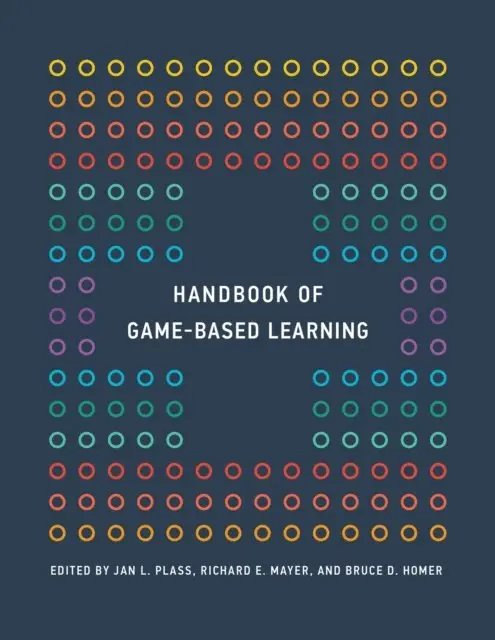
A comprehensive introduction to the latest research and theory on learning and instruction with computer games.
This book offers a comprehensive introduction to the latest research on learning and instruction with computer games. Unlike other books on the topic, which emphasize game development or best practices, Handbook of Game-Based Learning is based on empirical findings and grounded in psychological and learning sciences theory. The contributors, all leading researchers in the field, offer a range of perspectives, including cognitive, motivational, affective, and sociocultural. They explore research on whether (and how) computer games can help students learn educational content and academic skills; which game features (including feedback, incentives, adaptivity, narrative theme, and game mechanics) can improve the instructional effectiveness of these games; and applications, including games for learning in STEM disciplines, for training cognitive skills, for workforce learning, and for assessment. The Handbook offers an indispensable reference both for readers with practical interests in designing or selecting effective game-based learning environments and for scholars who conduct or evaluate research in the field. It can also be used in courses related to play, cognition, motivation, affect, instruction, and technology.
ContributorsRoger Azevedo, Ryan S. Baker, Daphne Bavelier, Amanda E. Bradbury, Ruth C. Clark, Michele D. Dickey, Hamadi Henderson, Bruce D. Homer, Fengfeng Ke, Younsu Kim, Charles E. Kinzer, Eric Klopfer, James C. Lester, Kristina Loderer, Richard E. Mayer, Bradford W. Mott, Nicholas V. Mudrick, Brian Nelson, Frank Nguyen, V. Elizabeth Owen, Shashank Pawar, Reinhard Pekrun, Jan L. Plass, Charles Raffale, Jonathon Reinhardt, C. Scott Rigby, Jonathan P. Rowe, Richard M. Ryan, Ruth N. Schwartz, Quinnipiac Valerie J. Shute, Randall D. Spain, Constance Steinkuehler, Frankie Tam, Michelle Taub, Meredith Thompson, Steven L. Thorne, A. M. Tsaasan
657 kr
Läs direkt efter köp
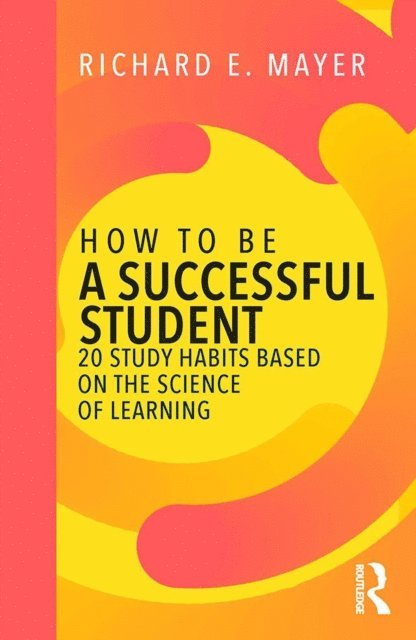
How to Be a Successful Student is a clear, concise, evidence-based guide to the habits that are scientifically proven to help people learn. Acclaimed educational psychologist Richard Mayer distils cutting edge research to focus on the 20 best study habits for college students, including habits for motivating yourself to learn, managing your learning environment, and effectively applying learning strategies. This accessible, practical book covers all three areas with evidence-based, approachable suggestions to help you become a successful student by developing effective study habits and rejecting ineffective ones.
2 602 kr
Skickas inom 10-15 vardagar
598 kr
Läs direkt efter köp
571 kr
Skickas
602 kr
Läs direkt efter köp
1 778 kr
Skickas inom 10-15 vardagar
3 708 kr
Skickas inom 10-15 vardagar
1 885 kr
Läs direkt efter köp
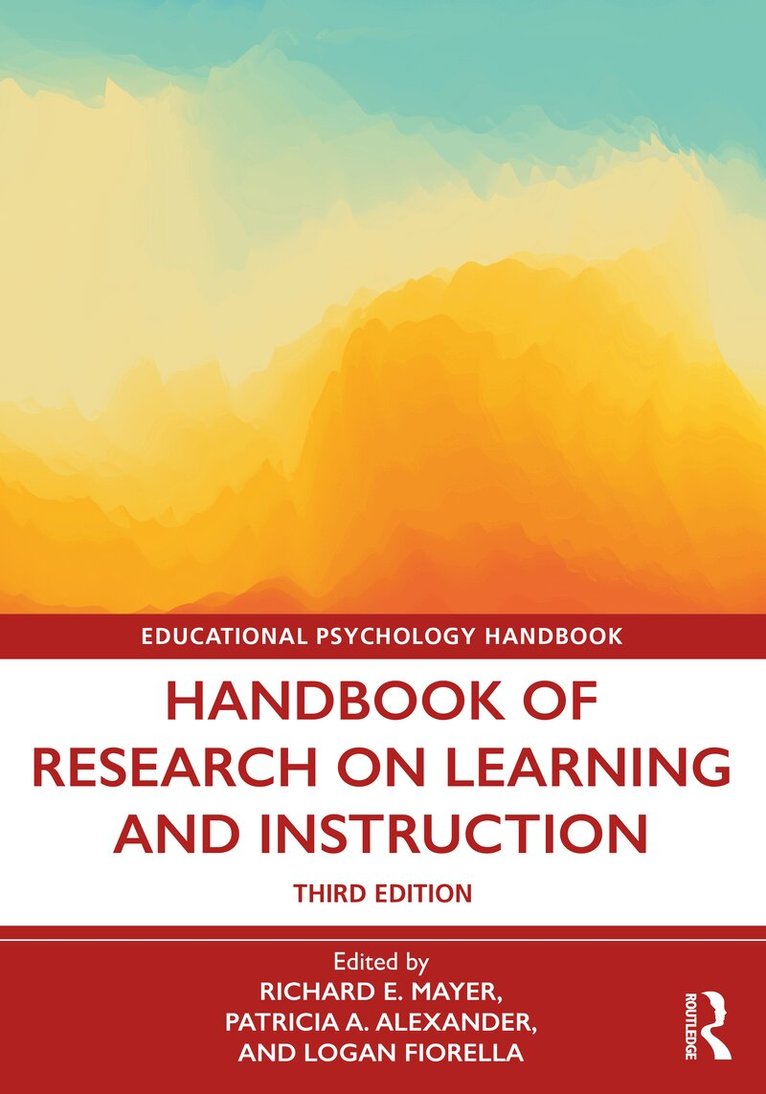
The third edition of the Handbook of Research on Learning and Instruction provides an overview of contemporary research advances in the science of learning (how people learn) and the science of instruction (how to help people learn). With chapters written by leading researchers from around the world, this volume examines learning and instruction in a variety of learning environments, including in and out of K-16 and adult learning classrooms. Contributors to this volume demonstrate how and why educational practice should be guided by research evidence concerning what works in instruction. The book is written at a level that is appropriate for students, researchers, and practitioners interested in evidence-based approaches to learning and instruction.
The book is divided into two sections: learning and instruction. The learning section consists of chapters on how people learn in a variety of domains, from reading and writing to science and math and beyond, as well as how people acquire the knowledge and processes required for critical thinking, self-regulation, motivation, and more. The instruction section consists of chapters on effective instructional methods—feedback, visualizations, active learning, self-explanation, collaboration, inquiry, games simulations, adaptive learning technologies, among others.
Each chapter in this third edition has been thoroughly revised to integrate recent advances in the field of educational psychology. Selected returning chapters have been merged for concision and comprehensiveness, while new chapters reflect cutting-edge insights into socioemotional learning, educational neuroscience, active learning in lecture classes, and generative learning strategies. As with the previous two editions, this foundational volume showcases the highest quality research being done on learning and instruction by traversing a broad array of academic domains, learning constructs, and instructional methods.
1 703 kr
Skickas inom 7-10 vardagar
1 194 kr
Skickas inom 7-10 vardagar
2 738 kr
Skickas inom 7-10 vardagar
1 188 kr
Läs direkt efter köp
1 188 kr
Läs direkt efter köp
847 kr
Skickas inom 7-10 vardagar
961 kr
Läs direkt efter köp
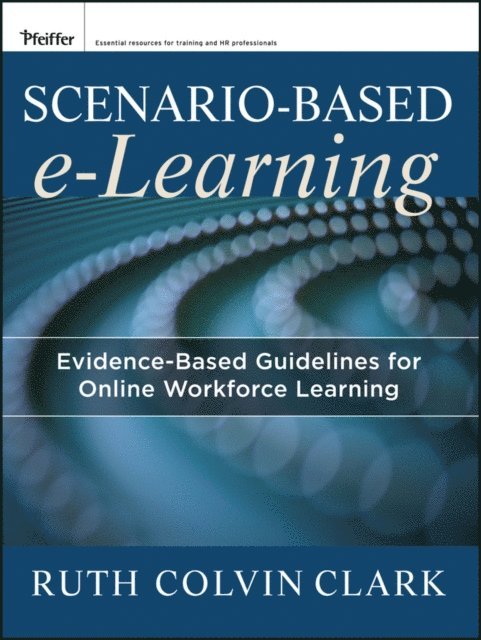
Scenario-Based e-Learning
Scenario-Based e-Learning offers a new instructional design approach that can accelerate expertise, build critical thinking skills, and promote transfer of learning. This book focuses on the what, when, and how of scenario-based e-learning for workforce learning. Throughout the book, Clark defines and demystifies scenario-based e-learning by offering a practical design model illustrated with examples from veterinary science, automotive troubleshooting, sales and loan analysis among other industries. Filled with helpful guidelines and a wealth of illustrative screen shots, this book offers you the information needed to:
Identify the benefits of a SBeL design for learners and learning outcomes Determine when SBeL might be appropriate for your needs Identify specific outcomes of SBeL relevant to common organizational goals Classify specific instructional goals into one or more learning domains Apply a design model to present content in a task-centered context Evaluate outcomes from SBeL lessons Identify tacit expert knowledge using cognitive task analysis techniques Make a business case for SBeL in your organizationPraise for Scenario-Based e-Learning
"Clark has done it againwith her uncanny ability to make complex ideas accessible to practitioners, the guidelines in this book provide an important resource for you to build your own online, problem-centered instructional strategies."
M. David Merrill, professor emeritus at Utah State University; author, First Principles of Instruction
"Clark''s wonderful book provides a solid explanation of the how, what, and why of scenario-based e-learning. The tools, techniques, and resources in this book provide a roadmap for creating engaging, informative scenarios that lead to tangible, measurable learning outcomes. If you want to design more engaging e-learning, you need to read this book."
Karl M. Kapp, Professor of Instructional Technology, Bloomsburg University; author, The Gamification of Learning and Instruction
982 kr
Läs direkt efter köp
Scenario-Based e-Learning
Scenario-Based e-Learning offers a new instructional design approach that can accelerate expertise, build critical thinking skills, and promote transfer of learning. This book focuses on the what, when, and how of scenario-based e-learning for workforce learning. Throughout the book, Clark defines and demystifies scenario-based e-learning by offering a practical design model illustrated with examples from veterinary science, automotive troubleshooting, sales and loan analysis among other industries. Filled with helpful guidelines and a wealth of illustrative screen shots, this book offers you the information needed to:
Identify the benefits of a SBeL design for learners and learning outcomes Determine when SBeL might be appropriate for your needs Identify specific outcomes of SBeL relevant to common organizational goals Classify specific instructional goals into one or more learning domains Apply a design model to present content in a task-centered context Evaluate outcomes from SBeL lessons Identify tacit expert knowledge using cognitive task analysis techniques Make a business case for SBeL in your organizationPraise for Scenario-Based e-Learning
"Clark has done it againwith her uncanny ability to make complex ideas accessible to practitioners, the guidelines in this book provide an important resource for you to build your own online, problem-centered instructional strategies."
M. David Merrill, professor emeritus at Utah State University; author, First Principles of Instruction
"Clark''s wonderful book provides a solid explanation of the how, what, and why of scenario-based e-learning. The tools, techniques, and resources in this book provide a roadmap for creating engaging, informative scenarios that lead to tangible, measurable learning outcomes. If you want to design more engaging e-learning, you need to read this book."
Karl M. Kapp, Professor of Instructional Technology, Bloomsburg University; author, The Gamification of Learning and Instruction
856 kr
Läs direkt efter köp
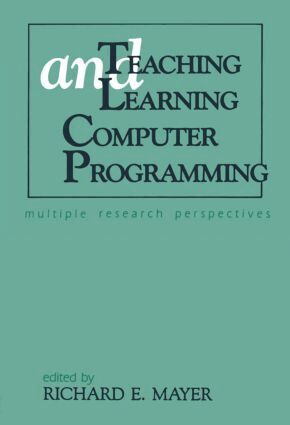
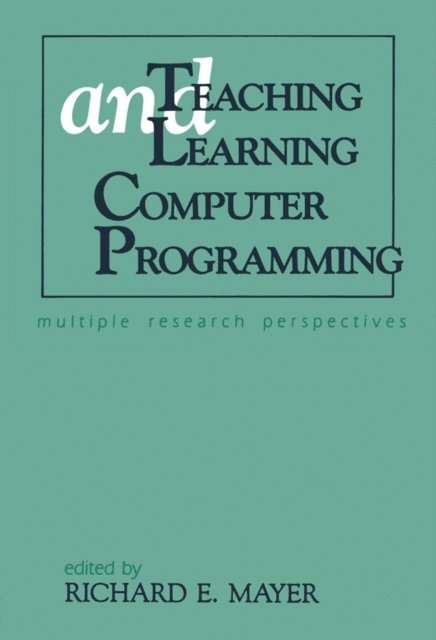
The influx of computer technology into classrooms during the past decade raises the questions -- how can we teach children to use computers productively and what effect will learning to program computers have on them? During this same period, researchers have investigated novice learning of computer programming. Teaching and Learning Computer Programming unites papers and perspectives by respected researchers of teaching and learning computer science while it summarizes and integrates major theoretical and empirical contributions. It gives a current and concise account of how instructional techniques affect student learning and how learning of programming affects students'' cognitive skills. This collection is an ideal supplementary text for students and a valuable reference for professionals and researchers of education, technology and psychology, computer science, communication, developmental psychology, and industrial organization.
2 455 kr
Skickas inom 10-15 vardagar
633 kr
Skickas inom 10-15 vardagar
744 kr
Skickas inom 10-15 vardagar
944 kr
Läs direkt efter köp
950 kr
Läs direkt efter köp