Inbunden, Engelska, 2024
1 560 kr
Skickas inom 5-8 vardagar
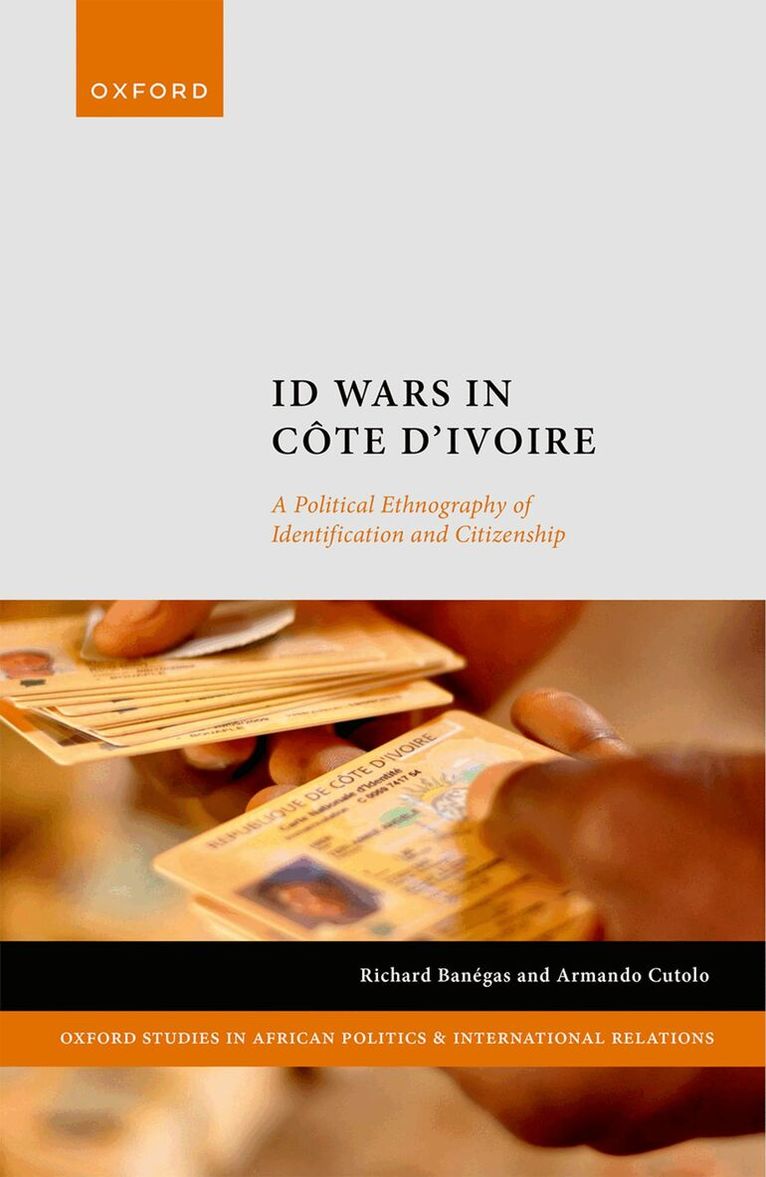
Identity documents provide rights to citizenship and social inclusion. They can also generate violence and conflicts. This book explores Côte d'Ivoire's 'ID war' as a paradigmatic case of a citizenship crisis, centered on the access to national identity cards and certificates. Using ethnographic and historical data, it shows how the documentary struggle for citizenship has continued in the post-crisis reconstruction, affecting the new policies of identification and registration based upon biometrics and new technologies. It describes how the latter have been overturned and reframed by the Ivorian society. Focusing on the production and negotiation of legal identities, the book delves into the social life of IDs and biometrics and describes the clandestine world of the 'margouillats', the corrupt brokers of the civil registry, the forms of documentary falsification aimed at taming legal and bureaucratic principles with the requirements of ordinary social life, the hidden practices of state apparatuses of identification and the local machinery of biometric registration, and the self-made censuses and systems of identification used by minorities seeking recognition in the public space. Through these ethnographic descriptions with a specific approach 'from below', the book shows that actual reforms supposed to depoliticize - and in the case of biometric technologies, to de-socialize - identification do not erase its constitutively political dimension. From a comparative perspective, the case of Côte d'Ivoire reveals the unprecedented revenge of the documentary state on the biometric state and encourages us to rethink their dyadic opposition in a more complex triangulation of identification, debt and recognition.Oxford Studies in African Politics and International Relations is a series for scholars and students working on African politics and International Relations and related disciplines. Volumes concentrate on contemporary developments in African political science, political economy, and International Relations, such as electoral politics, democratization, decentralization, the political impact of natural resources, the dynamics and consequences of conflict, and the nature of the continent's engagement with the East and West. Comparative and mixed methods work is particularly encouraged. Case studies are welcomed but should demonstrate the broader theoretical and empirical implications of the study and its wider relevance to contemporary debates. The series focuses on sub-Saharan Africa, although proposals that explain how the region engages with North Africa and other parts of the world are of interest. General Editors Nic Cheeseman, Peace Medie, and Ricardo Soares de Oliveira.