398 kr
Läs direkt efter köp
398 kr
Läs direkt efter köp
2 492 kr
Skickas inom 7-10 vardagar
1 962 kr
Läs direkt efter köp
1 962 kr
Läs direkt efter köp
2 526 kr
Skickas inom 10-15 vardagar
695 kr
Skickas inom 10-15 vardagar
830 kr
Skickas inom 7-10 vardagar
245 kr
Skickas inom 7-10 vardagar
277 kr
Läs direkt efter köp
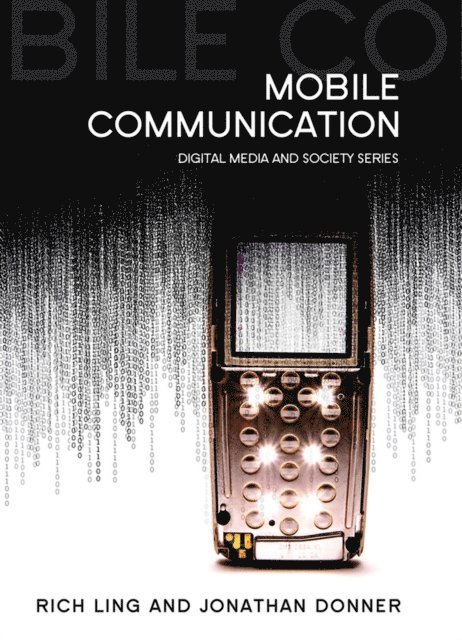
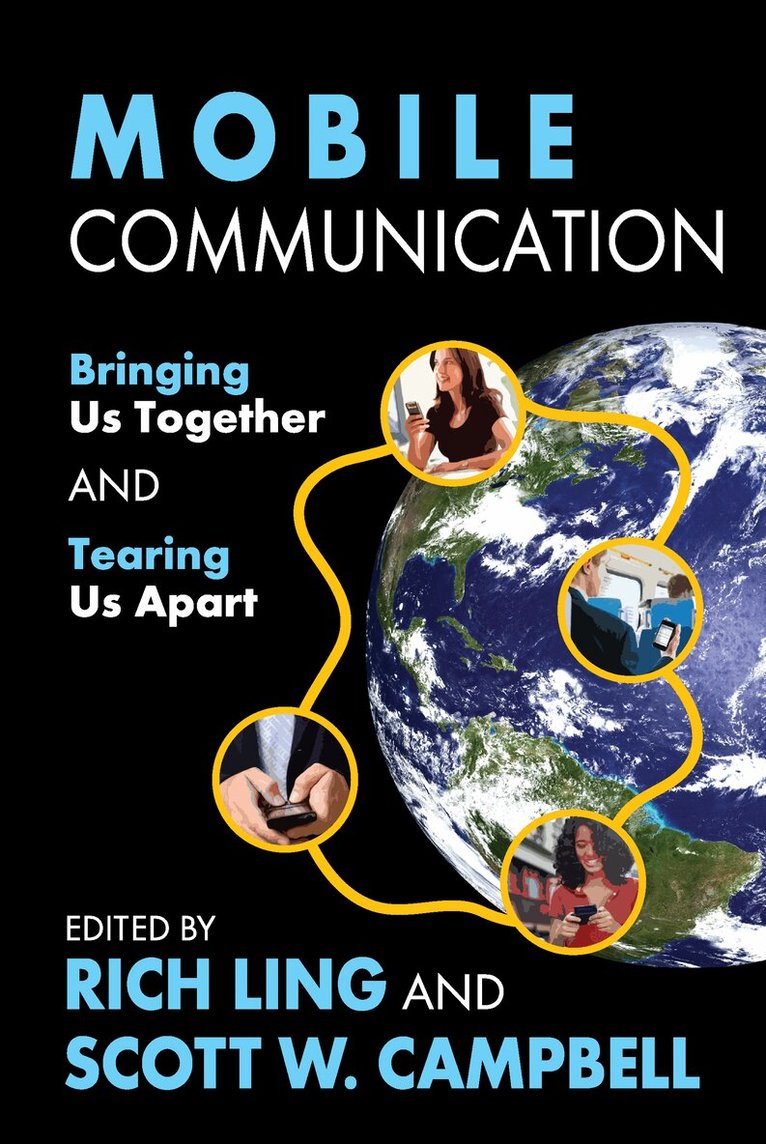
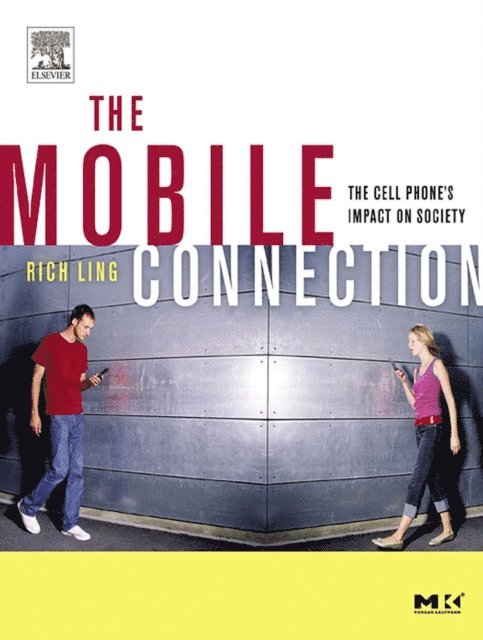
Written by two leading researchers in the field, this volume presents an overview of the mobile telephone as a social and cultural phenomenon. Research is summarized and made accessible though detailed descriptions of ten mobile users from around the world. These illustrate popular debates, as well as deeper social forces at work. The book concludes by considering three themes: 1) the tighter interlacing of daily activities 2) a revolution of control in the social sphere, and 3) the arrival of a world where the majority of its inhabitants are reachable, anytime, anywhere.
808 kr
Läs direkt efter köp
The rise of the smartphone has shifted news from fixed publication to a flow of updateable information. The chapters in this book investigate the implications for audiences, industry and society as news becomes mobile.
Wherever we go, news from anywhere can reach us on our smartphones. And wherever we are, we can search up information specific to that place. News is produced by mobile journalists (MoJos) as well as by citizens armed with smartphones, reporting breaking news from crisis zones where information is uncertain, or hyperlocal news from neighbourhoods where little happens. Mobile technology allows citizens to engage deeply with a cause or to skim headlines so they know a little about a lot of things. News is distributed on mobile networks and consumed by mobile audiences as they make their daily way through time and space coloured by their mobile devices. It is consumed in the niches of life. It intersects with place in new ways as geolocated news. It pursues us wherever we are through push notifications. And news has moved from fixed to fluid, a flow of updateable information rather than a regularly issued product. In this book, the contributors take varied viewpoints on mobility and news, its impact on what news is, how journalists produce it and how it fits into everybody’s everyday life.
The chapters in this book were originally published as a special issue of Digital Journalism.
814 kr
Läs direkt efter köp
The rise of the smartphone has shifted news from fixed publication to a flow of updateable information. The chapters in this book investigate the implications for audiences, industry and society as news becomes mobile.
Wherever we go, news from anywhere can reach us on our smartphones. And wherever we are, we can search up information specific to that place. News is produced by mobile journalists (MoJos) as well as by citizens armed with smartphones, reporting breaking news from crisis zones where information is uncertain, or hyperlocal news from neighbourhoods where little happens. Mobile technology allows citizens to engage deeply with a cause or to skim headlines so they know a little about a lot of things. News is distributed on mobile networks and consumed by mobile audiences as they make their daily way through time and space coloured by their mobile devices. It is consumed in the niches of life. It intersects with place in new ways as geolocated news. It pursues us wherever we are through push notifications. And news has moved from fixed to fluid, a flow of updateable information rather than a regularly issued product. In this book, the contributors take varied viewpoints on mobility and news, its impact on what news is, how journalists produce it and how it fits into everybody’s everyday life.
The chapters in this book were originally published as a special issue of Digital Journalism.
826 kr
Läs direkt efter köp
This volume maps the role of mobile communication in the daily lives of women around the globe, shedding light on “under-the-radar” use of mobile communication to display a nuanced understanding of social impacts that may affect the gender construction processes of women at the individual, institutional, and societal levels.
A global team of authors focus on the use of mobile communication by women in the lower rungs of their respective societies, as well as those who migrate with marginalized statuses within and across the national borders, to demonstrate how “under-the-radar” use of mobile communication is deeply inscribed within diversified social, cultural, historical, and political milieus. Illuminating the social structural constraints faced by women under their dynamic negotiation of agentic mobile phone use for self-empowerment, the chapters cover women’s economic activities, health care, well-being, migration, gendered identity, and the practices of different gender roles.
This comprehensive and interdisciplinary volume will be of interest to scholars and students of media and communication, new and digital media, mobile communication, gender studies, sociology, anthropology, political science, and cultural studies.
805 kr
Läs direkt efter köp
This volume maps the role of mobile communication in the daily lives of women around the globe, shedding light on “under-the-radar” use of mobile communication to display a nuanced understanding of social impacts that may affect the gender construction processes of women at the individual, institutional, and societal levels.
A global team of authors focus on the use of mobile communication by women in the lower rungs of their respective societies, as well as those who migrate with marginalized statuses within and across the national borders, to demonstrate how “under-the-radar” use of mobile communication is deeply inscribed within diversified social, cultural, historical, and political milieus. Illuminating the social structural constraints faced by women under their dynamic negotiation of agentic mobile phone use for self-empowerment, the chapters cover women’s economic activities, health care, well-being, migration, gendered identity, and the practices of different gender roles.
This comprehensive and interdisciplinary volume will be of interest to scholars and students of media and communication, new and digital media, mobile communication, gender studies, sociology, anthropology, political science, and cultural studies.
2 515 kr
Skickas inom 10-15 vardagar
707 kr
Skickas inom 10-15 vardagar
Taylor & Francis Ltd
21 282 kr
Skickas inom 10-15 vardagar
929 kr
Läs direkt efter köp
908 kr
Läs direkt efter köp
883 kr
Läs direkt efter köp
864 kr
Läs direkt efter köp
794 kr
Skickas inom 10-15 vardagar
2 515 kr
Skickas inom 10-15 vardagar
751 kr
Skickas inom 10-15 vardagar
1 286 kr
Skickas inom 10-15 vardagar
467 kr
Skickas inom 11-20 vardagar
640 kr
Skickas inom 7-10 vardagar
1 133 kr
Skickas inom 7-10 vardagar
459 kr
Läs direkt efter köp
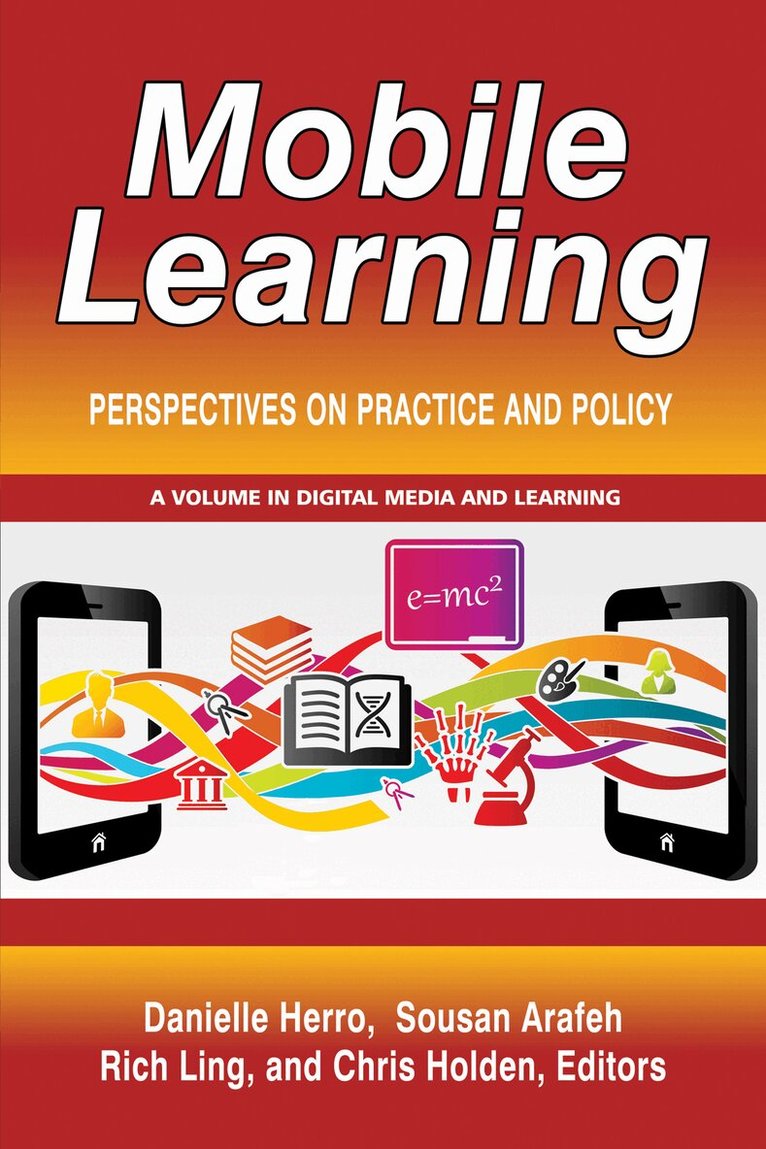
There can be no doubt that mobile technologies are here to stay. Global mobile traffic grew 74 percent in 2015 alone, with 563 million devices and connections added -- most of them tablets and Smartphones. This growth has been 4000-fold in the past 10 years and 400 million-fold in the past 15 years (Cisco, 2016). Mobile technologies permeate the lives of 21st century citizens as mainstays of organizational and institutional day-to-day operations, commerce, and communication and as tools used to support individuals’ personal, social, and career responsibilities. In both the corporate and educational worlds, e- and m-learning and marketing with mobile technologies are moving forward at breakneck speed with, in many cases, a blurring of traditional sector boundaries.
As neither the technology nor the uses are static, exploring practices and policies that underpin this quickly shifting mobile technology context is crucial for ensuring its intelligent, purposeful, and equitable use. This edited book provides a venue for researchers to share their work on mobile learning with a focus on uses for mobiles in informal settings and PK-20 classrooms, language learning, mobile gaming, leadership and policy issues, and what mobile learning in the future may be. It assists researchers and educators to consider and answer questions such as: What is “mobile learning” today? How can mobiles be used to enable learning? How is mobile learning crossing or connecting economic, social, and/or cultural sectors? How do specific cultural practices with media influence mobile learning (e.g., youth practices, educator practices, parent practices, community practices)? What are policy and leadership implications in supporting mobile learning? What policies, practices, and/or pedagogical approaches are necessary to move forward with mobiles in schools or universities? In what ways is mobile learning impacting education; including how students learn and teachers teach? What will/ should/might mobile learning look like in the future?
688 kr
Läs direkt efter köp
1 449 kr
Läs direkt efter köp