
Häftad, Engelska, 2025
422 kr
Skickas inom 7-10 vardagar
422 kr
Skickas inom 7-10 vardagar
1 970 kr
Skickas inom 7-10 vardagar
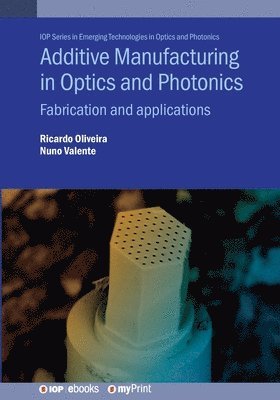
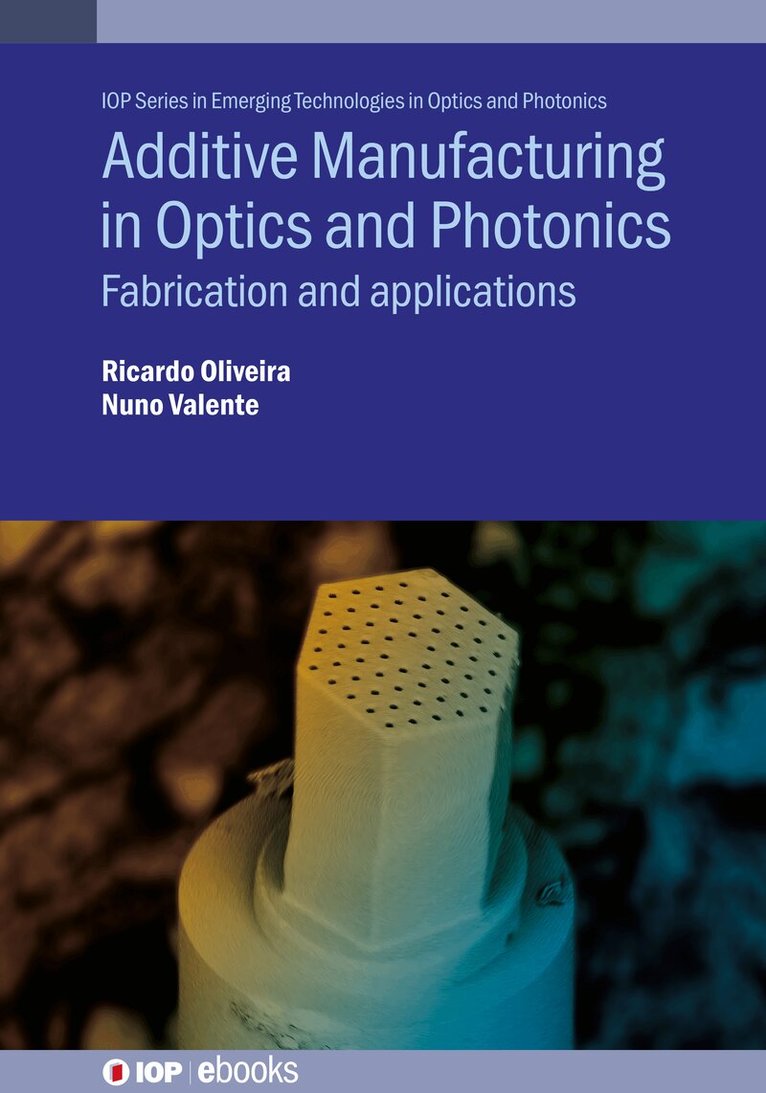
Additive Manufacturing (AM), commonly known as 3D printing, is reshaping how optical and photonic devices are designed and fabricated. This book introduces readers to the expanding role of AM in photonics, providing both foundational theory and practical insight into how these technologies are applied to create novel optical components. Aimed at graduate students and early-career researchers, the book surveys a broad spectrum of AM techniques relevant to photonics-including stereolithography, selective laser sintering, digital light processing and direct laser writing. Throughout, the book emphasizes the opportunities and current limitations of AM for photonic device engineering. It provides a practical entry point for those new to the field, while offering insights valuable to experienced researchers seeking to integrate 3D printing into their photonics workflow.
Key Features:
Emerging trends and prospects: Brings the most forefront progress in technologies and applications used in additive manufacturing for optics and photonics. Also, provides future prospects of this technology in different fields.
Wide range of industry applications: Additive manufacturing has huge potential to revolutionize optics and photonics fields. This will benefit several industries including telecommunications, sensors, healthcare, and aerospace, among others, that are strictly involved with optical technologies.
Demonstrates case studies: Shows the most up-to-date research works of successful applications and challenges of additive manufacturing in optics, offering practical insights and inspiration for people interested in learning or developing components and structures for optical projects.
Educational tool: It can serve as an educational resource for students, researchers, and professionals who want to learn more about the benefits of additive manufacturing in optics and photonics.
939 kr
Läs direkt efter köp
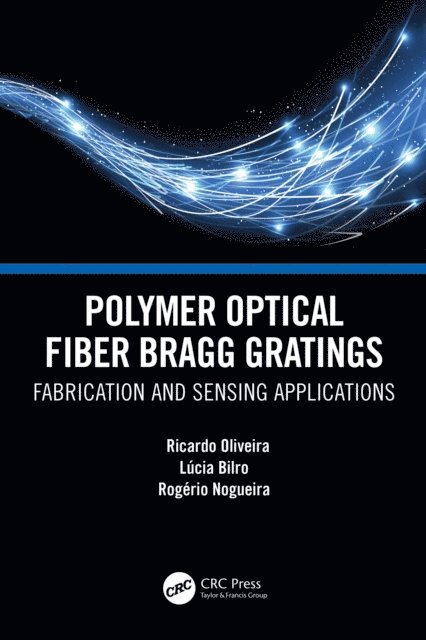
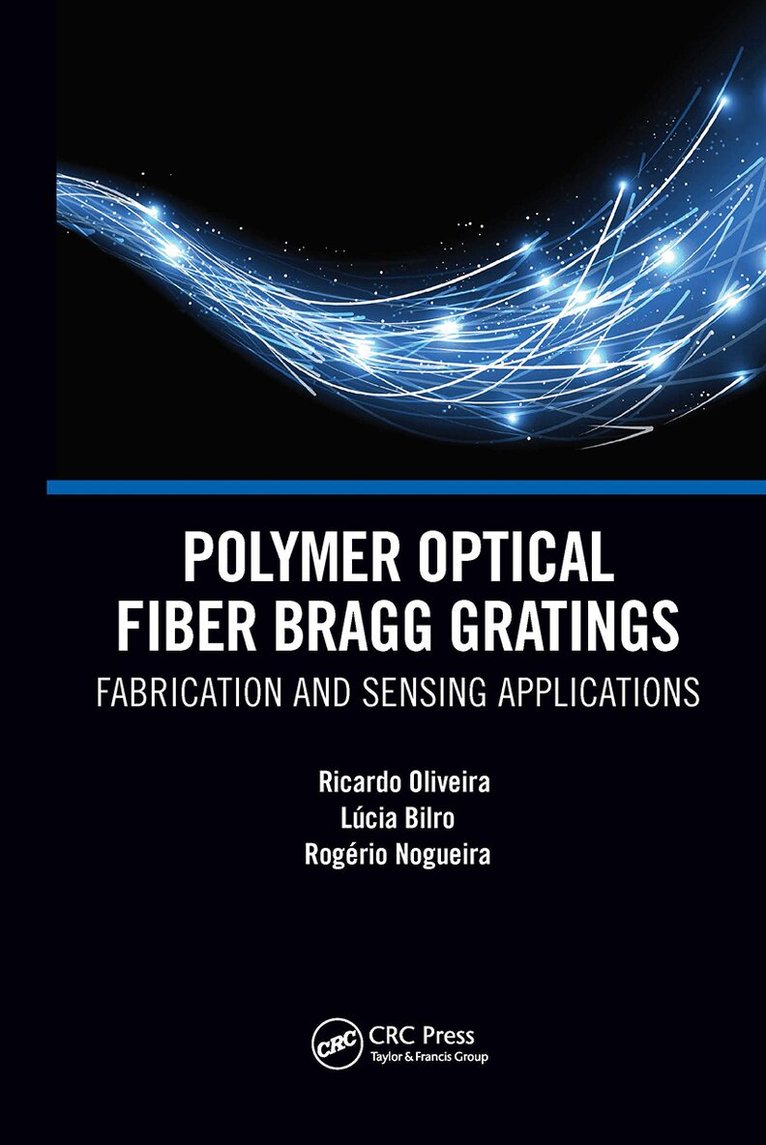
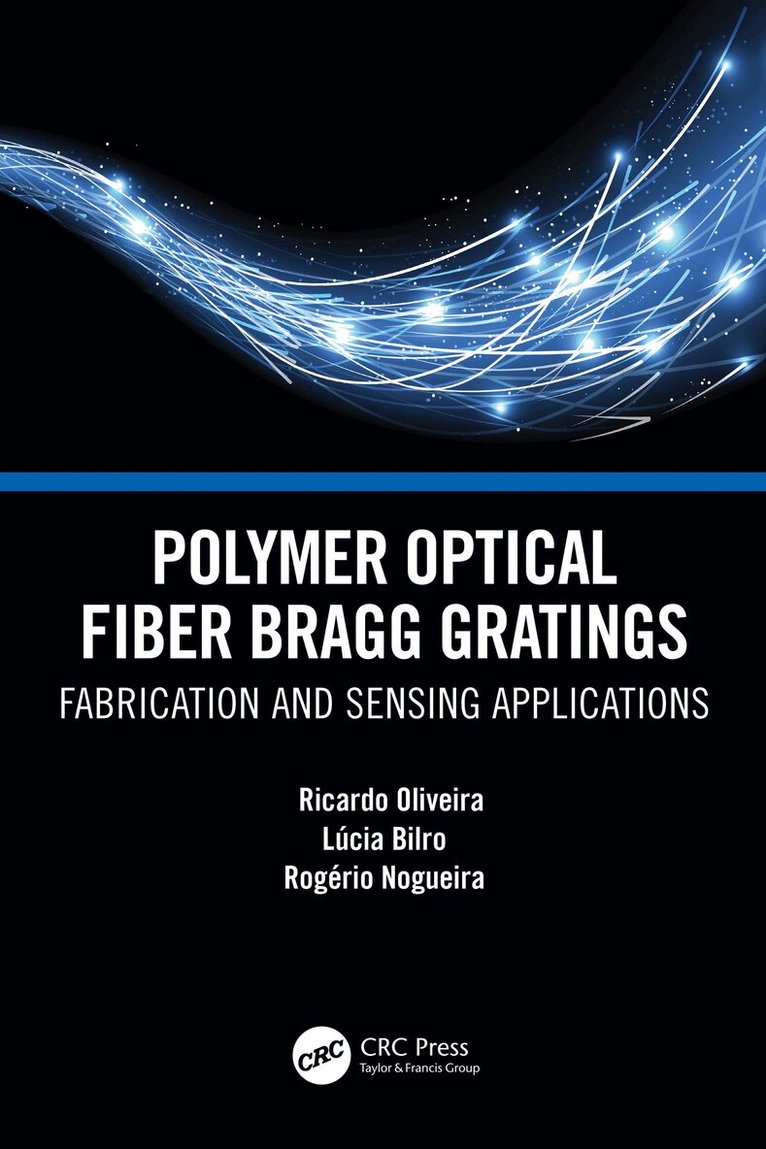
Polymer optical fibers (POFs) have been regarded as a viable alternative to silica fibers in a variety of sensing applications. Fiber optic sensors offer key advantages over other sensing technologies, which include immunity to electromagnetic interference, compact, lightweight, multiplexing capability, and higher sensitivity. This book gives an overview of the polymer optical fiber Bragg grating (POFBG) technology over the last 20 years, covering aspects related to the fiber Bragg grating fabrication and also sensing applications. The book is split into five chapters, and it is written in such a way that can provide a comprehensive and simple route to new users, scientists and engineers working or wishing to work in the field of POFBGs:
Describes the systems commonly employed for producing fiber Braggs gratings (FBGs) in silica fibers that can be used for the production of POFBGs;
Explores different laser sources for the inscription of POFBGs;
Explores the capability of using this technology at the visible and infrared region, in different fiber types (e.g., step-index, microstructured, unclad, highly birefringent) and in fibers composed of different polymer materials such as PMMA, doped PMMA, PS and ZEONEX;
Reports the fabrication of different types of POF gratings, such as uniform, phase-shifted, tilted, chirped, and long-period gratings;
Shows the opportunities of POFBGs for a variety of sensing applications.
The insight to the use of POFBGs provides a vision for the opportunities of this fiber optic technology.
963 kr
Läs direkt efter köp
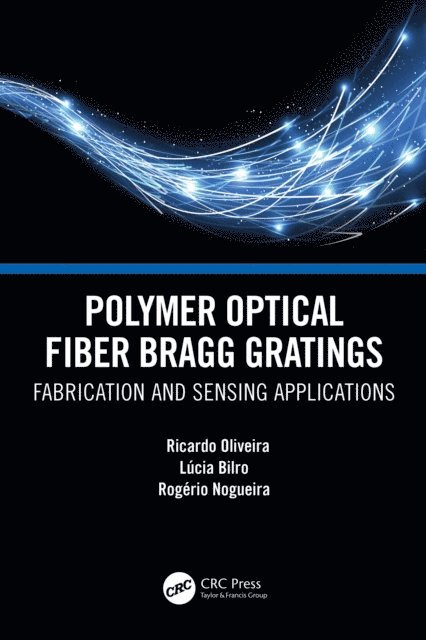
Polymer optical fibers (POFs) have been regarded as a viable alternative to silica fibers in a variety of sensing applications. Fiber optic sensors offer key advantages over other sensing technologies, which include immunity to electromagnetic interference, compact, lightweight, multiplexing capability, and higher sensitivity. This book gives an overview of the polymer optical fiber Bragg grating (POFBG) technology over the last 20 years, covering aspects related to the fiber Bragg grating fabrication and also sensing applications. The book is split into five chapters, and it is written in such a way that can provide a comprehensive and simple route to new users, scientists and engineers working or wishing to work in the field of POFBGs:
Describes the systems commonly employed for producing fiber Braggs gratings (FBGs) in silica fibers that can be used for the production of POFBGs;
Explores different laser sources for the inscription of POFBGs;
Explores the capability of using this technology at the visible and infrared region, in different fiber types (e.g., step-index, microstructured, unclad, highly birefringent) and in fibers composed of different polymer materials such as PMMA, doped PMMA, PS and ZEONEX;
Reports the fabrication of different types of POF gratings, such as uniform, phase-shifted, tilted, chirped, and long-period gratings;
Shows the opportunities of POFBGs for a variety of sensing applications.
The insight to the use of POFBGs provides a vision for the opportunities of this fiber optic technology.
827 kr
Skickas inom 10-15 vardagar
2 526 kr
Skickas inom 10-15 vardagar

44 kr
Läs direkt efter köp

1 638 kr
Skickas inom 10-15 vardagar

2 111 kr
Läs direkt efter köp

1 632 kr
Skickas inom 10-15 vardagar