The history of Peru unfolds in the lives of the descendants of seven children fathered by a Catholic priest and his longtime secret lover.Renato Cisneros's great-great-grandmother Nicolasa bore seven children by her long-term secret love, who was also her priest, raising them alone in nineteenth century Peru. More than a century later, Renato, the descendent of that clandestine affair, struggles to wring information about his origins out of recalcitrant relatives, whose foibles match the adventures and dalliances of their ancestors. As buried secrets are brought into the light, the story of Nicolasa's progeny unfolds, bound up with key moments in the development of the Republic of Peru since its independence.
The history of Peru unfolds in the lives of the descendants of seven children fathered by a Catholic priest and his longtime secret lover.Renato Cisneros's great-great-grandmother Nicolasa bore seven children by her long-term secret love, who was also her priest, raising them alone in nineteenth century Peru. More than a century later, Renato, the descendent of that clandestine affair, struggles to wring information about his origins out of recalcitrant relatives, whose foibles match the adventures and dalliances of their ancestors. As buried secrets are brought into the light, the story of Nicolasa's progeny unfolds, bound up with key moments in the development of the Republic of Peru since its independence.
Matías Roeder, a young man with an Italian father, German mother, and a sense of stagnation he is desperate to escape from, hops a boat from Peru to New York with vague plans but a firm intention to never go home again. This familiar story of migration—the odd jobs, the romances, the Bowery bars—goes sideways when Japan bombs Pearl Harbor and he joins the US Air Force as part of a bombing crew. Matías is now Matthew, in the belly of a B-17, remade by the vertigo and rawness of aerial warfare. But the past comes roaring back when he trains his sights on his beloved grandfather’s hometown of Hamburg. Matías’s reckoning unfolds in the interstices of other stories, swapped by two more Peruvians – a journalist and a cabdriver – stuck in a present-day Madrid traffic jam, whose lives in Lima are now as distant as World War II was to their homeland. The World We Saw Burning is both a striking account of war and a reflection on identity and uprootedness in a time when everything seems on the verge of exploding or disappearing forever.
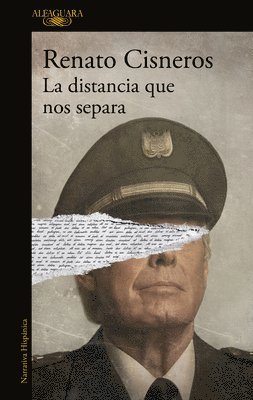
‘This is an impressive book. In writing it the author demonstrates great talent, as well as great courage.’ —Mario Vargas LlosaIf I succeed in understanding who he was before I was born, perhaps I will be able to understand who I am now that he is dead…In this sprawling family saga stretching across Latin America, a son embarks on a journey to understand his complex relationship with his father and how it shaped the man he is today. Recalling Gabriel García Márquez’s One Hundred Years of Solitude and Isabel Allende’s House of the Spirits , the renowned journalist and writer Renato Cisneros probes deep into his own family history to try to come to terms with his father, General Luis Federico ‘The Gaucho’ Cisneros, a leading, controversial figure in the oppressive military regime that held power in Peru during the 1970s and 1980s, a tortuous period marked by state-sanctioned terrorism and the rise of the Shining Path.Selling over 35,000 copies in Peru alone, The Distance Between Us is at once excruciating in its honesty and deeply moving in its universal relevance. Selected for a slew of international prizes, it is now available in English for the first time.
‘This is an impressive book. In writing it the author demonstrates great talent, as well as great courage.’ —Mario Vargas LlosaIf I succeed in understanding who he was before I was born, perhaps I will be able to understand who I am now that he is dead…In this sprawling family saga stretching across Latin America, a son embarks on a journey to understand his complex relationship with his father and how it shaped the man he is today. Recalling Gabriel García Márquez’s One Hundred Years of Solitude and Isabel Allende’s House of the Spirits , the renowned journalist and writer Renato Cisneros probes deep into his own family history to try to come to terms with his father, General Luis Federico ‘The Gaucho’ Cisneros, a leading, controversial figure in the oppressive military regime that held power in Peru during the 1970s and 1980s, a tortuous period marked by state-sanctioned terrorism and the rise of the Shining Path.Selling over 35,000 copies in Peru alone, The Distance Between Us is at once excruciating in its honesty and deeply moving in its universal relevance. Selected for a slew of international prizes, it is now available in English for the first time.
Als Sohn eines der wichtigsten Generäle der peruanischen Militärdiktatur, des Generalobersts Luis Federico Cisneros, genannt El Gaucho, hatte Renato Ciscneros Einblick in die Vorgänge hinter den Kulissen, die uns Europäern praktisch unbekannt sind. Doch der berüchtigte El Gaucho hütete noch ein ganz anderes, schmerzhaftes Geheimnis: die große, ihm verwehrte Liebe seiner Jugend. Renato Cisneros erzählt von der Suche nach diesem Geheimnis seines Vaters.Sie offenbart, wie der Konflikt zwischen Leidenschaft und Konvention Menschen über Generationen hinweg formt, deformiert und wiederkehrende Muster erzeugt. Jahrelange Recherche fließt hier zusammen zu einem Fresko, das in gleicher Weise persönlich, historisch und universal ist.So spiegelt der Roman auch den Wandel, den Südamerika durchläuft: Eine quälende, aber auch befreiende Auseinandersetzung mit der Vergangenheit. Quälend, da El Gaucho seinen Freunden Jorge Videla und Augusto Pinochet in nichts nachstand. Befreiend, da die Entdeckung des Dramas, das diesen gefürchteten Mann ein Leben lang verfolgte, dem Sohn die Liebe zum eigenen Vater rettet. Als eine Anatomie des Bösen wird das Buch selbst zum Dokument einer Befreiungauch für seine Leser, weil es Mitgefühl mit jenen weckt, die selbst keines zu empfinden vermögen.2018 Pen Translates Awards2017 Nominiert für den Prix MédicisAusgezeichnet mit dem Prix Transfuge du meilleur roman de Littérature HispanophoneFinalist für den Vargas Llosa Biannual Award