2 478 kr
Skickas inom 10-15 vardagar
2 478 kr
Skickas inom 10-15 vardagar
2 478 kr
Skickas inom 10-15 vardagar
791 kr
Läs direkt efter köp
This book studies the state of tribal education in India. India has the single largest tribal population in the world, yet the tribal community remains one of the most economically impoverished and marginalized groups in the country.
The volume:
Examines the educational status of the tribal population and studies developmental issues such as unemployment, illiteracy, caste discrimination, and inequality faced by the community Studies the implementation and execution of welfare schemes, initiatives, and reforms in place to tackle issues faced by tribal students and identifies loopholes in the various centrally sponsored schemes Emphasizes the importance of the Right to Education Act and presents policy implications for the educational uplift of India’s very many millions of tribal peopleA critical study of the Indian education system, this book will be indispensable to students and researchers of education, education policy, minority studies, indigenous studies, sociology of education, and South Asian studies.
774 kr
Läs direkt efter köp
This book studies the state of tribal education in India. India has the single largest tribal population in the world, yet the tribal community remains one of the most economically impoverished and marginalized groups in the country.
The volume:
Examines the educational status of the tribal population and studies developmental issues such as unemployment, illiteracy, caste discrimination, and inequality faced by the community Studies the implementation and execution of welfare schemes, initiatives, and reforms in place to tackle issues faced by tribal students and identifies loopholes in the various centrally sponsored schemes Emphasizes the importance of the Right to Education Act and presents policy implications for the educational uplift of India’s very many millions of tribal peopleA critical study of the Indian education system, this book will be indispensable to students and researchers of education, education policy, minority studies, indigenous studies, sociology of education, and South Asian studies.
725 kr
Läs direkt efter köp
This book is an in-depth analysis of the educational development of tribals in India. Education as Development: Deprivation, Poverty, Dispossession is a significant new addition for understanding educational and economic setbacks experienced by the marginalized in India.
The volume:
Focuses on how the social, economic, and education systems have evolved over time in India and identifies the scope of development in these areas Provides a rational structure for readers to understand how the Adivasi in India can be made to fit in the modern-designed education system Highlights the problems of the marginalized – such as income inequality, education, health, housing, governance, civil society environment and infrastructure, and others which hamper their overall growthThis book will be of great interest to students, researchers, and policy makers in the fields of education, minority studies, indigenous studies, sociology of education, and South Asian studies.
741 kr
Läs direkt efter köp
This book is an in-depth analysis of the educational development of tribals in India. Education as Development: Deprivation, Poverty, Dispossession is a significant new addition for understanding educational and economic setbacks experienced by the marginalized in India.
The volume:
Focuses on how the social, economic, and education systems have evolved over time in India and identifies the scope of development in these areas Provides a rational structure for readers to understand how the Adivasi in India can be made to fit in the modern-designed education system Highlights the problems of the marginalized – such as income inequality, education, health, housing, governance, civil society environment and infrastructure, and others which hamper their overall growthThis book will be of great interest to students, researchers, and policy makers in the fields of education, minority studies, indigenous studies, sociology of education, and South Asian studies.
681 kr
Skickas inom 10-15 vardagar
637 kr
Skickas inom 10-15 vardagar
585 kr
Skickas inom 7-10 vardagar
1 604 kr
Läs direkt efter köp
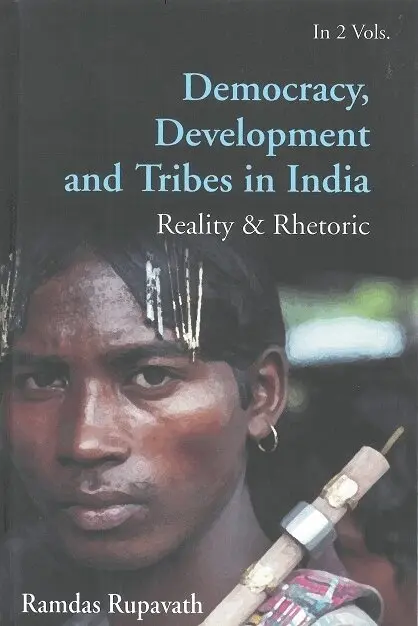
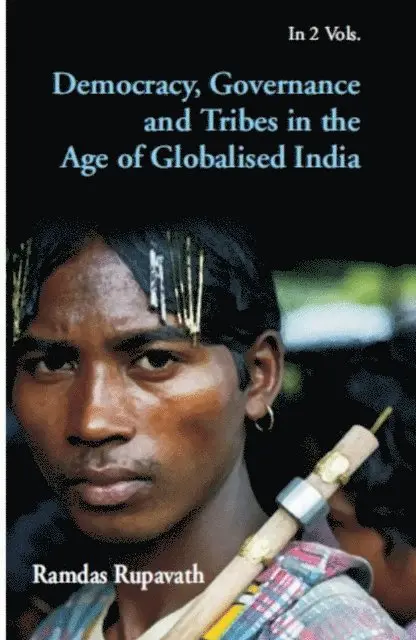
This book is putting together various issues from different states in India. The Tribal communities in India represent different levels of the deprivation in a larger, regional, and globalized world. This book aims to place the concept of democracy, development in the tribal context. This volume basically focuses to understand contemporary tribal societies which require a basic appreciation of the historical processes which have been determined the course of successive changes in economic, social cultural, ideological and political life of the tribes. Indian state and governments are talked about as models of federalism in a large and multinational society, ensuring rights of ethnic and religious groups in a truly pluralistic society, and striving for social justice in a society marked by social hierarchies for a long time. However the democratic experiment has notificant challenges, namely that of ensuring inclusive development. Economic equality, social justice, cultural pluralism, human rights, dignity and security are all important aspects of development which have been consolidated and expanded through the existing structure of participatory democracy. But this has not always been an easy task. Indian democracy has been intensively analysesd, debated and criticized for a long time. However, democracy is not only just an elections and government formation process; it is more about values, habits of thoughts and practices, democracy need not electoral but replacement with social justice. Through democratic method existing unequal social, economic and political justice situation can be removed. The tribal's are most affected people in such democratic set up with developmental approach. The new tribal politics will be based on two things the resource politics of the Adivasis and survival politics of the informal sector. This book will be of interest to students and Scholars of Democracy and Development studies, Political Science, Anthropology, and Sociology, Political economy, Tribal studies, Rural Development, and Gender studies. It is widely applicable to all sections of the marginalized whether socially, economically, culturally, academically, politically and Administrators and policy makers.