

Häftad, Engelska, 2019
318 kr
Skickas inom 3-6 vardagar
318 kr
Skickas inom 3-6 vardagar

310 kr
Skickas
268 kr
Skickas inom 7-10 vardagar

254 kr
Skickas

79 kr
Läs direkt efter köp
271 kr
Lyssna direkt efter köp

129 kr
Skickas

299 kr
Skickas

88 kr
Läs direkt efter köp

257 kr
Lyssna direkt efter köp

137 kr
Skickas

86 kr
Läs direkt efter köp

243 kr
Lyssna direkt efter köp

140 kr
Skickas

290 kr
Kommande
125 kr
Läs direkt efter köp
147 kr
Läs direkt efter köp
407 kr
Skickas inom 7-10 vardagar
335 kr
Skickas inom 3-6 vardagar
2 497 kr
Skickas inom 10-15 vardagar
1 281 kr
Skickas inom 10-15 vardagar
611 kr
Skickas inom 3-6 vardagar
397 kr
Skickas inom 7-10 vardagar

440 kr
Skickas inom 7-10 vardagar
266 kr
Skickas inom 7-10 vardagar

331 kr
Skickas inom 10-15 vardagar
268 kr
Läs direkt efter köp
814 kr
Läs direkt efter köp
Until very recently, studies of the environmental movement have been heavily biased towards the North Atlantic worlds. There was a common assumption amongst historians and sociologists that concerns over such issues as conservation or biodiversity were the exclusive preserve of the affluent westerner: the ultimate luxury of the consumer society. Citizens of the world''s poorest countries, ran the conventional wisdom, had nothing to gain from environmental concerns; they were ''too poor to be green'', and were attending to the more urgent business of survival. Yet strong environmental movements have sprung up over recent decades in some of the poorest countries in Asia and Latin America, albeit with origins and forms of expression quite distinct from their western counterparts. In Varieties of Environmentalism, Guha and Matinez-Alier seek to articulate the values and orientation of the environmentalism of the poor, and to explore the conflicting priorities of South and North that were so dramatically highlighted at the Rio Earth Summit in 1992. Essays on the ''ecology of affluence'' are also included, placing ion context such uniquely western phenomena as the ''cult of wilderness'' and the environmental justice movement. Using a combination of archival and field data,. The book presents analyses of environmental conflicts and ideologies in four continents: North and South America, Asia and Europe. The authors present the nature and history of environmental movements in quite a new light, one which clarifies the issues and the processes behind them. They also provide reappraisals for three seminal figures, Gandhi, Georgescu-Roegen and Mumford, whose legacy may yet contribute to a greater cross-cultural understanding within the environmental movements.
808 kr
Läs direkt efter köp
Until very recently, studies of the environmental movement have been heavily biased towards the North Atlantic worlds. There was a common assumption amongst historians and sociologists that concerns over such issues as conservation or biodiversity were the exclusive preserve of the affluent westerner: the ultimate luxury of the consumer society. Citizens of the world''s poorest countries, ran the conventional wisdom, had nothing to gain from environmental concerns; they were ''too poor to be green'', and were attending to the more urgent business of survival. Yet strong environmental movements have sprung up over recent decades in some of the poorest countries in Asia and Latin America, albeit with origins and forms of expression quite distinct from their western counterparts. In Varieties of Environmentalism, Guha and Matinez-Alier seek to articulate the values and orientation of the environmentalism of the poor, and to explore the conflicting priorities of South and North that were so dramatically highlighted at the Rio Earth Summit in 1992. Essays on the ''ecology of affluence'' are also included, placing ion context such uniquely western phenomena as the ''cult of wilderness'' and the environmental justice movement. Using a combination of archival and field data,. The book presents analyses of environmental conflicts and ideologies in four continents: North and South America, Asia and Europe. The authors present the nature and history of environmental movements in quite a new light, one which clarifies the issues and the processes behind them. They also provide reappraisals for three seminal figures, Gandhi, Georgescu-Roegen and Mumford, whose legacy may yet contribute to a greater cross-cultural understanding within the environmental movements.

1 513 kr
Läs direkt efter köp
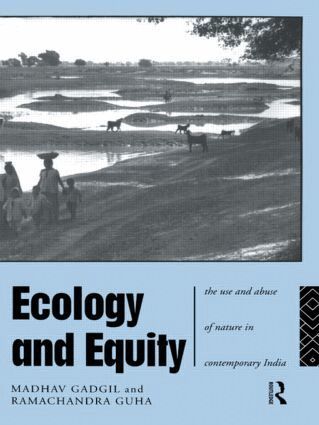
Environmental destruction is seen a matter of worldwide concern but as a Third World problem.Ecology and Equity explores the most ecologically complex country in the world. India''s peoples range from technocrats to hunter-gathers and its environments from dense forest to wasteland. The bookanalyses the use and abuse of nature on the sub-continent to reveal the interconnections of social and environmental conflict on the global scale. The authors argue that the root of this conflict is competition within different social groups and between different economic interests for natural resources. Radical both in its critique of the causes of crisis in India and in its proposals for ecological reform, Ecology and Equity is essential reading for all concerned for the Third World''s in the world.