456 kr
Läs direkt efter köp
456 kr
Läs direkt efter köp
453 kr
Läs direkt efter köp
671 kr
Skickas inom 7-10 vardagar
2 324 kr
Skickas inom 10-15 vardagar
900 kr
Skickas inom 10-15 vardagar
594 kr
Skickas inom 10-15 vardagar
690 kr
Skickas inom 10-15 vardagar
827 kr
Skickas inom 10-15 vardagar
2 489 kr
Skickas inom 10-15 vardagar
942 kr
Läs direkt efter köp
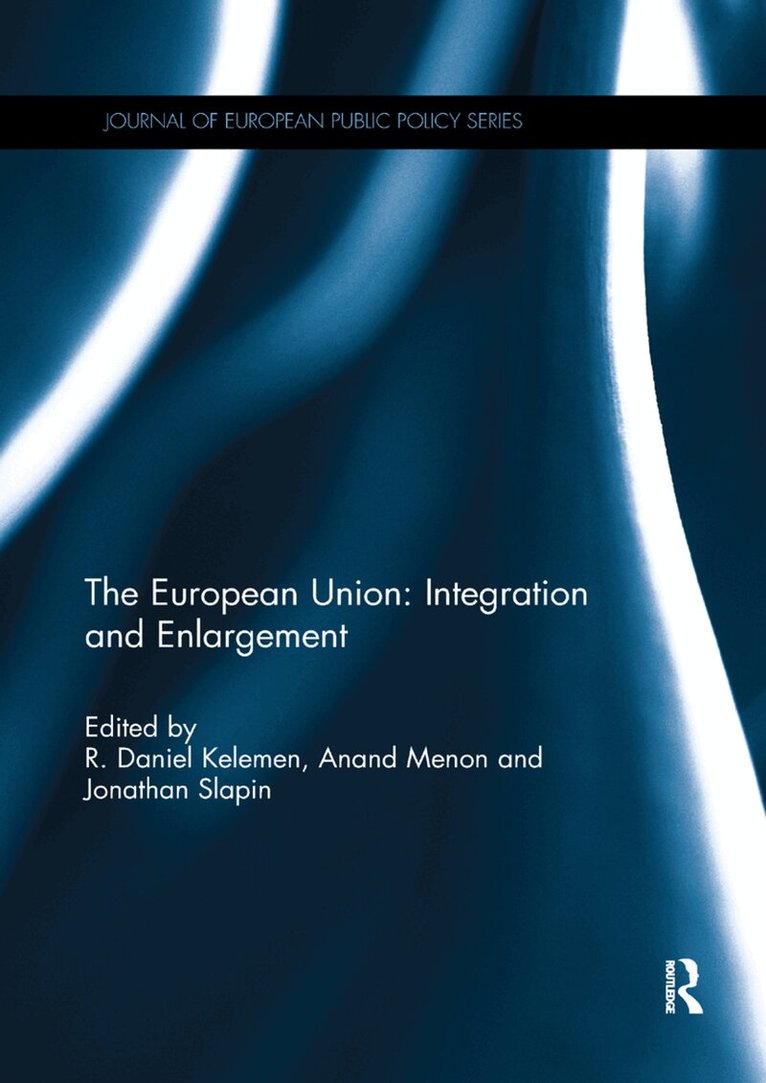
This book explores one of the central challenges facing the EU today – how to reconcile enlargement with the pursuit of a stronger and more effective European Union. While the relationship between widening and deepening has been recognized for years as one of the big questions in the field of European integration, existing theoretical and empirical analyses of this relationship suffer from a variety of shortcomings. This book brings together a group of EU scholars who significantly advance our understanding of the relationship between widening and deepening. The contributors challenge a variety of ‘common wisdoms’ concerning the relationship between widening and deepening and offer nuanced theoretical and empirical analysis of the relationship between these two vital dimensions of European integration. Collectively, the contributors to this volume offer the most comprehensive picture available to date of the multi-faceted relationship between widening and deepening.
This book was published as a special issue of the Journal of European Public Policy.
963 kr
Läs direkt efter köp
This book explores one of the central challenges facing the EU today – how to reconcile enlargement with the pursuit of a stronger and more effective European Union. While the relationship between widening and deepening has been recognized for years as one of the big questions in the field of European integration, existing theoretical and empirical analyses of this relationship suffer from a variety of shortcomings. This book brings together a group of EU scholars who significantly advance our understanding of the relationship between widening and deepening. The contributors challenge a variety of ‘common wisdoms’ concerning the relationship between widening and deepening and offer nuanced theoretical and empirical analysis of the relationship between these two vital dimensions of European integration. Collectively, the contributors to this volume offer the most comprehensive picture available to date of the multi-faceted relationship between widening and deepening.
This book was published as a special issue of the Journal of European Public Policy.
813 kr
Läs direkt efter köp
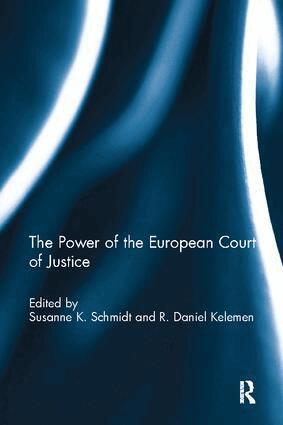
The European Court of Justice (ECJ) has played a vital role in promoting the process of European integration. In recent years, however, the expansion of EU law has led it to impact ever more politically sensitive issues, and controversial ECJ judgments have elicited unprecedented levels of criticism. Can we expect the Court to sustain its role as a motor of deeper integration without Member States or other countervailing forces intervening? To answer this question, we need to revisit established explanations of the Court’s power to see if they remain viable in the Court’s contemporary environment. We also need to better understand the ultimate limits of the Court’s power – the means through which and extent to which national governments, national courts, litigants and the Court’s other interlocutors attempt to influence the Court and to limit the impact of its rulings.
In this book, leading scholars of European law and politics investigate how the ECJ has continued to support deeper integration and whether the EU is experiencing an increase in countervailing forces that may diminish the Court’s ability or willingness to act as a motor of integration.
This book was published as a special issue of the Journal of European Public Policy.
1 099 kr
Skickas inom 3-6 vardagar