Rabindranath Tagore’s profound meditations on life, nature, grace and brokenness in the Gitanjali won him the Nobel Prize for Literature in 1913. Sing of Life is Priya Sarukkai Chabria’s virtuosic revisioning of this world classic. Limned with daring, intuition and poetic imagination, it rings true to Tagore’s search for spiritual splendour, and her own questing. Chabria writes in the introduction to the work, ‘I believe a great poem is one that often serves as a draft or raft for someone else’s poem. Or that is how it should be: a spark or a shift in another’s consciousness.’
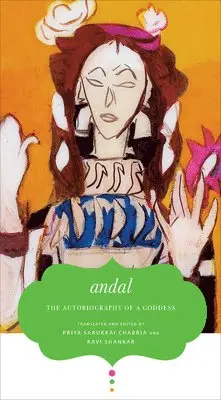
Eighth century Tamil poet and founding saint Andal is believed to have been found as a baby underneath a holy basil plant in the temple garden of Srivilliputhur. As a young woman she fell deeply in love with Lord Vishnu, composing fervent poems and songs in his honor and, according to custom, eventually marrying the god himself. The Autobiography of a Goddess is Andal's entire corpus, composed before her marriage to Vishnu, and it cements her status as the South Indian corollary to Mirabai, the saint and devotee of Sri Krishna. The collection includes the Thiruppavai, a song still popular in congregational worship, thirty pasuram (stanzas) sung before Lord Vishnu, and the less-translated, rapturously erotic Nacchiyar Thirumoli. Priya Sarrukai Chabria and Ravi Shankar serve as master translators for the volume, employing a radical new method for that revitalizes classical and spiritual verse by shifting it into a new contemporary poetic idiom in English. Many of Andal's pieces are translated collaboratively, giving readers multiple perspectives on the rich sonic and philosophical complexity of classical Tamil.Andal: The Autobiography of a Goddess is a powerful expression of female sexuality in the Indian spiritual tradition-one newly available to a general readership in this fresh new translation.
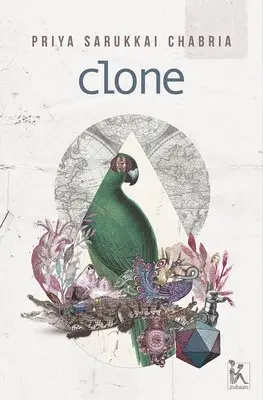
A revolutionary take on the classic dystopian science fiction novel, Clone inaugurates a new kind of writing in India. Priya Sarukkai Chabria weaves the tale of a fourteenth-generation clone in twenty-fourth-century India who struggles against imposed amnesia and sexual taboos in a species-depleted world. With resonant and allusive prose, Chabria takes us along as the clone hesitantly navigates through a world rendered unfamiliar by her expanding consciousness. This slow transformation is mirrored in the way both she and her world appear to the reader. The necessary questions Chabria raises revolve around a shared humanity, the necessity of plurality of expression, the wonder of love, and the splendor of difference. Clone’s adventurous forays into vastly different times, spaces, and consciousness—animal, human, and post-human—build a poetic story about compassion and memory in the midst of all that is grotesque.
Rabindranath Tagore's profound meditations on life, nature, grace and brokenness in the Gitanjali won him the Nobel Prize for Literature in 1913. Sing of Life is Priya Sarukkai Chabria's virtuosic revisioning of this world classic. Limned with daring, intuition and poetic imagination, it rings true to Tagore's search for spiritual splendour, and her own questing. Chabria writes in the introduction to the work, I believe a great poem is one that often serves as a draft or raft for someone else's poem. Or that is how it should be: A spark or a shift in another's consciousness. In this inspired linguistic experiment, she seeks to capture that spark and give it new life by chiselling Tagore's prose-poetry into intense poems that invite us to re-engage with the Gitanjali. Contemplative and courageous, this is a reimagining of Tagore and his work for a new generation of readers.