This book explores how photography and documentary film have participated in the representation of the 1994 genocide in Rwanda and its aftermath. This in-depth analysis of professional and amateur photography and the work of Rwandan and international filmmakers offers an insight into not only the unique ability of images to engage with death, memory and the need for evidence, but also their helplessness and inadequacy when confronted with the enormity of the event. Focusing on a range of films and photographs, the book tests notions of truth, evidence, record and witnessing – so often associated with documentary practice – in the specific context of Rwanda and the wider representational framework of African conflict and suffering. Death, Image, Memory is an inquiry into the multiple memorial and evidentiary functions of images that transcends the usual investigations into whether photography and documentary film can reliably attest to the occurrence and truth of an event.
'Irresistible . . . I'm in awe' HELEN OYEYEMI'I loved this book' JUSTIN MYERS'A remarkable novel' JUNE THOMAS'We have a case to solve, remember, Mr. Writer?'Zofia's son, Janek, has vanished without a trace. Leaving behind her native Warsaw, she arrives in London, determined to uncover the truth - and she's certain that a celebrated writer called Steve holds the key to Janek's disappearance.To fund her DIY investigation, Zofia takes on a string of cleaning jobs - a professional trajectory she finds very much beneath her. Armed with little more than her stubborn resolve and a second-hand detective manual, Zofia gathers evidence. After all, mother knows best - something she proves when she makes a shocking discovery: Steve's now dating Janek's ex-boyfriend. After some further digging it transpires that a former lover is not the only thing Steve has stolen from Janek...Despite their mutual animosity, Zofia and Steve team up to get to the bottom of this tangled web of lies. Facing an unsolved murder, a stolen manuscript and a missing son, this unlikely duo must confront the secrets they've been hiding - not just from each other but from themselves.With biting humour and a detective you've definitely never met before who breaks *every* rule in the book, Zofia Nowak's Book of Superior Detecting will keep you guessing - and laughing - until the very last page. Perfect for fans of Jonas Jonasson, Elizabeth is Missing and Eleanor Oliphant is Completely Fine.'Zofia is glorious! I want her as my cleaner - no, better still, my friend!' J.M. HALL'Funny, deep and unexpected. This is so much more than a murder mystery . . . I'll be thinking about this one for a while' S.J. BENNETT'A one of a kind, pitch-perfect novel' HELEN PARIS
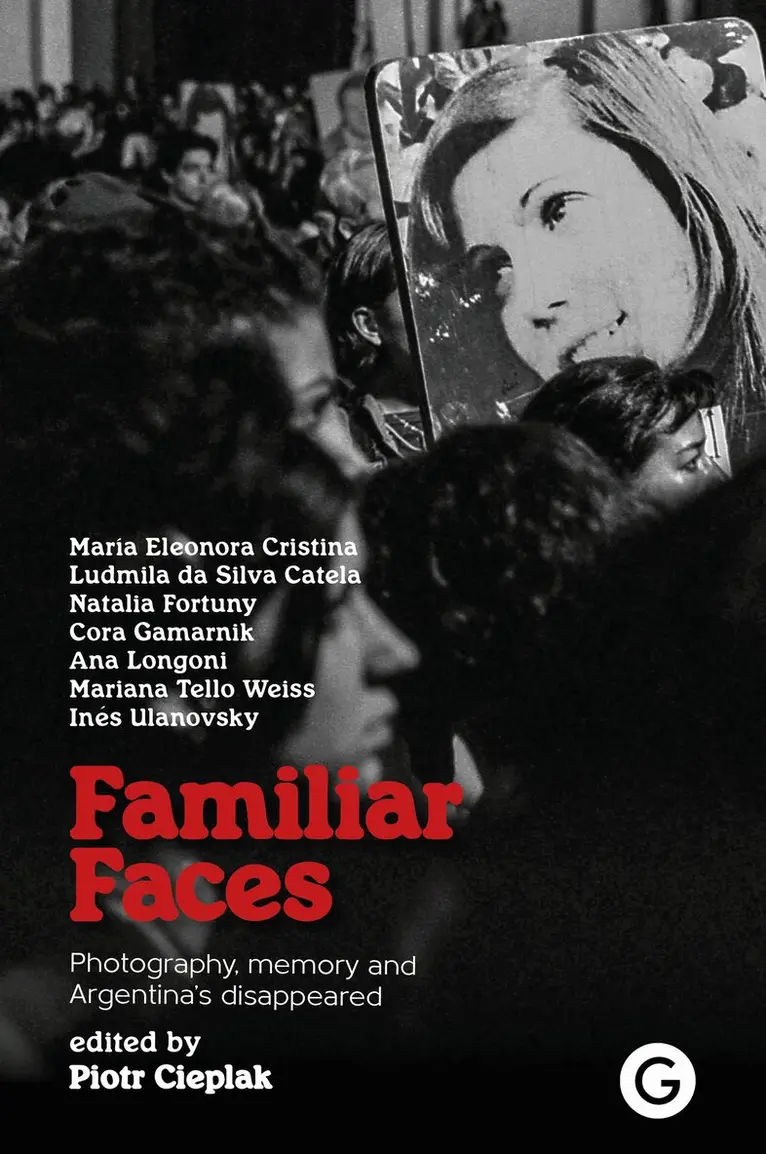
During the country’s most recent civic-military dictatorship (1976–1983), 30,000 people were disappeared or killed by the state. Over the decades, vernacular and professional photographs have been central to the Argentine struggle for justice. They were used not only to protest the disappearances under the dictatorship and to denounce the authorities, but also as tools of political and social activism, and for remembering the disappeared. With contributions from leading Argentina-based anthropologists, ethnographers, curators, art scholars, media researchers, and photographers, Familiar Faces moves beyond the traditional considerations of representation, focusing instead on the ways in which photography is continuously reimagined as a tool of memory, mourning, and political and judicial activism. In so doing, it considers the diverse uses of press photography; artistic practice; photographs of the disappeared in domestic rituals; photographs of the inmates of torture centers; the reclamation of images taken by the dictatorial state for memorial and activist purposes. Written and published at a crucial moment in Argentine memory politics, Familiar Faces offers a geographically and formally diverse selection of case studies, with international as well as regional resonance. While firmly rooted in this national context, the book contributes to wider, global debates about the increasingly pervasive role of the photographic image in relation to state-sponsored, large-scale violence.