Family life since World War II has undergone dramatic changes. Cultural shifts emphasizing personal needs and fulfillment have transformed traditional understandings of marriage and divorce, gender equality, and sexual behavior, resulting in a marked increase in single-parent homes, dual-income couples, divorce, and blended families. In this book, contributors who represent diverse traditions in North America show how their respective traditions have responded to changes in the family in the last half-century. Exploring the broad range of responses in their traditions--from conservative to progressive--they reflect on the role that theology, Scripture, and the social sciences have played in this transformation. Further, they take a realistic look at the influence of mainstream religion and its role in future discussions of family life.The Family, Culture, and Religion series offers informed and responsible analyses of the state of the American family from a religious perspective and provides practical assistance for the family's revitalization.
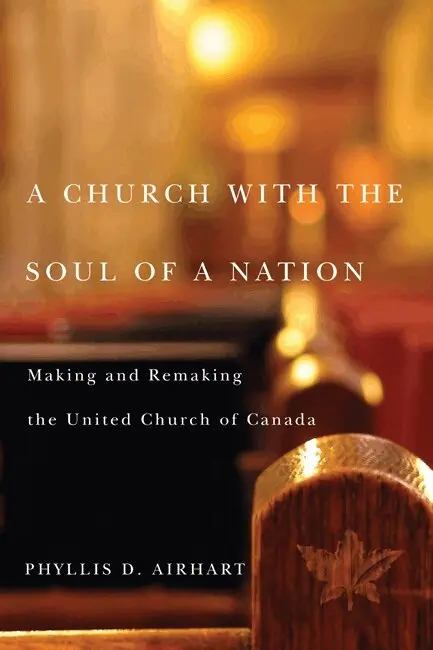
"As Canadian as the maple leaf" is how one observer summed up the United Church of Canada after its founding in 1925. But was this Canadian-made church flawed in its design, as critics have charged? A Church with the Soul of a Nation explores this question by weaving together the history of the United Church with a provocative analysis of religion and cultural change.
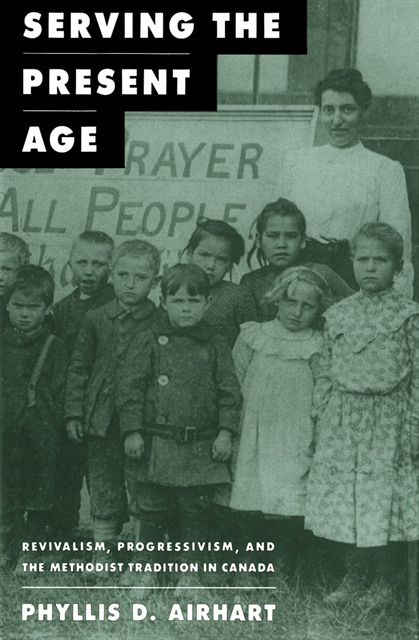
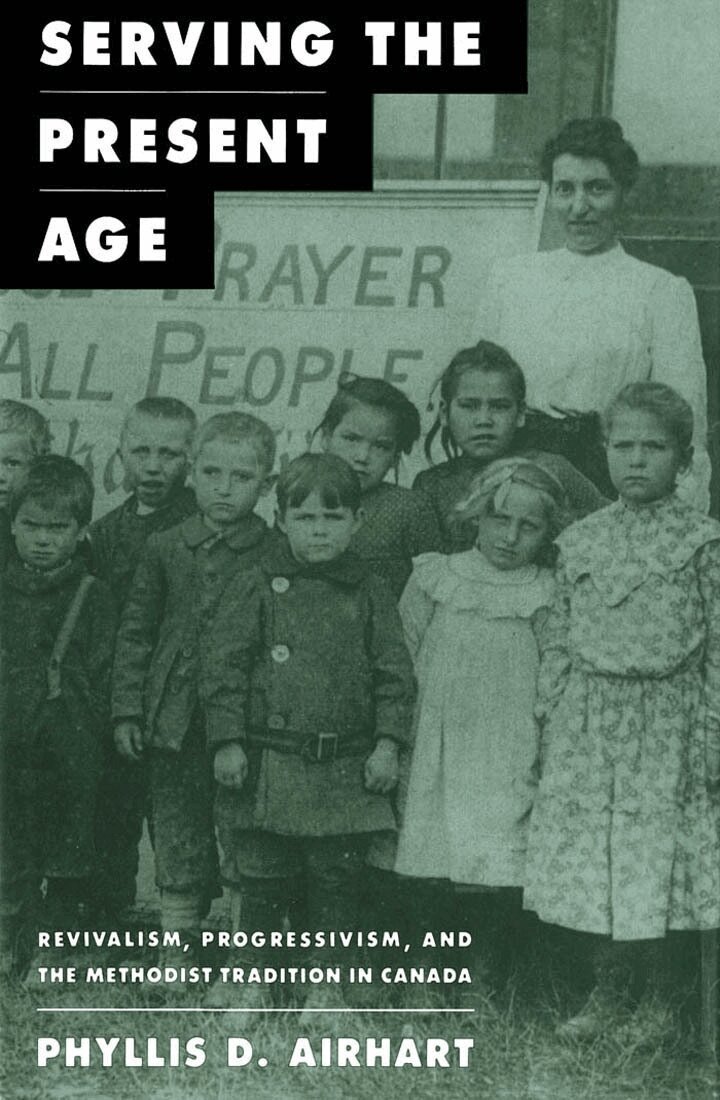
Essential to Methodist revivalism was the personal conversion experience, which constituted the basis of salvation and church membership. Revivalism, maintains Airhart, was a distinctive form of piety and socialization that was critical in helping Methodists define who they were, colouring their understanding of how religion was to be experienced, practised, articulated, and cultivated. This revivalist piety, even more than doctrine or policy, was the identifying mark of Methodism in the nineteenth century. But, during the late Victorian era, the Methodist presentation of the religious life underwent a transformation. By 1925, when the Methodist Church was incorporated into the United Church of Canada, its most prominent leaders were espousing an approach to piety that was essentially, and sometimes explicitly, non-revivalist. The Methodist approach to personal religion changed during this transition and, significantly, Methodists increasingly became identified with social Christianity -- although experience remained a key aspect of their theology. There was also a growing tendency to associate revivalism with fundamentalism, a new religious development that used the Methodist language of conversion but was unappealing to Canadian Methodists. Airhart portrays the tensions between tradition and innovation through stories of the men and women who struggled to revitalize religion in an age when conventional social assumptions and institutions were being challenged by the ideals of the progressive movement. Serving the Present Age is an account of Canadian Methodist participation in a realignment of North American Protestantism which supporters believed would better enable them, in the words of a well-known Wesley hymn, "to serve the present age."
Doing Ethics in a Pluralistic World is an apt title for this collection of essays in honour of Roger C. Hutchinson who, over many decades, has encouraged and participated in shaping a Canadian contextual social ethics. His abiding interest in social ethics and in religious engagement with public issues is reflected in his life's work - seeking the consensus and self-knowledge required to achieve cooperation in the search for a just, participatory, and sustainable society. One of Roger Hutchinson's many notable accomplishments is his development of a method of dialogue for ethical clarification in situations of diversity. Some of the essays collected here apply this method to specific issues, while others discuss how religious persons and organizations can and do co-operate in a pluralistic world to achieve social and ecological well-being. All essays are of keen interest to those concerned with the role and function of ethics at the matrix of religious conviction and social transformation. For nearly three decades Roger Hutchinson has been based at Victoria University in Toronto, first in religious studies, then at Emmanuel College, where he completed his teaching career as professor of church and society while serving as principal from 1996 to 2001.