How many Muses are there? Who were the original twelve Titans? Why is Zeus (Jupiter) associated with power stations, and Poseidon (Neptune) with salt-cellars? Who were Aphrodite's (Venus') handmaidens? In this beautiful little book, packed with helpful details and rare early illustrations, picture-researcher Philippa Lewis reveals the fabulous deities of the Classical world, their colourful characters, memorable stories and visual attributes, showing how the immortals live on even today.
When is a threshold a portal? What is a sallyport? How many ways are there to cross a wall, a fence or a river? What is a kissing gate? Are there gateways to other worlds? In this beautiful book, packed with rare antique illustrations and original drawings by artist Miles Thistlethwaite, author Philippa Lewis explores the fascinating world of liminal boundaries and the inexhaustable variety of ways in which we cross them. WOODEN BOOKS are small but packed with information. "Fascinating" FINANCIAL TIMES. "Beautiful" LONDON REVIEW OF BOOKS. "Rich and Artful" THE LANCET. "Genuinely mind-expanding" FORTEAN TIMES. "Excellent" NEW SCIENTIST. "Stunning" NEW YORK TIMES. Small books, big ideas.
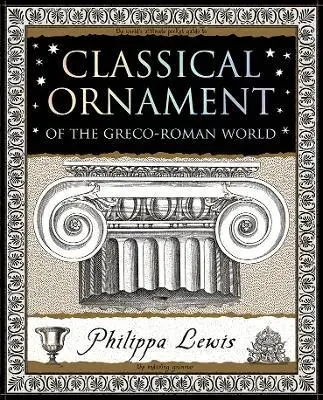
What is egg-and-dart? Why are acanthus leaves so special? Where would you find gadrooning and strigillation? What are friezes, dentils, meanders, volutes, palmettes, and rosettes, and where will you likely find them? In this beautiful book, Philippa Lewis unpacks the rich vocabulary of classical ornament, from the Five Orders, with their columns, capitals and entablatures, to the fabulous patterns and motifs which adorn them. An indispensable guide to the visual language which still surrounds us today.
This book offers a history of shyness in France. In particular, it interrogates the seeming strangeness of shyness in the long nineteenth century, positing it as an everyday experience which nonetheless troubled the stories that the nation sought to tell about itself in a period of intense political and social change. Shyness threatened the narratives of natural sociability central to French thought yet could also be seen as a symbol of sensibility and striving.The book unravels these competing perspectives by analysing a diverse range of sources from etiquette books, medical writing, and life-writing, to popular theatre and canonical fiction. It draws on techniques from the emotion history, literary studies, and the medical humanities. In revealing the neglected history of an often-trivialised experience and those who suffered with it, the book makes a significant contribution both to the history of the emotions in nineteenth-century France and to present-day shyness studies.
This engaging and enjoyable book takes us into the heart of the garden and, through an abundance of contemporary quotations and delightful engravings and line illustrations, depicts how we have enjoyed ourselves in the garden through the centuries. While there have been many books about gardening itself, and even the pleasures to be gained from the occupation, the theme of this book is something different - the garden as inhabited space, what J.D. Sedding, in "Garden Craft Old & New" (1891), described as the sounds of 'common daily life - the romps of children, the clink of tea-cups, the clatter of croquet mallets, the melee of the tennis courts, the fiddler's scrape, and the tune of moving feet ...'.