1 162 kr
Skickas inom 7-10 vardagar
1 162 kr
Skickas inom 7-10 vardagar
667 kr
Skickas inom 7-10 vardagar
421 kr
Läs direkt efter köp
421 kr
Läs direkt efter köp
1 539 kr
Läs direkt efter köp
636 kr
Skickas inom 7-10 vardagar
2 095 kr
Skickas inom 3-6 vardagar
2 122 kr
Skickas inom 3-6 vardagar
727 kr
Läs direkt efter köp
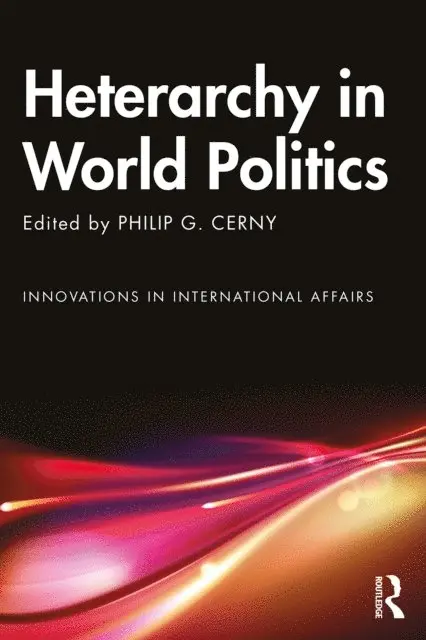
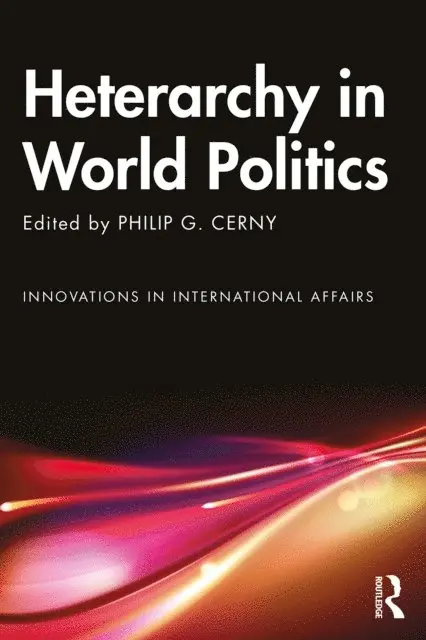
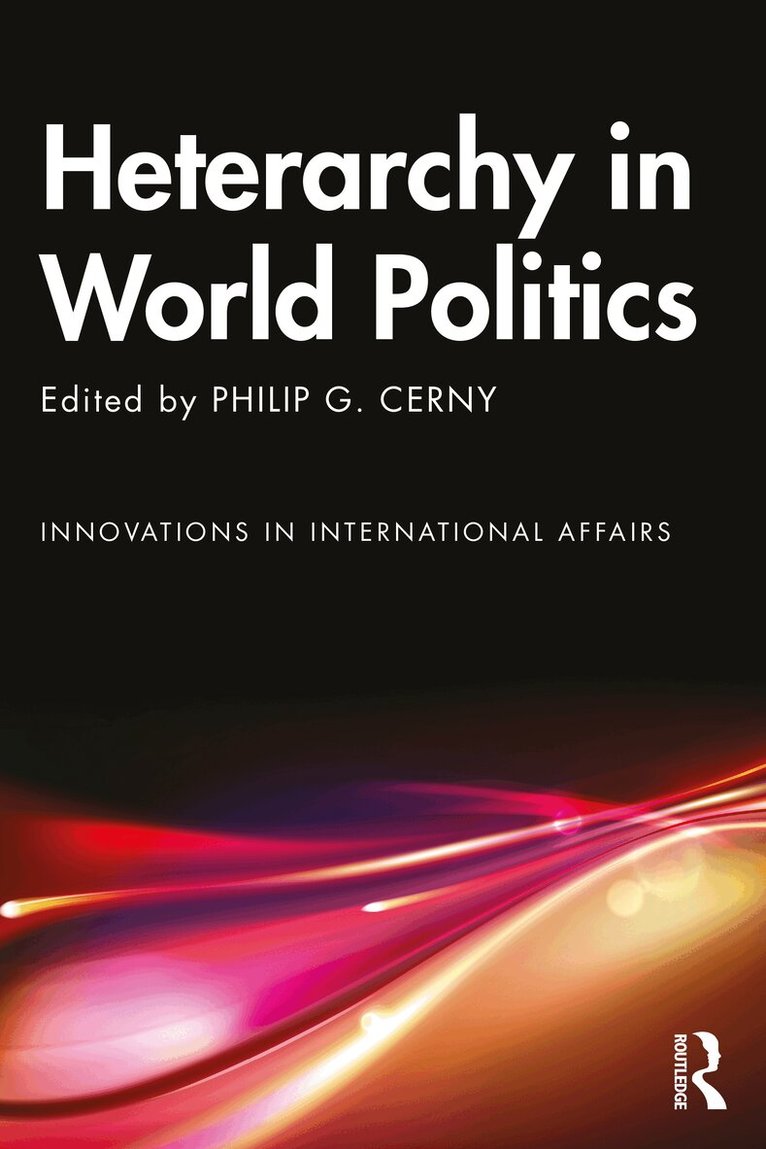
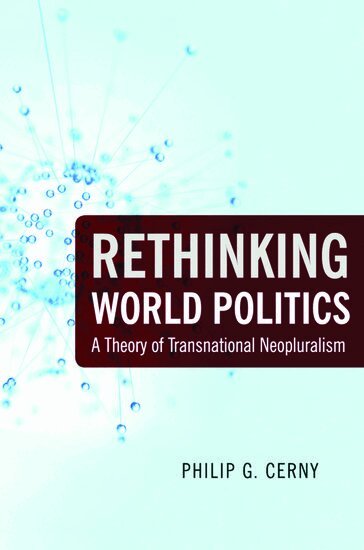
Heterarchy in World Politics challenges the fundamental framing of international relations and world politics. IR theory has always been dominated by the presumption that world politics is, at its core, a system of states. However, this has always been problematic, challengeable, time-bound, and increasingly anachronistic.
In the 21st century, world politics is becoming increasingly multi-nodal and characterized by "heterarchy" – the coexistence and conflict between differently structured micro- and meso quasi-hierarchies that compete and overlap not only across borders but also across economic-financial sectors and social groupings. Thinking about international order in terms of heterarchy is a paradigm shift away from the mainstream "competing paradigms" of realism, liberalism, and constructivism. This book explores how, since the mid-20th century, the dialectic of globalization and fragmentation has caught states and the interstate system in the complex evolutionary process toward heterarchy. These heterarchical institutions and processes are characterized by increasing autonomy and special interest capture. The process of heterarchy empowers strategically situated agents — especially agents with substantial autonomous resources, and in particular economic resources — in multi-nodal competing institutions with overlapping jurisdictions. The result is the decreasing capacity of macro-states to control both domestic and transnational political/economic processes. In this book, the authors demonstrate that this is not a simple breakdown of states and the states system; it is in fact the early stages of a structural evolution of world politics.
This book will interest students, scholars and researchers of international relations theory. It will also have significant appeal in the fields of world politics, security studies, war studies, peace studies, global governance studies, political science, political economy, political power studies, and the social sciences more generally.
2 136 kr
Skickas inom 10-15 vardagar
622 kr
Skickas inom 10-15 vardagar
271 kr
Skickas inom 3-6 vardagar
1 090 kr
Skickas inom 10-15 vardagar
913 kr
Läs direkt efter köp
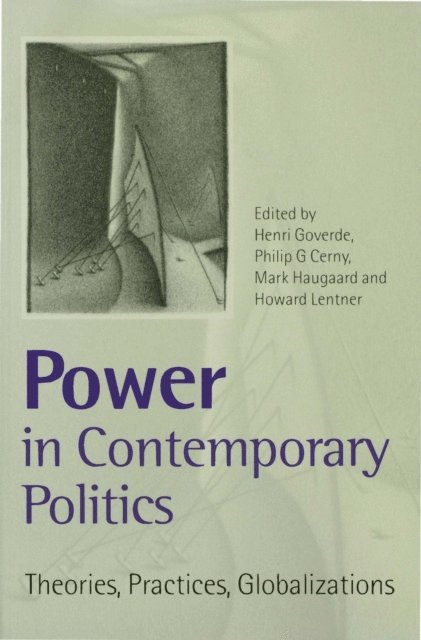
The concept of political power is introduced within a three-part framework: contemporary theories of power; applications of power processes and practices; and the implications of modern power flows across the globe today.
The book explores the many structures of power in the contemporary world from theories of its construction and use, to its operation in policy networks, and its wider exercise at different levels in the political process, from the local to the global.
Amongst the many themes explored are the reproduction and the legitimization of power, the dynamics of resistance and coercion, the concepts of private and public power, and the impact of globalization processes and subsequent shifting power arrangements.
Combining diverse perspectives and different tools of analysis, this book represents the most comprehensive treatment of political power published in the last fifteen years. It will be essential reading for academics and students alike across political science, international studies and political sociology.
2 836 kr
Tillfälligt slut
2 582 kr
Tillfälligt slut