The last days of the Raj bring to mind Gandhi''s nonviolence and Nehru''s diplomacy. These associations obscure another reality: that an army of Indian men and women who tried to throw the British off the subcontinent. The Forgotten Army brings to life for the first time the story of how Subhas Chandra Bose, a charismatic Bengali, attempted to liberate India with an army of former British Indian soldiers -- the Indian National Army (INA). The story begins with the British Indian Army fighting a heroic rearguard action against the invading Japanese down the Malaysian peninsula and ends with many of these same soldiers defeated in their effort to invade India as allies of Japan. Peter Ward Fay intertwines powerful descriptions of military action with a unique knowledge of how the INA was formed and its role in the broader struggle for Indian independence. Fay incorporates the personal reminiscences of Prem Saghal, a senior officer in the INA, and Lakshmi Swaminadhan, leader of its women''s sections, to help the reader understand the motivations of those who took part. Their experiences offer an engagingly personal counterpoint to the political and military history. ". . . a well-crafted and thought-provoking mixture of oral history and original research, providing the most comprehensive account yet published of the events leading to the formation of the INA." -- Guardian "Fay has made a magnificent attempt to analyse all the credible information on the history of [Subhas Chandra] Bose''s legendary Indian National Army (INA)." -- Times Higher Education Supplement "This fine study of the Indian National Army (INA) seeks to demonstrate this army''s significance in the attainment of Indian independence and the termination of the British Empire. . . . Throughout, Fay seeks to explain why ''constant and true'' Indians like Sahgal and Swaminadhan chose to fight alongside the Japanese and against the British . . . ." -- Pacific Affairs
This work tells the story of the war between England and China that delivered Hong Kong to the English, forced the imperial Chinese government to add four ports to Canton as places in which foreigners could live and trade, and rendered irreversible the process that for almost a century thereafter distinguished Western relations with this quarter of the globe - the process that is loosely termed the ""opening of China"". Originally published by UNC Press in 1975, Peter Ward Fay's study was the first to treat extensively the opium trade from the point of production in India to point of consumption in China and the first to give both Protestant and Catholic missionaries their due; it remains the most comprehensive account of the first Opium War through western eyes. In a new preface, Fay reflects on the relationship between the events described in the book and Hong Kong's more recent history.
This book tells the fascinating story of the war between England and China that delivered Hong Kong to the English, forced the imperial Chinese government to add four ports to Canton as places in which foreigners could live and trade, and rendered irreversible the process that for almost a century thereafter distinguished western relations with this quarter of the globe-- the process that is loosely termed the "opening of China." Originally published by UNC Press in 1975, Peter Ward Fay''s study was the first to treat extensively the opium trade from the point of production in India to the point of consumption in China and the first to give both Protestant and Catholic missionaries their due; it remains the most comprehensive account of the first Opium War through western eyes. In a new preface, Fay reflects on the relationship between the events described in the book and Hong Kong''s more recent history.
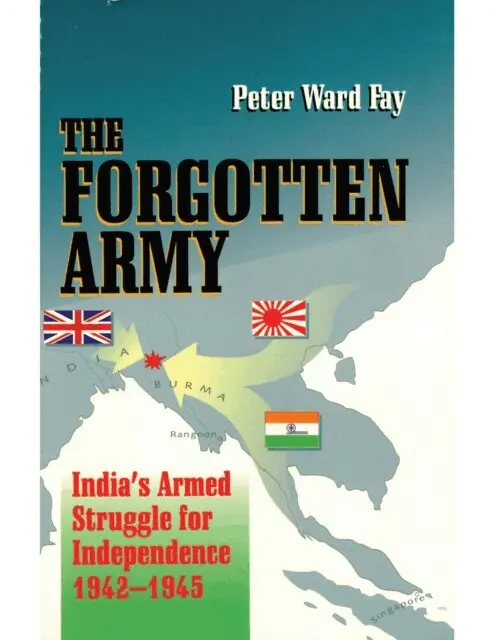
The last days of the Raj bring to mind Gandhi's nonviolence and Nehru's diplomacy. These associations obscure another reality: that an army of Indian men and women who tried to throw the British off the subcontinent. The Forgotten Army brings to life for the first time the story of how Subhas Chandra Bose, a charismatic Bengali, attempted to liberate India with an army of former British Indian soldiers -- the Indian National Army (INA). The story begins with the British Indian Army fighting a heroic rearguard action against the invading Japanese down the Malaysian peninsula and ends with many of these same soldiers defeated in their effort to invade India as allies of Japan. Peter Ward Fay intertwines powerful descriptions of military action with a unique knowledge of how the INA was formed and its role in the broader struggle for Indian independence. Fay incorporates the personal reminiscences of Prem Saghal, a senior officer in the INA, and Lakshmi Swaminadhan, leader of its women's sections, to help the reader understand the motivations of those who took part. Their experiences offer an engagingly personal counterpoint to the political and military history. ". . . a well-crafted and thought-provoking mixture of oral history and original research, providing the most comprehensive account yet published of the events leading to the formation of the INA." -- Guardian "Fay has made a magnificent attempt to analyse all the credible information on the history of [Subhas Chandra] Bose's legendary Indian National Army (INA)." -- Times Higher Education Supplement "This fine study of the Indian National Army (INA) seeks to demonstrate this army's significance in the attainment of Indian independence and the termination of the British Empire. . . . Throughout, Fay seeks to explain why 'constant and true' Indians like Sahgal and Swaminadhan chose to fight alongside the Japanese and against the British . . . ." -- Pacific Affairs
The last days of the Raj bring to mind Gandhi's non-violence and Nehru's diplomacy. These associations obscure another reality-that an army of Indian men and women tried to throw the British off the subcontinent. Now The Forgotten Army brings to life for the first time the story of how Subhash Chandra Bose, a charismatic Bengali, attempted to liberate India with an army of former British Indian soldiers- The Indian National Army (INA).