336 kr
Skickas inom 7-10 vardagar
336 kr
Skickas inom 7-10 vardagar
1 530 kr
Skickas inom 10-15 vardagar
325 kr
Skickas inom 7-10 vardagar
293 kr
Skickas inom 7-10 vardagar
309 kr
Skickas inom 7-10 vardagar
477 kr
Skickas inom 7-10 vardagar
1 623 kr
Skickas inom 7-10 vardagar
397 kr
Skickas inom 7-10 vardagar
1 623 kr
Skickas inom 7-10 vardagar
397 kr
Skickas inom 7-10 vardagar
574 kr
Läs direkt efter köp
587 kr
Läs direkt efter köp
851 kr
Skickas inom 7-10 vardagar
293 kr
Läs direkt efter köp
Race, ethnicity and nation are all intimately linked to family and kinship, yet these links deserve closer attention than they usually get in social science, above all when family and kinship are changing rapidly in the context of genomic and biotechnological revolutions. Drawing on data from assisted reproduction, transnational adoption, mixed race families, Basque identity politics and post-Soviet nation-building, this volume provides new and challenging ways to understand race, ethnicity and nation.
746 kr
Läs direkt efter köp
746 kr
Läs direkt efter köp
467 kr
Läs direkt efter köp
1 526 kr
Skickas inom 7-10 vardagar
448 kr
Skickas
2 515 kr
Skickas inom 10-15 vardagar
707 kr
Skickas inom 10-15 vardagar
1 000 kr
Läs direkt efter köp
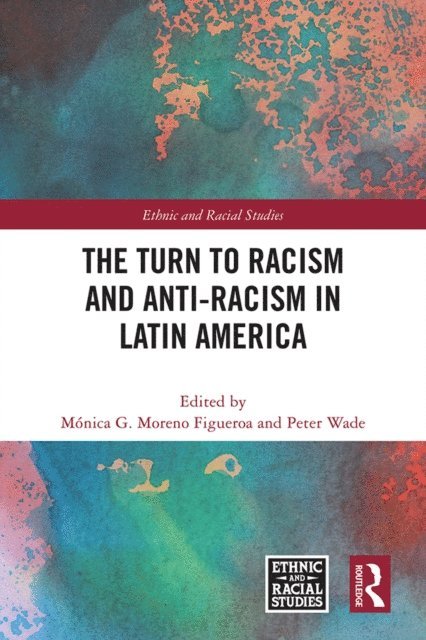
This book highlights the growing mainstream focus on racism and anti- racism in Latin America. It reveals the diverse social transformation projects addressing racism, reflecting a complexity not previously evident. Inspired by a research project involving Indigenous and Black organizations, the chapters in this book explore cases in Brazil, Colombia, Ecuador, and Mexico, where anti- racist efforts are significant, though not always central to organizational agendas. These chapters share a common theme of valuing varied anti- racist actions and discourses while critically acknowledging the structural, shifting nature of racism. The issues explored are racial visibility, naming racism, racial data, legal rights and recognition, entrepreneurship, mestizo identity, the possibilities of alliances, and racially-aware struggles against class (and gendered) oppression. Though not exhaustive, the chapters provide valuable insights into the antiracist shift in Latin America, offering broader perspectives on global anti- racism efforts. This book was originally published as a special issue of the Ethnic and Racial Studies journal.
1 022 kr
Läs direkt efter köp
This book highlights the growing mainstream focus on racism and anti- racism in Latin America. It reveals the diverse social transformation projects addressing racism, reflecting a complexity not previously evident. Inspired by a research project involving Indigenous and Black organizations, the chapters in this book explore cases in Brazil, Colombia, Ecuador, and Mexico, where anti- racist efforts are significant, though not always central to organizational agendas. These chapters share a common theme of valuing varied anti- racist actions and discourses while critically acknowledging the structural, shifting nature of racism. The issues explored are racial visibility, naming racism, racial data, legal rights and recognition, entrepreneurship, mestizo identity, the possibilities of alliances, and racially-aware struggles against class (and gendered) oppression. Though not exhaustive, the chapters provide valuable insights into the antiracist shift in Latin America, offering broader perspectives on global anti- racism efforts. This book was originally published as a special issue of the Ethnic and Racial Studies journal.
1 139 kr
Skickas inom 7-10 vardagar
371 kr
Skickas inom 7-10 vardagar
488 kr
Skickas inom 10-15 vardagar
356 kr
Läs direkt efter köp
359 kr
Läs direkt efter köp
572 kr
Läs direkt efter köp
This book questions the political logic of foregrounding cultural collectives in a world shaped by globalization and neoliberalization. Throughout the world, it is no longer only individuals, but increasingly collective "cultures" who are made responsible for their own regulation, welfare and enterprise. This appears as a surprising shift from the tenets of classical liberalism which defined the ideal subject of politics as the "unencumbered self"- the free, equal and self-governing individual.
The increasing promotion and recognition of cultural rights in international legislation, multiculturalism, and public debates on "culture" as a political problem more generally indicate that culture has become a more central terrain for governance and struggles around rights and citizenship. On the basis of case studies from China, Latin America, and North America, the contributors of this book explore the links between culture, civility, and the politics of citizenship. They argue that official reifications of "culture" in relation to citizenship, and even the recognition of cultural rights, may obey strategies of governance and control, but that citizens may still use new cultural rights and networks, and the legal mechanisms that have been created to protect them, in order to pursue their own agendas of empowerment.
This book was originally published as a special issue of Economy and Society.