1 393 kr
Skickas inom 7-10 vardagar
1 393 kr
Skickas inom 7-10 vardagar
850 kr
Läs direkt efter köp
850 kr
Läs direkt efter köp
586 kr
Skickas inom 7-10 vardagar
1 257 kr
Skickas inom 7-10 vardagar
732 kr
Skickas inom 7-10 vardagar
529 kr
Skickas inom 10-15 vardagar
589 kr
Läs direkt efter köp
414 kr
Skickas inom 7-10 vardagar
357 kr
Läs direkt efter köp
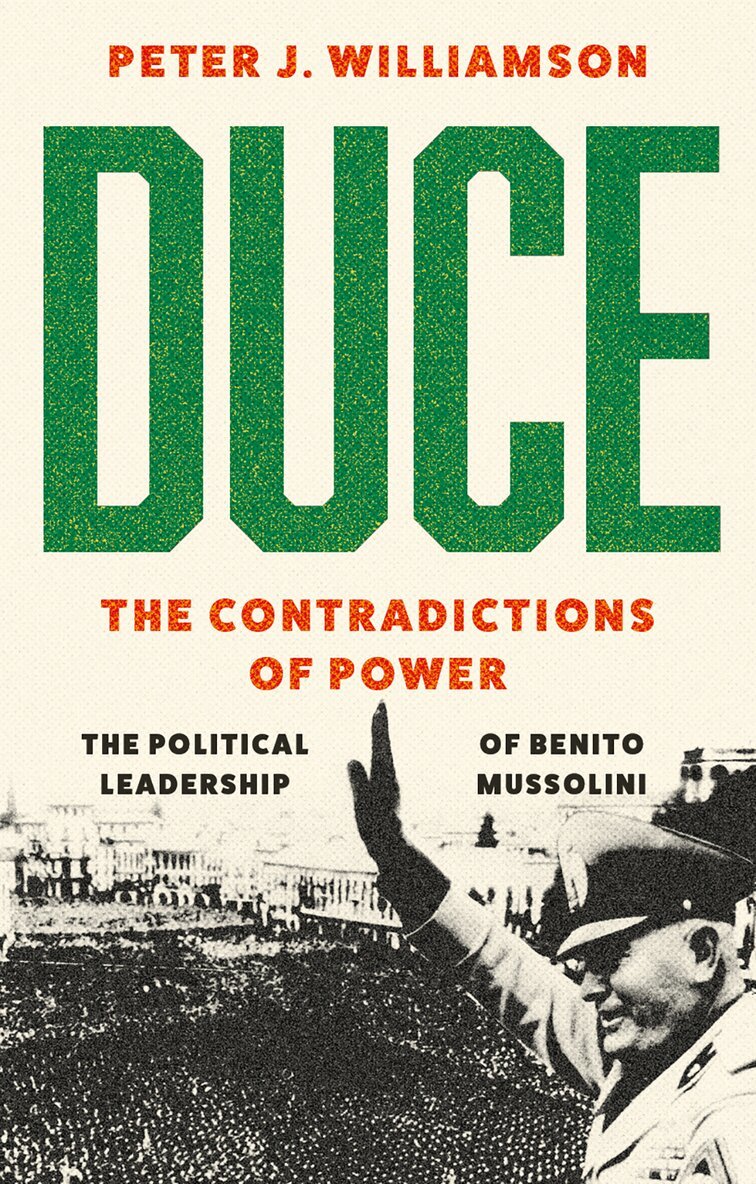
Eighty years after the fall of Benito Mussolini, controversy remains about what his dictatorship represented. This reflects the different sides to the Duce’s leadership: while adept at nurturing and enforcing his personal political power, Mussolini’s lack of insight into the requirements of governance prevented him from converting this power into influence to achieve his goals. His efforts to maintain the support of Italy’s conservative elites—economic, social and political—also created tensions with his radical Fascist ambitions, diminishing the momentum behind his regime.
Mussolini is frequently portrayed as a charismatic leader, but his rule was secured principally by coercion, violence and a ‘spoils system’. Nonetheless, his personality cult had significant popular appeal, even if based upon a political myth. This enabled him to consolidate his position and to dominate his Fascist colleagues—but at a price of over-centralised, dysfunctional decision-making.
In this book, the first comprehensive English-language study of Mussolini in nearly two decades, Peter J. Williamson brings to life the contradictions within the Duce’s leadership. Using a wide range of sources, Williamson reveals how these conflicts impeded the dictator’s ambitions, leaving him increasingly frustrated, all while most Italians endured the severe privations of both failure and Fascism.
1 872 kr
Kommande
Over the past three decades, the concept of the business ecosystem has transformed strategic thinking. As a hybrid between markets and hierarchies, it complements traditional industry and value chain perspectives by emphasizing collaboration, co-innovation, aligning investments, and the co-evolution of multiple organizations. Today, firms increasingly compete as part of ecosystems rather than as standalone enterprises. This creates new management challenges: orchestrating diverse partners, balancing openness with control, and sustaining long-term ecosystem health while creating and capturing value.
De Gruyter Handbook on Business Ecosystems combines a concise overview of the evolution of ecosystem thinking—from Moore's pioneering work to recent advances in ecosystem governance, architecture, the role of artificial intelligence, and resilience—with practical insights into how ecosystems can be designed, managed, and led. Bringing together leading academics and experienced practitioners, the chapters are organized around four themes: ecosystem typologies, governance, ecosystem creation and evolution, and ecosystem management and leadership. By combining rigorous research with practical experience, this book provides an essential resource for both managers seeking to build and orchestrate ecosystems and scholars advancing the field.
330 kr
Tillfälligt slut