411 kr
Läs direkt efter köp
411 kr
Läs direkt efter köp
2 070 kr
Skickas inom 10-15 vardagar
867 kr
Skickas inom 10-15 vardagar
800 kr
Skickas inom 7-10 vardagar
924 kr
Läs direkt efter köp
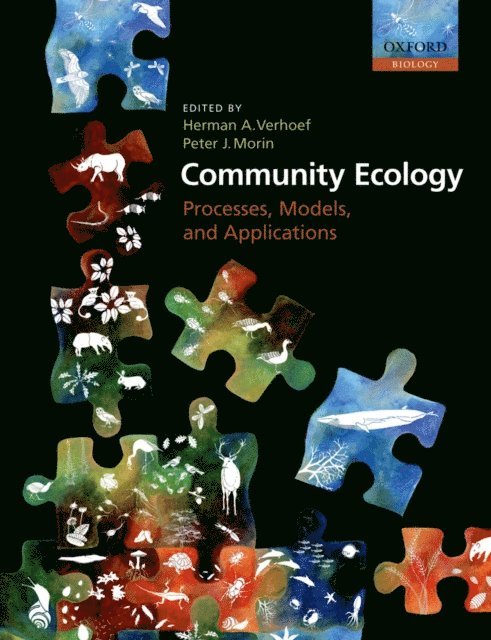
Community ecology: the study of the patterns and processes involving two or more species - has developed rapidly in the last two decades, driven by new and more sophisticated research techniques, advances in mathematical theory and modeling, and the increasing pressure on the environment wrought by humans. Once a purely descriptive science, it is now one of the most forward-looking areas of scientific inquiry.
Morin skillfully guides the reader through the main tenets and central concepts of community ecology - competition, predation, food webs, indirect effects, habitat selection, diversity, and succession.
In an attempt to introduce the reader to the most balanced coverage possible, Morin includes examples drawn from both the aquatic and terrestrial realm and from both plant and animal species. Balancing theory with experimentation and drawing on exciting new studies to complement the historical foundations of the discipline, he also stresses that both the empirical and theoretical approaches are necessary to drive ecology foward into the new millenium.
The final chapter on applied community ecology ably demonstrates how community ecological processes have a wide environmental relevance. Although in its infancy, the application of community ecology to emerging problems in human-dominated ecosystems could mitigate problems as diverse as management strategies for important diseases transmitted by animals and the restoration and reconstruction of viable communities.
Required reading for all students and practitioners interested in community phenomena, Community Ecology marks an important contribution to the development of this protean discipline.
The first serious textbook for a decade on one of the keystone subdisciplines of ecology. Broad taxonomic and habitat coverage. Section on implications of community ecology for environmental issues.912 kr
Läs direkt efter köp
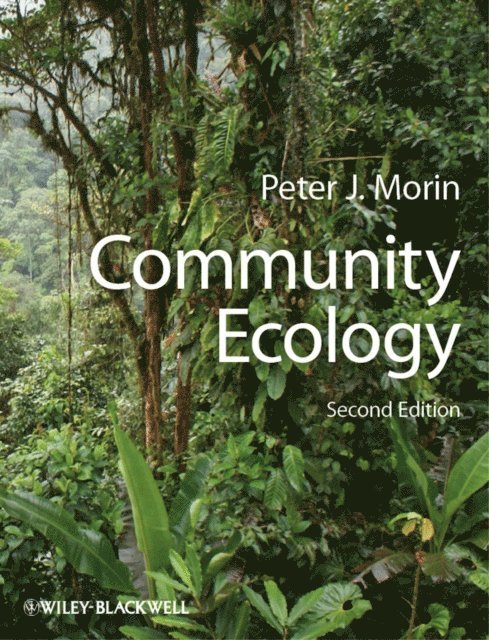
This book introduces the reader to a balanced coverage of concepts and theories central to community ecology, using examples drawn from terrestrial, freshwater, and marine systems, and focusing on animal, plant, and microbial species. The historical development of key concepts is described using descriptions of classic studies, while examples of exciting new developments in recent studies are used to point toward future advances in our understanding of community organization. Throughout, there is an emphasis on the crucial interplay between observations, experiments, and mathematical models.
This second updated edition is a valuable resource for advanced undergraduates, graduate students, and established scientists who seek a broad overview of community ecology. The book has developed from a course in community ecology that has been taught by the author since 1983.
Figures and tables can be downloaded for free from www.wiley.com/go/morin/communityecology
912 kr
Läs direkt efter köp
This book introduces the reader to a balanced coverage of concepts and theories central to community ecology, using examples drawn from terrestrial, freshwater, and marine systems, and focusing on animal, plant, and microbial species. The historical development of key concepts is described using descriptions of classic studies, while examples of exciting new developments in recent studies are used to point toward future advances in our understanding of community organization. Throughout, there is an emphasis on the crucial interplay between observations, experiments, and mathematical models.
This second updated edition is a valuable resource for advanced undergraduates, graduate students, and established scientists who seek a broad overview of community ecology. The book has developed from a course in community ecology that has been taught by the author since 1983.
Figures and tables can be downloaded for free from www.wiley.com/go/morin/communityecology
1 149 kr
Tillfälligt slut