315 kr
Skickas inom 10-15 vardagar
315 kr
Skickas inom 10-15 vardagar
481 kr
Läs direkt efter köp
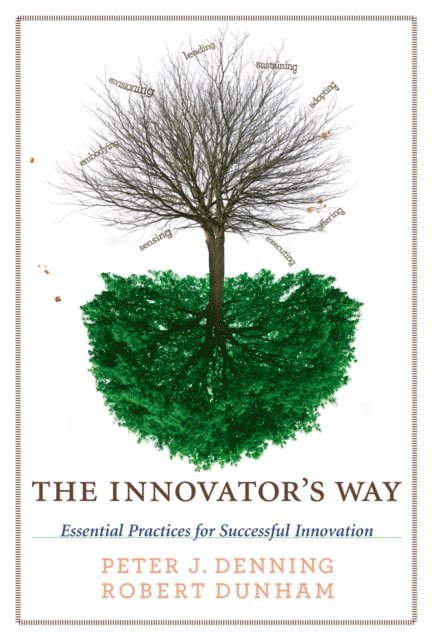
Two experts show that innovation is a skill that can be learned and describe eight essential practices for achieving success.
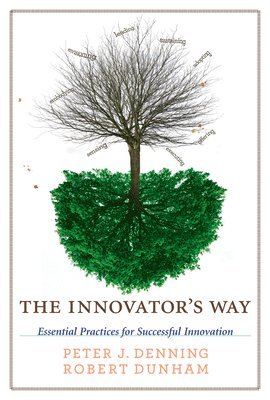
Innovation is the ruling buzzword in business today. Technology companies invest billions in developing new gadgets; business leaders see innovation as the key to a competitive edge; policymakers craft regulations to foster a climate of innovation. And yet businesses report a success rate of only four percent for innovation initiatives. Can we significantly increase our odds of success? In The Innovator''s Way, innovation experts Peter Denning and Robert Dunham reply with an emphatic yes. Innovation, they write, is not simply an invention, a policy, or a process to be managed. It is a personal skill that can be learned, developed through practice, and extended into organizations.
Denning and Dunham identify and describe eight personal practices that all successful innovators perform: sensing, envisioning, offering, adopting, sustaining, executing, leading, and embodying. Together, these practices can boost a fledgling innovator to success. Weakness in any of these practices, they show, blocks innovation. Denning and Dunham chart the path to innovation mastery, from individual practices to teams and social networks.
234 kr
Läs direkt efter köp
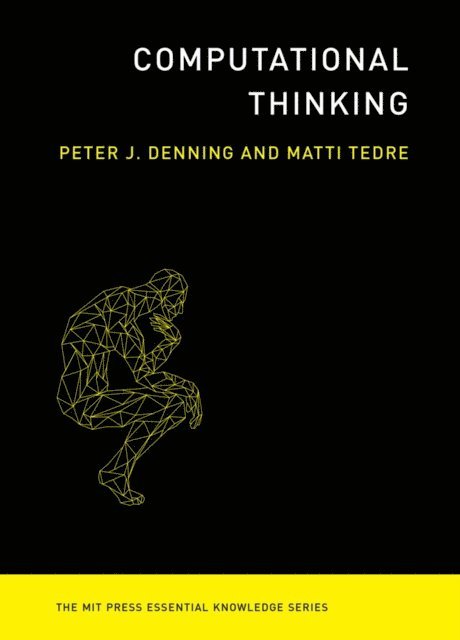
An introduction to computational thinking that traces a genealogy beginning centuries before the digital computer.
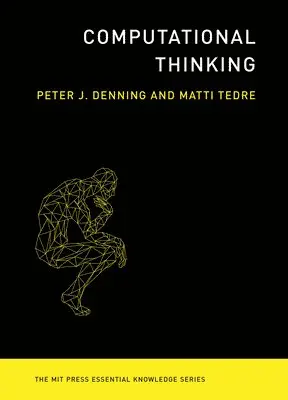
A few decades into the digital era, scientists discovered that thinking in terms of computation made possible an entirely new way of organizing scientific investigation; eventually, every field had a computational branch: computational physics, computational biology, computational sociology. More recently, “computational thinking” has become part of the K–12 curriculum. But what is computational thinking? This volume in the MIT Press Essential Knowledge series offers an accessible overview, tracing a genealogy that begins centuries before digital computers and portraying computational thinking as pioneers of computing have described it.
The authors explain that computational thinking (CT) is not a set of concepts for programming; it is a way of thinking that is honed through practice: the mental skills for designing computations to do jobs for us, and for explaining and interpreting the world as a complex of information processes. Mathematically trained experts (known as “computers”) who performed complex calculations as teams engaged in CT long before electronic computers. The authors identify six dimensions of today''s highly developed CT—methods, machines, computing education, software engineering, computational science, and design—and cover each in a chapter. Along the way, they debunk inflated claims for CT and computation while making clear the power of CT in all its complexity and multiplicity.
570 kr
Skickas inom 7-10 vardagar
610 kr
Skickas inom 7-10 vardagar
196 kr
Skickas
243 kr
Skickas inom 10-15 vardagar
243 kr
Skickas inom 10-15 vardagar
356 kr
Läs direkt efter köp
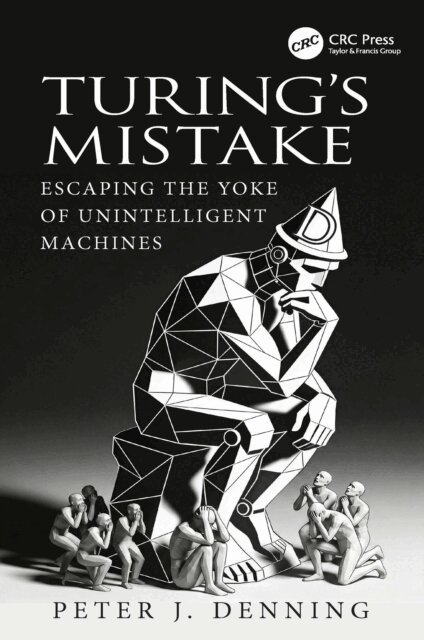
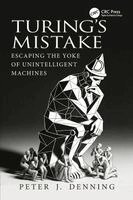
AI is sweeping away familiar cultures and we have no idea where it is taking us. The older generation tends to stick up for humanity and the younger generation for post-humanity. It is a serious tension. Everywhere there is a mood of unsettlement at not knowing where the unstoppable momentum of AI will go and whether we will like the outcome. For the first time in the history of humanity, we do not really have a good grip on what the role of humans is on the planet.
This predicament can be traced to widespread acceptance of two assumptions proposed by Alan Turing in 1950 when he asked, “Can computers think?â€: that intelligence is disembodied and its presence can be determined by the Turing test. The AI field has been obsessed by a quest for Artificial General Intelligence, abbreviated AGI, in fulfillment of Turing’s proposals. This book argues that AI has ignored a gaping hole: the issue of tacit knowledge, which is essential for human intelligence and can never be known by machines. The seekers of AGI have a long wait ahead.
For the rest of us, non-human machine intelligence is already emerging in AI agentic nerworks and is well on its way to dragging us into an unwanted and unwelcome world where not-very-intelligent machines force conformity to their goals. We can escape this yoke by renouncing the idea that we are a form of machine. We can celebrate and reawaken the powers we have, such as care, understanding, and respect, that no machine can have.
361 kr
Läs direkt efter köp
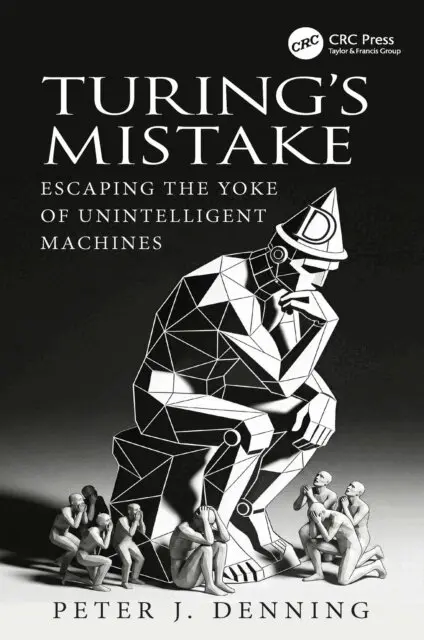
AI is sweeping away familiar cultures and we have no idea where it is taking us. The older generation tends to stick up for humanity and the younger generation for post-humanity. It is a serious tension. Everywhere there is a mood of unsettlement at not knowing where the unstoppable momentum of AI will go and whether we will like the outcome. For the first time in the history of humanity, we do not really have a good grip on what the role of humans is on the planet.
This predicament can be traced to widespread acceptance of two assumptions proposed by Alan Turing in 1950 when he asked, “Can computers think?â€: that intelligence is disembodied and its presence can be determined by the Turing test. The AI field has been obsessed by a quest for Artificial General Intelligence, abbreviated AGI, in fulfillment of Turing’s proposals. This book argues that AI has ignored a gaping hole: the issue of tacit knowledge, which is essential for human intelligence and can never be known by machines. The seekers of AGI have a long wait ahead.
For the rest of us, non-human machine intelligence is already emerging in AI agentic nerworks and is well on its way to dragging us into an unwanted and unwelcome world where not-very-intelligent machines force conformity to their goals. We can escape this yoke by renouncing the idea that we are a form of machine. We can celebrate and reawaken the powers we have, such as care, understanding, and respect, that no machine can have.
1 829 kr
Skickas inom 10-15 vardagar
334 kr
Läs direkt efter köp
310 kr
Läs direkt efter köp
233 kr
Skickas inom 10-15 vardagar