

Häftad, Engelska, 2025
367 kr
Skickas inom 7-10 vardagar
367 kr
Skickas inom 7-10 vardagar

602 kr
Läs direkt efter köp
Colleges and universities silo diversity and inclusion by creating specific courses to address them, or programs to welcome and support people with a range of identities, whereas in reality students, faculty and staff do not encounter diversity in the fractured ways that match the organizational structures of our institutions. We all simultaneously embody a variety of identities with different saliency in different circumstances and times.This book offers models for institutions to move intentionally toward intersections – of study abroad and multiculturalism, of race and gender and religion, and of other essential aspects of our educational programs and our students’ identities – to open doors to new possibilities that better prepare our students for life in a diverse world, and that allow our institutions to become more efficient and effective as we strive to not simply do things better in our own separate spheres, but to do better things by working together across difference.Each chapter offers action-oriented analysis focusing on particular campus intersections, rather than attending to specific demographic groups. Chapter authors also build on their own local expertise of doing this work on campuses that often do not have deep pockets or rich histories of such efforts.The book is organized into three sections:* People focuses on diversity broadly defined, considering questions about how we recruit and engage the students, faculty, and staff in the campus community, and how we work with governing boards and others to promote inclusive excellence.* Environment focuses on inclusion, including residence life, the local community, the working and learning environment, and external factors and events such as national and international news or town gown relationships.* Learning focuses on perspective taking and learning about difference in the core curriculum, the disciplines, and the co-curriculum, as well as professional development for faculty and staff.This ground reaking book helps readers, no matter what position they occupy on campus, to develop the knowledge and capacities necessary to create inclusive classrooms and is premised on the understanding that identity, oppression, power and marginalization cannot be addressed by looking solely at single identities.

587 kr
Läs direkt efter köp
Colleges and universities silo diversity and inclusion by creating specific courses to address them, or programs to welcome and support people with a range of identities, whereas in reality students, faculty and staff do not encounter diversity in the fractured ways that match the organizational structures of our institutions. We all simultaneously embody a variety of identities with different saliency in different circumstances and times.This book offers models for institutions to move intentionally toward intersections – of study abroad and multiculturalism, of race and gender and religion, and of other essential aspects of our educational programs and our students’ identities – to open doors to new possibilities that better prepare our students for life in a diverse world, and that allow our institutions to become more efficient and effective as we strive to not simply do things better in our own separate spheres, but to do better things by working together across difference.Each chapter offers action-oriented analysis focusing on particular campus intersections, rather than attending to specific demographic groups. Chapter authors also build on their own local expertise of doing this work on campuses that often do not have deep pockets or rich histories of such efforts.The book is organized into three sections:* People focuses on diversity broadly defined, considering questions about how we recruit and engage the students, faculty, and staff in the campus community, and how we work with governing boards and others to promote inclusive excellence.* Environment focuses on inclusion, including residence life, the local community, the working and learning environment, and external factors and events such as national and international news or town gown relationships.* Learning focuses on perspective taking and learning about difference in the core curriculum, the disciplines, and the co-curriculum, as well as professional development for faculty and staff.This ground reaking book helps readers, no matter what position they occupy on campus, to develop the knowledge and capacities necessary to create inclusive classrooms and is premised on the understanding that identity, oppression, power and marginalization cannot be addressed by looking solely at single identities.
2 726 kr
Läs direkt efter köp
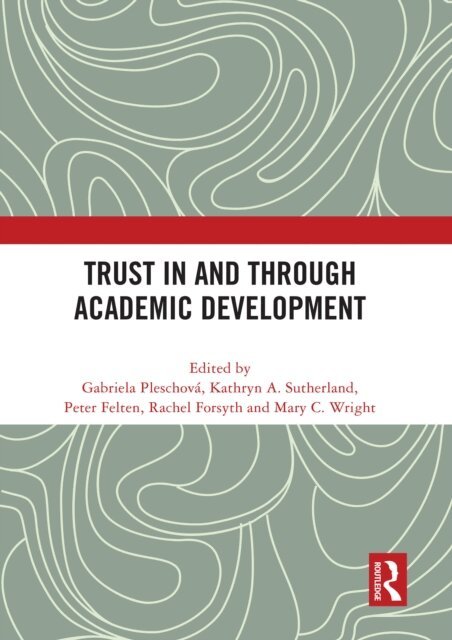
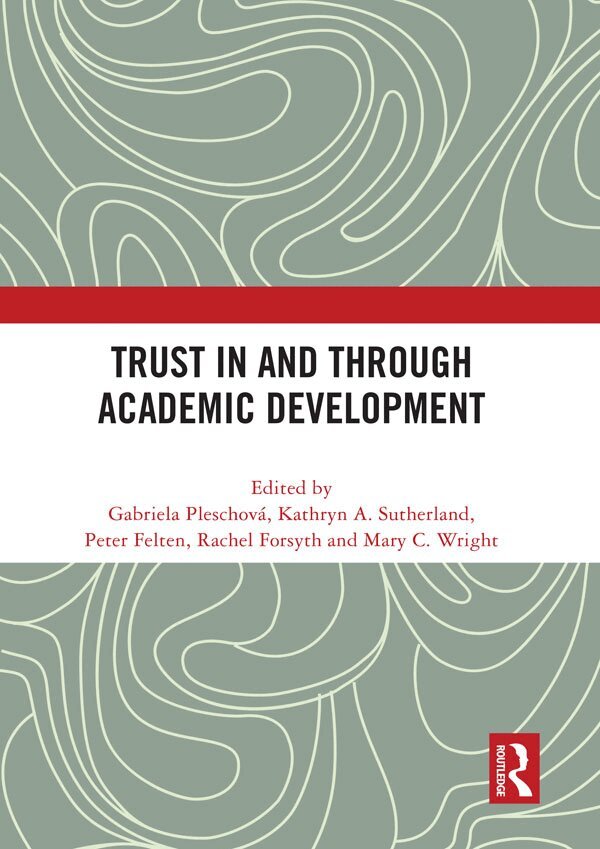
Trust matters in higher education, yet it is often taken for granted. This book shows how trust—between students and teachers, faculty and academic developers, or individuals and institutions—shapes the ways we teach, learn, and work together.
Drawing on fresh research and first-hand accounts from across the world, this book reveals that trust is not static but a dynamic, reciprocal process. It is cultivated gradually through care, credibility, and openness, and it enables people to share vulnerabilities, take risks, and imagine new possibilities for teaching and learning. Contributors explore trust at many levels: in the classroom, in academic development programmes, and within wider institutional and cultural contexts. They demonstrate how trust allows people to share vulnerabilities, engage in honest conversations, and take risks that lead to more inclusive and effective teaching. At the same time, they address the challenges of mistrust and the work required to establish trustworthy practices and structures.
Accessible and thought-provoking, this book offers valuable insights for anyone interested in the human relationships at the heart of higher education. It makes a compelling case that trust-building is not optional but integral to effective teaching, meaningful learning, and transformative academic development.
This book was originally published as a special issue of International Journal for Academic Development.
2 707 kr
Läs direkt efter köp
Trust matters in higher education, yet it is often taken for granted. This book shows how trust—between students and teachers, faculty and academic developers, or individuals and institutions—shapes the ways we teach, learn, and work together.
Drawing on fresh research and first-hand accounts from across the world, this book reveals that trust is not static but a dynamic, reciprocal process. It is cultivated gradually through care, credibility, and openness, and it enables people to share vulnerabilities, take risks, and imagine new possibilities for teaching and learning. Contributors explore trust at many levels: in the classroom, in academic development programmes, and within wider institutional and cultural contexts. They demonstrate how trust allows people to share vulnerabilities, engage in honest conversations, and take risks that lead to more inclusive and effective teaching. At the same time, they address the challenges of mistrust and the work required to establish trustworthy practices and structures.
Accessible and thought-provoking, this book offers valuable insights for anyone interested in the human relationships at the heart of higher education. It makes a compelling case that trust-building is not optional but integral to effective teaching, meaningful learning, and transformative academic development.
This book was originally published as a special issue of International Journal for Academic Development.
2 444 kr
Skickas inom 10-15 vardagar

332 kr
Skickas inom 7-10 vardagar
388 kr
Läs direkt efter köp
Praise for Transformative Conversations
"In the ''superstorm'' of writings about the crisis in higher education this little gem of a book stands out like a mindfulness bell. It calls us back to the only thing that truly mattersthe energy and wisdom buried in the minds and hearts of dedicated educators." Diana Chapman Walsh, president emerita, Wellesley College; trustee emerita, Amherst College; member of the MIT Corporation
"This book is revolutionary! It is about transforming the very essence of higher education through the power of authentic conversation, knowing that as the people within the institution evolve, the institution will transform." Patricia and Craig Neal, The Art of Convening: Authentic Engagement in Meetings, Gatherings, and Conversations; founders, Heartland Inc.
"This is a radical story about how to create a more intimate and relational culture inside the halls of higher education.... for those who long for higher education to return from the abyss of siloed isolation to its original charter as a cooperative learning institution committed to developing the whole person in service of the common good." Peter Block, Flawless Consulting and Abundant Community
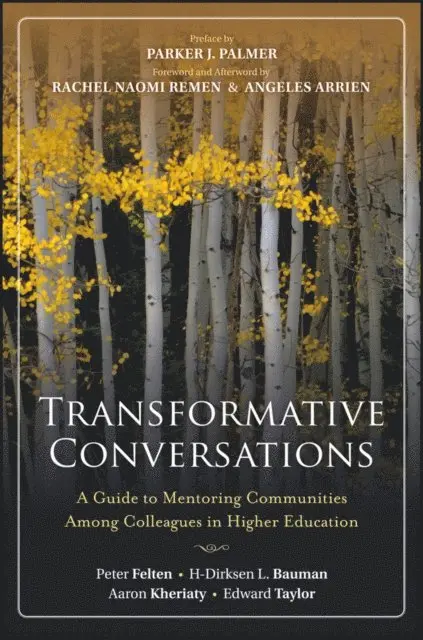
Transformative Conversations offers guidance to help readers create and sustain Formation Mentoring Communities, where faculty, staff, and administrators can speak openly and honestly to the heart of their work as educators and human beings.

396 kr
Läs direkt efter köp
Praise for Transformative Conversations
"In the ''superstorm'' of writings about the crisis in higher education this little gem of a book stands out like a mindfulness bell. It calls us back to the only thing that truly mattersthe energy and wisdom buried in the minds and hearts of dedicated educators." Diana Chapman Walsh, president emerita, Wellesley College; trustee emerita, Amherst College; member of the MIT Corporation
"This book is revolutionary! It is about transforming the very essence of higher education through the power of authentic conversation, knowing that as the people within the institution evolve, the institution will transform." Patricia and Craig Neal, The Art of Convening: Authentic Engagement in Meetings, Gatherings, and Conversations; founders, Heartland Inc.
"This is a radical story about how to create a more intimate and relational culture inside the halls of higher education.... for those who long for higher education to return from the abyss of siloed isolation to its original charter as a cooperative learning institution committed to developing the whole person in service of the common good." Peter Block, Flawless Consulting and Abundant Community
Transformative Conversations offers guidance to help readers create and sustain Formation Mentoring Communities, where faculty, staff, and administrators can speak openly and honestly to the heart of their work as educators and human beings.
468 kr
Skickas inom 7-10 vardagar
539 kr
Läs direkt efter köp
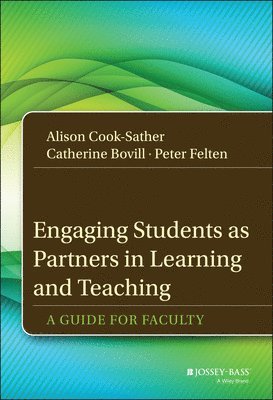
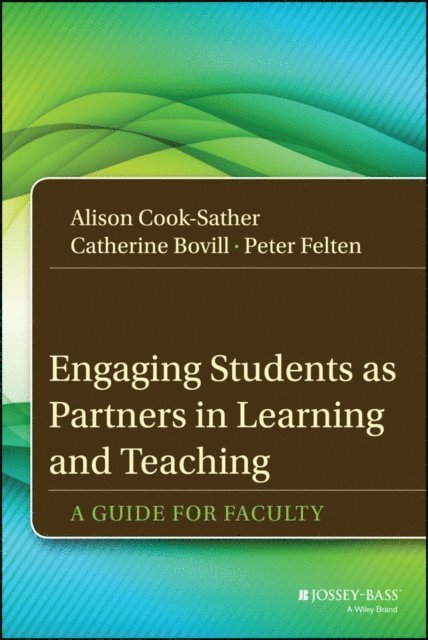
Student-faculty partnerships is an innovation that is gaining traction on campuses across the country. There are few established models in this new endeavor, however. Engaging Students as Partners in Learning and Teaching: A Guide for Faculty offers administrators, faculty, and students both the theoretical grounding and practical guidelines needed to develop student-faculty partnerships that affirm and improve teaching and learning in higher education.
Provides theory and evidence to support new efforts in student-faculty partnerships Describes various models for creating and supporting such partnerships Helps faculty overcome some of the perceived barriers to student-faculty partnerships Suggests a range of possible levels of partnership that might be appropriate in different circumstances Includes helpful responses to a range of questions as well as advice from faculty, students, and administrators who have hands-on experience with partnership programsBalancing theory, step-by-step guidelines, expert advice, and practitioner experience, this book is a comprehensive why- and how-to handbook for developing a successful student-faculty partnership program.
522 kr
Läs direkt efter köp
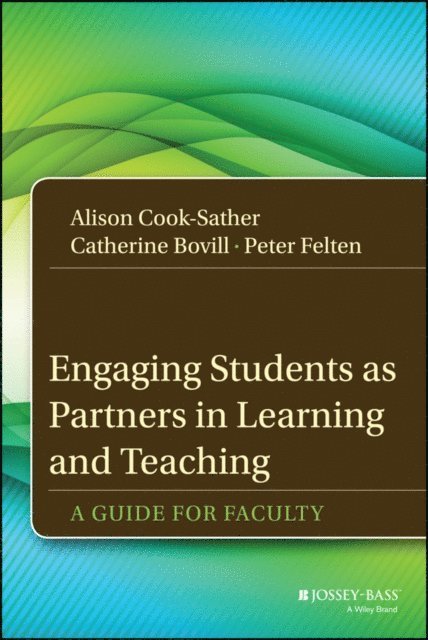
Student-faculty partnerships is an innovation that is gaining traction on campuses across the country. There are few established models in this new endeavor, however. Engaging Students as Partners in Learning and Teaching: A Guide for Faculty offers administrators, faculty, and students both the theoretical grounding and practical guidelines needed to develop student-faculty partnerships that affirm and improve teaching and learning in higher education.
Provides theory and evidence to support new efforts in student-faculty partnerships Describes various models for creating and supporting such partnerships Helps faculty overcome some of the perceived barriers to student-faculty partnerships Suggests a range of possible levels of partnership that might be appropriate in different circumstances Includes helpful responses to a range of questions as well as advice from faculty, students, and administrators who have hands-on experience with partnership programsBalancing theory, step-by-step guidelines, expert advice, and practitioner experience, this book is a comprehensive why- and how-to handbook for developing a successful student-faculty partnership program.

359 kr
Skickas inom 7-10 vardagar
461 kr
Skickas
223 kr
Skickas inom 7-10 vardagar
326 kr
Kommande

2 455 kr
Skickas inom 10-15 vardagar

519 kr
Skickas inom 10-15 vardagar

31 kr
Läs direkt efter köp