1 282 kr
Skickas inom 7-10 vardagar
1 282 kr
Skickas inom 7-10 vardagar
900 kr
Läs direkt efter köp
676 kr
Läs direkt efter köp
Commentators today generally agree that we are at an inflection point in the history of capitalism. This economic system in its long-regnant neoliberal form—privileging free international trade, promoting the transnational movement of capital and labor, and advocating a limited role for the state—has faltered, if not failed, and needs to be superseded by a new political-economic architecture that accommodates pressing concerns relating to national security, climate change, inequality and equity, and resiliency among others. Few serious writers are calling for capitalism to be razed, as this system has proven far superior to others in generating wealth and providing higher living standards. Moreover, since its emergence centuries ago, capitalism has proved highly adaptable, able to survive, even to thrive, in both hospitable and inhospitable circumstances and surroundings, often in the face of stiff competition and outright opposition.
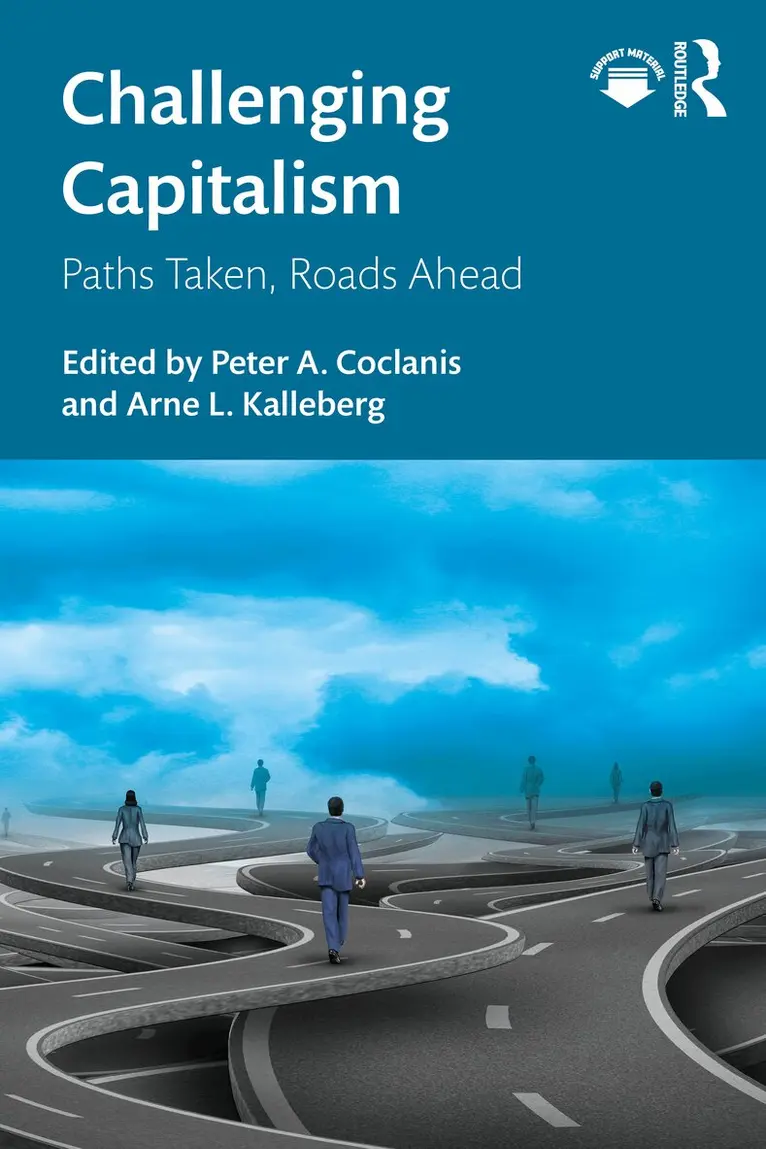
In Challenging Capitalism, an interdisciplinary group of distinguished scholars addresses some of the likely challenges of a new political-economic order that minimizes capitalism’s deficiencies without impeding unduly its ability to facilitate and support wealth creation and human flourishing. An introductory chapter traces the development of capitalism as an economic system and identifies the three major eras in the modern version of capitalism. This chapter sets the stage for a baker’s dozen chapters that examine important features and forms of the dominant economic system, including racial capitalism, platform capitalism, surveillance capitalism, authoritarian capitalism, and stakeholder capitalism. The authors approach capitalism and its future from different angles and from a variety of ideological perspectives, offering keen insights into the capitalist paths we have traveled, our position today, and the road or roads ahead.
The book is essential reading for anyone interested in capitalism from across the social sciences and humanities, including political economy, sociology, history, political science, public policy, and economics.

676 kr
Läs direkt efter köp
Commentators today generally agree that we are at an inflection point in the history of capitalism. This economic system in its long-regnant neoliberal form—privileging free international trade, promoting the transnational movement of capital and labor, and advocating a limited role for the state—has faltered, if not failed, and needs to be superseded by a new political-economic architecture that accommodates pressing concerns relating to national security, climate change, inequality and equity, and resiliency among others. Few serious writers are calling for capitalism to be razed, as this system has proven far superior to others in generating wealth and providing higher living standards. Moreover, since its emergence centuries ago, capitalism has proved highly adaptable, able to survive, even to thrive, in both hospitable and inhospitable circumstances and surroundings, often in the face of stiff competition and outright opposition.
In Challenging Capitalism, an interdisciplinary group of distinguished scholars addresses some of the likely challenges of a new political-economic order that minimizes capitalism’s deficiencies without impeding unduly its ability to facilitate and support wealth creation and human flourishing. An introductory chapter traces the development of capitalism as an economic system and identifies the three major eras in the modern version of capitalism. This chapter sets the stage for a baker’s dozen chapters that examine important features and forms of the dominant economic system, including racial capitalism, platform capitalism, surveillance capitalism, authoritarian capitalism, and stakeholder capitalism. The authors approach capitalism and its future from different angles and from a variety of ideological perspectives, offering keen insights into the capitalist paths we have traveled, our position today, and the road or roads ahead.
The book is essential reading for anyone interested in capitalism from across the social sciences and humanities, including political economy, sociology, history, political science, public policy, and economics.

668 kr
Skickas inom 10-15 vardagar
2 590 kr
Skickas inom 10-15 vardagar
1 928 kr
Skickas inom 7-10 vardagar
687 kr
Skickas inom 7-10 vardagar
402 kr
Skickas inom 10-15 vardagar
385 kr
Läs direkt efter köp
The Atlantic Economy during the Seventeenth and Eighteenth Centuries is a collection of essays focusing on the expansion, elaboration, and increasing integration of the economy of the Atlantic basin—comprising parts of Europe, West Africa, and the Americas—during the seventeenth and eighteenth centuries. In thirteen essays, the contributors examine the complex and variegated processes by which markets were created in the Atlantic basin and how they became integrated.
While a number of the contributors focus on the economic history of a specific European imperial system, others, mirroring the realities of the world they are writing about, transcend imperial boundaries and investigate topics shared throughout the region. In the latter case, the contributors focus either on processes occurring along the margins or interstices of empires, or on "breaches" in the colonial systems established by various European powers. Taken together, the essays shed much-needed light on the organization and operation of both the European imperial orders of the early modern era and the increasingly integrated economy of the Atlantic basin challenging these orders over the course of the same period.
Environmental Governance and Strategies for Sustainability in the Lower Mekong Basin
1 638 kr
Skickas inom 10-15 vardagar
2 159 kr
Läs direkt efter köp
This book brings together a talented international group of scholars, policy practitioners, and NGO professionals that explores a range of issues relating to environmental, developmental, and governing challenges on the Mekong, one of the world’s greatest rivers and, alas, one of the most endangered.
The book is divided into three sections devoted in turn to historical perspectives on the Lower Mekong Basin. Issues relate to livelihood strategies, environmental threats, and adaptation strategies; and various aspects of river governance, with individual authors treating questions of governance at different levels of refraction and in different registers. The result is a fresh and innovative collection of essays, which, taken together, provide much-needed new perspectives on some of the most important and seemingly intractable environmental and development issues in contemporary Asia.
1 632 kr
Skickas inom 10-15 vardagar
2 174 kr
Läs direkt efter köp
The Mekong Delta of Vietnam is one of the most productive agricultural areas in the world. The Mekong River fans out over an area of about 40,000 sq kilometers and over the course of many millennia has produced a region of fertile alluvial soils and constant flows of energy. Today about a fourth of the Delta is under rice cultivation, making this area one of the premier rice granaries in the world.
The Delta has always proven a difficult environment to manipulate, however, and because of population pressures, increasing acidification of soils, and changes in the Mekong’s flow, environmental problems have intensified. The changing way in which the region has been linked to larger flows of commodities and capital over time has also had an impact on the region: For example, its re-emergence in recent decades as a major rice-exporting area has linked it inextricably to global markets and their vicissitudes. And most recently, the potential for sea level increases because of global warming has added a new threat. Because most of the region is on average only a few meters above sea level and because any increase of sea level will change the complex relationship between tides and down-river water flow, the Mekong Delta is one of the areas in the world most vulnerable to the effects of climate change.
How governmental policy and resident populations have in the past and will in coming decades adapt to climate change as well as several other emerging or ongoing environmental and economic problems is the focus of this collection.
1 632 kr
Skickas inom 10-15 vardagar
642 kr
Tillfälligt slut
325 kr
Tillfälligt slut
471 kr
Tillfälligt slut
545 kr
Tillfälligt slut