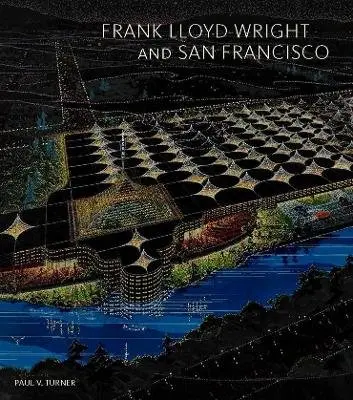
An unprecedented look at the architect’s storied relationship with San Francisco and the Bay AreaFrank Lloyd Wright (1867–1959) often spent time in San Francisco, which he called “the most charming city in America.” Paul V. Turner looks at the architect’s complex and evolving relationship with the city, surveying the full body of Wright’s work in the Bay Area—roughly thirty projects, a third of which were built. Spanning 1900 to 1959, they include houses, a gift shop, a civic center, a skyscraper, a church, an industrial building, a mortuary, and a bridge across the San Francisco Bay. The unbuilt structures are among Wright’s most innovative, and the diverse reasons for their failure counter long-held stereotypes about the architect.Wright’s Bay Area projects are published together here for the first time, along with previously unpublished correspondence between Wright and his clients, as well as his Bay Area associate Aaron Green. Stories from San Francisco newspapers portray the media’s changing positions on Wright—from his early personal scandals to his later roles as eccentric provocateur and celebrated creative genius. Beautifully illustrated with the architect’s original drawings and plans, Frank Lloyd Wright and San Francisco highlights aspects of the architect’s career that have never before been explored, inspiring a new understanding of Wright, his personal and client interactions, and his work.
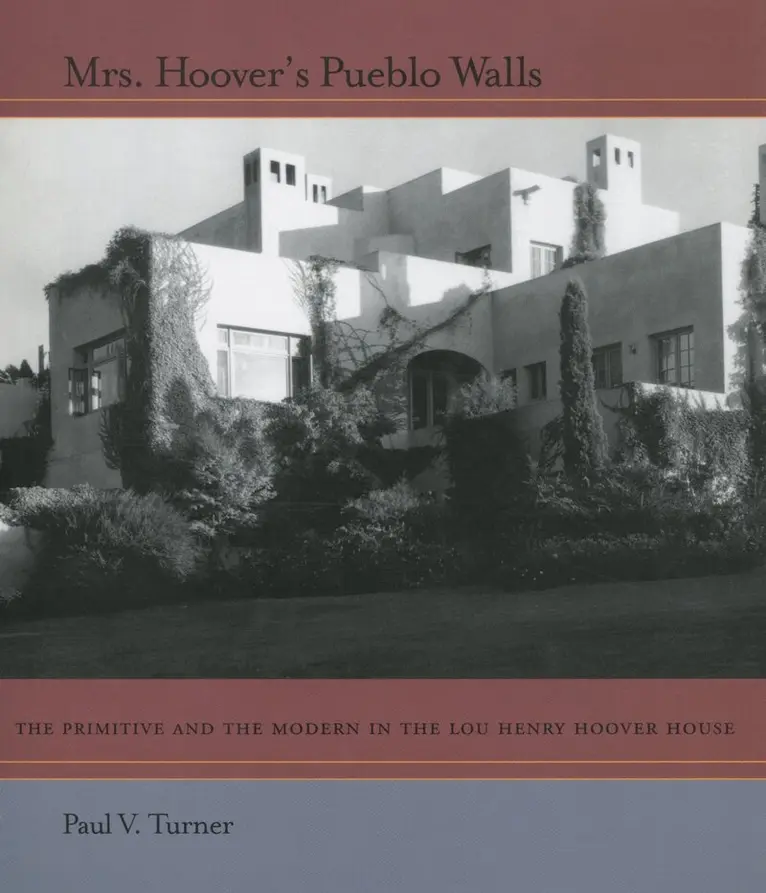
Two questions have intrigued observers of the Lou Henry Hoover House, built at Stanford University in 1919 by Lou Henry and Herbert Hoover and now the official residence of the university's president. Who was the building's architect? And what was the motive for its unusual, cubic, flat-roofed, undecorated form? Although professional architects were involved in the project, this book shows that the architect was actually Lou Henry Hoover herself, who conceived the design of the house and worked out its details, using her architects largely for technical matters and to produce the drawings and supervise construction. As for the design, the book argues that it was inspired mainly by the Native American Pueblo architecture of New Mexico and Arizona. Herbert Hoover, in fact, called it a "Hopi house," and Lou referred to her "Pueblo walls," but the Pueblo connection was later denied by others involved in the project. The book reveals that both of the Hoovers were interested in Native American culture, and that Lou, in particular, was fascinated with the "primitive" architecture of the non-Western world, which she had studied during the years when she and Herbert had lived and worked in Asia and elsewhere. Primitive forms did not appeal to her for their exoticism, as was typical at that time, but for the virtues she found in them. The Hoover House is a remarkable example of the contribution of non-Western or indigenous architecture to the development of modernism.