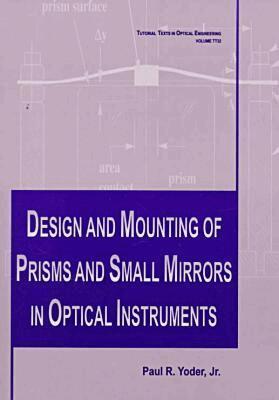
This text examines the various ways in which prisms and small mirrors typically are designed and mounted in optical instruments. It provides analytical tools for evaluating different designs, and discusses the advantages and disadvantages of various techniques. The book, in part, is an outgrowth of SPIE short courses taught by the author and is a companion to his 1995 volume ""Mounting Lenses in Optical Instruments"". The work should be useful for engineers and other practitioners in the fields of optical engineering and optomechanical design.
An update to the classic 2000 text, this book is written to teach optical design and engineering in a fully unintimidating way using clear and easy-to-understand graphics and explanations. This book is for everyone from program managers to seasoned optical designers and engineers, mechanical engineers, and electrical engineers.
Modern binoculars and scopes meet a variety of user needs. This Field Guide provides readers with a concise, organised reference that explains the functions and configurations of instruments commonly used by bird watchers, hunters, amateur astronomers, and military and law-enforcement members. This book also addresses the rationale behind instrument design choices, with hardware examples illustrating specific arrangements and features.