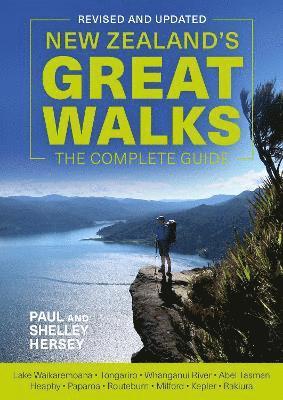
The ultimate guide to exploring New Zealand's Great Walks, fully revised and updated.New Zealand's Great Walks are world class. In a country blessed with hundreds of spectacular tracks to choose from, these are considered the best of the best. They pass through some of our most breathtaking landscapes - including golden sand beaches, ancient rainforests and high mountains.New Zealand's Great Walks- The Complete Guide is the only handbook anyone will need to experience these outdoor adventures. Each of the walks (and one river journey) is presented in a clear, user-friendly way, including-- An overview and highlights- Planning notes- Track description- Points of interest- Other things to do in the area Also included in the book is-- A brief history of the Great Walks- Conservation information- Notes on how to prepare for your trip- Useful websites and resources Authored by expert outdoor enthusiasts Paul and Shelley Hersey and fully illustrated with maps and stunning photography, New Zealand's Great Walks is the guide no keen adventurer can do without!Revised and updated to include the Paparoa Track and Pike29 Memorial Track.
In this book, Hoyk and Hersey describe 45 "unethical traps" into which any one of us can fall. These traps, they say, can erupt in any organizational environment. Some of these traps distort our perception of right and wrong—so we actually believe our unethical behavior is right. Many of them are psychological in nature, and if we are not aware of them they are like illusions—webs of deception. In the authors' analysis, these traps significantly contributed to the large-scale corporate disasters we witnessed in recent years.Hoyk and Hersey take account of these realities and offer a "real-world" method that will predict, preclude, and, if necessary, "get us out of" these traps. Given the increased scrutiny under which all executives and mangers operate today, this book is a 'must read' for anyone who is charged with achieving an organization's mission—whether that mission is increasing profit, serving the common good, or both.
A schoolgirl races from class to join a weekend trip to the hills. A mountaineering guide recalls his first weeks on the job during the 1920s. A young climber is shown the best route over the Main Divide by a big bull tahr. A climbing party is bombarded by falling rock when Ruapehu suddenly erupts. A mountaineer pays tribute to the Māori guides from south Westland, while a fighter pilot tries to recapture an ascent of the Minarets from his tent in Nigeria during World War II. From the Darrans of Fiordland to Denali in Alaska, New Zealand climbers, both experienced and recreational, have captured their alpine experience in letters, journals, articles, memoirs, poems and novels. Drawing on 150 years of published and unpublished material, Laurence Fearnley and Paul Hersey, two top contemporary authors, have compiled a wide-ranging, fascinating and moving glimpse into New Zealands mountaineering culture and the people who write about it.