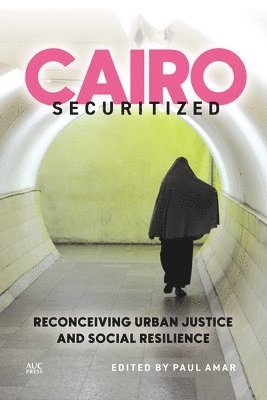
"A compendium of profound insights, garnered in all their granularity from varied aspects of Cairo's rich social life, which keeps the reader engrossed to the last page."—Contemporary SociologyA rich examination of the securitization of the everyday lives of the citizens of Cairo and how to build a more equitable urban orderUntil the year 2000, Cairo had been a model megacity, relatively crime free, safe, and public facing. It featured a thriving public culture and vibrant street life. In recent decades, however, the Egyptian state has accelerated a wholesale dismantlement of public education and public sector jobs and reversed the modest land reforms of the Nasser era. As a result, the vast majority of Cairo’s people have been forcibly deprived of their social rights, social goods, and educational capital.Eschewing the traditional focus on top-down regime and state security, the contributors to this volume, who represent a wide array of academics, activists, artists, and journalists, explore how repressive policies affect the everyday lives of citizens. They show the ways in which urban security crises are politically fashioned and do not emanate from the urban social fabric on their own: city crime, violence, and fear are created by specific means of extraction, production, and control.Another kind of city can live again. But how? By tackling a range of issues, including public health, transportation, labor safety, and housing and property distribution, Cairo Securitized unsettles simplistic binaries of thug and police, public versus private, and slum versus enclave, and proposes compelling new ways in which securitizing processes can be reversed, reengineered, and replaced with a participatory and equitable urban order.Contributors:Sara Soumaya Abed African Leadership Centre, Kings College London Zeinab Abul-Magd Oberlin College, USAMohamed Ahmed Political Scientist and historian, Cairo Egypt Rania Ahmed Independent Researcher, Cairo EgyptNicholas Simcik Arese University of Cambridge, UKAhmed Awadalla University of Strathclyde, Glasgow, UKAhmad Borham The American University in Cairo, Cairo EgyptMiguel A. Fuentes Carreño University of California, Santa Barbara, USARoberta Duffield Scholar on urbanism, public space, Cairo EgyptMomen El-Husseiny The American University in Cairo, Cairo EgyptMohamed Elmeshad SOAS, London UK Ifdal Elsaket Netherlands-Flemish Institute, Cairo Egypt Mohamed Elshahed Independent Writer and Curator, Mexico CityAmy Fallas University of California Santa Barbara, USATina Guirguis University of California, Santa Barbara, USAElena Habersky The American University in Cairo, Cairo EgyptHanan Hammad Texas Christian University, USAHatem Hassan Impact Justice, Pittsburgh, USAAmira Hetaba Federal Government of Lower Austria, AustriaDeena Khalil The American University in Cairo, Cairo EgyptOmnia Khalil City University of New York, USA Sabrina Lilleby University of Texas, Austin, USA Paul Miranda Nonviolent Peaceforce, South Mosul, IraqMostafa Mohie American University in Cairo, Cairo EgyptLaura Monfleur University François-Rabelais, Tours, FranceAya Nassar Royal Holloway, University of London, UKNora Noralla human rights researcher, Berlin, GermanyAly El Reggal Scuola Normale Superiore, Florence ItalyAfsaneh Rigot Harvard University, Cambridge USA Yahia Saleh Malmö University, SwedenBassem al-Samragy political analyst at the International Criminal Court, The Hague, The NetherlandsYahia Shawkat Technische Universität Berlin, Germany Maïa Sinno Géographie Cités Lab, CNRS / Sorbonne University, Paris FranceMark Westmoreland Leiden University, The Netherlands