Since Nation at Risk, NCLB and RTT, the once thought sacred institution of school boards as catalysts to ensure local control of schools is being redefined and are under heavy attack. Increasingly, school boards are disappearing from the discussion of promoting student achievement and their role as educational decision-makers have significantly declined. The aims of public education are gradually being federalized and privatized. In Vanishing School Boards, author Patrick Rice give various reasons for the descent of school boards, reasons why school boards are vital, the importance of board training and how the superintendent can assist the board in their mission of delivering a quality education to all students.
Since Nation at Risk, NCLB and RTT, the once thought sacred institution of school boards as catalysts to ensure local control of schools is being redefined and are under heavy attack. Increasingly, school boards are disappearing from the discussion of promoting student achievement and their role as educational decision-makers have significantly declined. The aims of public education are gradually being federalized and privatized. In Vanishing School Boards, author Patrick Rice give various reasons for the descent of school boards, reasons why school boards are vital, the importance of board training and how the superintendent can assist the board in their mission of delivering a quality education to all students.
Since Nation at Risk, NCLB and RTT, the once thought sacred institution of school boards as catalysts to ensure local control of schools is being redefined and are under heavy attack. Increasingly, school boards are disappearing from the discussion of promoting student achievement and their role as educational decision-makers have significantly declined. The aims of public education are gradually being federalized and privatized. In Vanishing School Boards, author Patrick Rice give various reasons for the descent of school boards, reasons why school boards are vital, the importance of board training and how the superintendent can assist the board in their mission of delivering a quality education to all students.
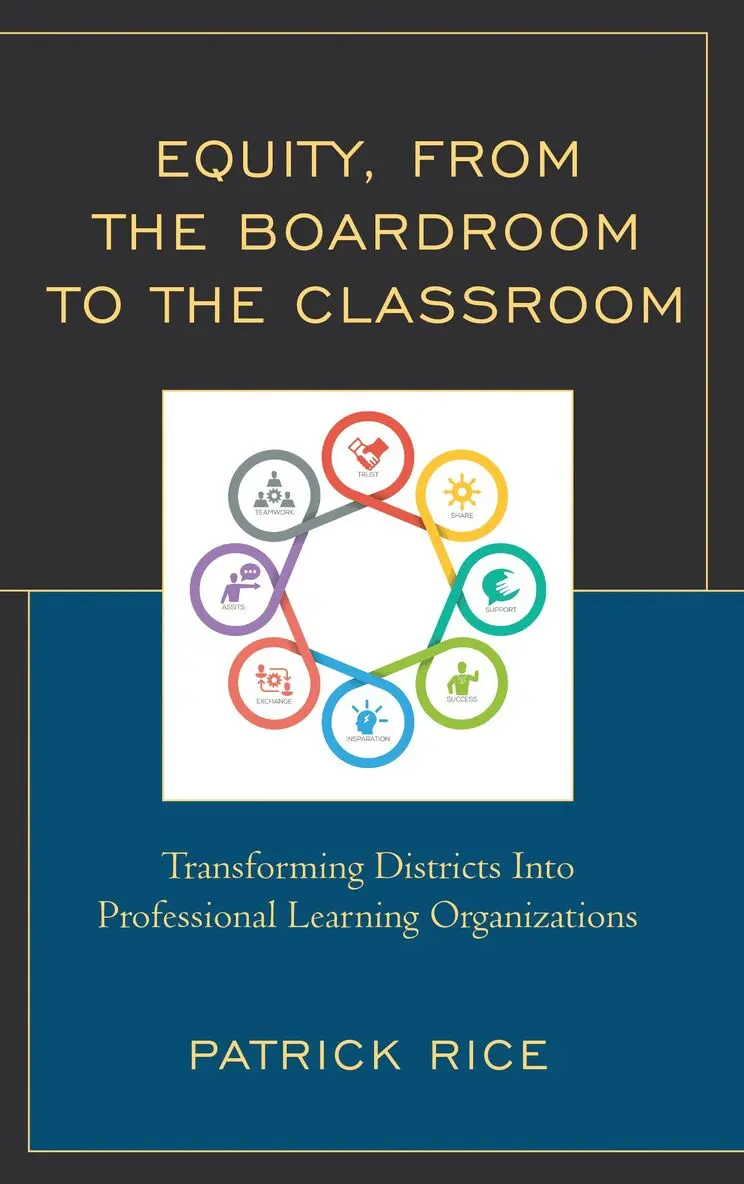
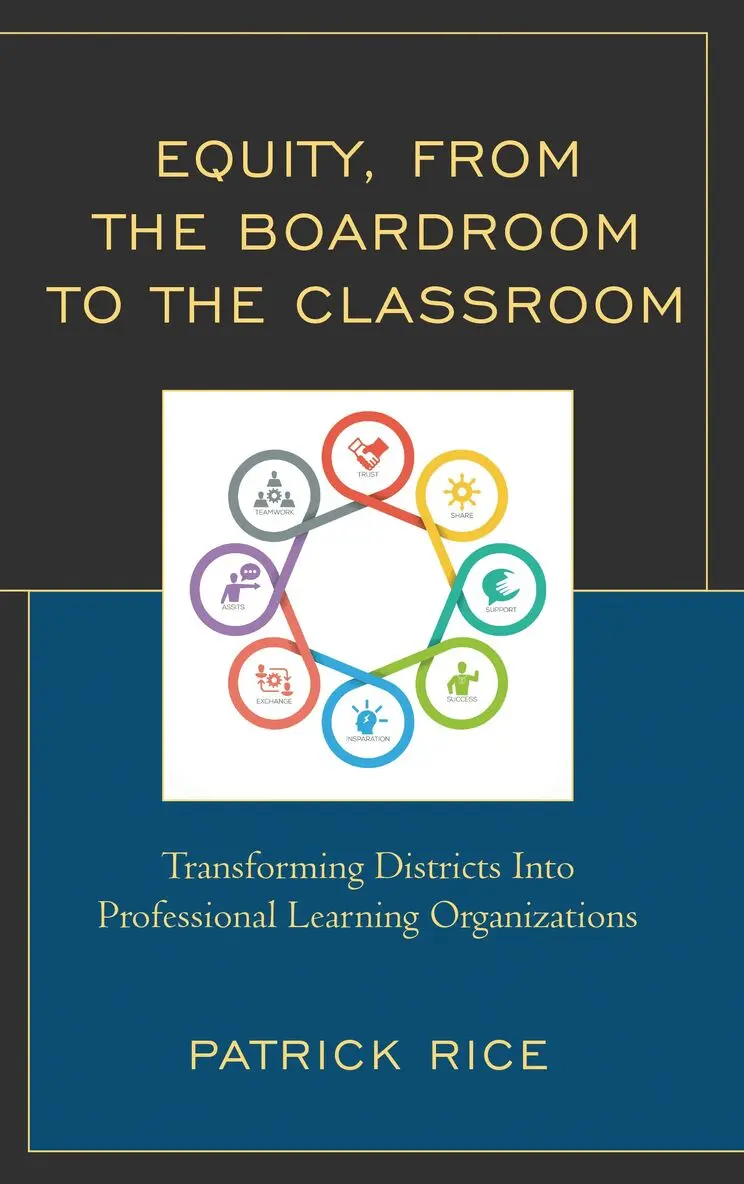
Equity, from the Boardroom to the Classroom discusses the need for districts to become Professional Learning Organizations (PLOs) which links the board’s role to Professional Learning Communities. In order to promote equity, it is vital that school boards build a culture in which all stakeholders contribute individually and collectively to accomplish district objectives. To foster a collaborative culture, boards must display “thermostat leadership” as opposed to “thermometer leadership.” “Thermostat leadership” is practiced when the board is actively involved in setting, maintaining, or adjusting district culture in order to ensure alignment with district priorities which PLOs promote. Comparatively, “thermometer leadership” is used when a board governs by a laissez-faire approach and seeks to mandate a specificculture without becomingly actively involved. The latter approach enable boards to be misinformed about its strategic initiatives.Research is clear: No school reform aimed at improving student learning will be successful without strong leadership and support from the school board. PLOs are a must for districts that desire to build a positive culture and seek to increase student achievement by way of a systemic process grounded in collaboration. Without leadership, support, and collaboration led by the school board, it is doubtful that any school reform will be successful regardless of how effective the reform may appear to be.
Equity, from the Boardroom to the Classroom discusses the need for districts to become Professional Learning Organizations (PLOs) which links the board’s role to Professional Learning Communities. In order to promote equity, it is vital that school boards build a culture in which all stakeholders contribute individually and collectively to accomplish district objectives. To foster a collaborative culture, boards must display “thermostat leadership” as opposed to “thermometer leadership.” “Thermostat leadership” is practiced when the board is actively involved in setting, maintaining, or adjusting district culture in order to ensure alignment with district priorities which PLOs promote. Comparatively, “thermometer leadership” is used when a board governs by a laissez-faire approach and seeks to mandate a specificculture without becomingly actively involved. The latter approach enable boards to be misinformed about its strategic initiatives.Research is clear: No school reform aimed at improving student learning will be successful without strong leadership and support from the school board. PLOs are a must for districts that desire to build a positive culture and seek to increase student achievement by way of a systemic process grounded in collaboration. Without leadership, support, and collaboration led by the school board, it is doubtful that any school reform will be successful regardless of how effective the reform may appear to be.
Divided into two parts, this guide shows studio owners and photographers how to increase visibility, creativity, and financial rewards in the teen and senior portrait market. The first section is focused on technical mastery, gives tips on how to refine one''s technique and remain competitive and providing advice on selecting the appropriate digital equipment and added artistic elements like indoor and outdoor sets, storytelling props, and fashionable backgrounds. The second section is devoted to successful marketing techniques that are low-cost and have a big impact, such as maintaining an Internet presence, offering special promotions, and producing direct-mail marketing pieces. Numerous marketing pieces from top studios are included as reference points.