2 194 kr
Läs direkt efter köp
2 194 kr
Läs direkt efter köp
2 210 kr
Läs direkt efter köp
2 798 kr
Skickas inom 10-15 vardagar
2 040 kr
Läs direkt efter köp
2 054 kr
Läs direkt efter köp
636 kr
Kommande
1 719 kr
Kommande
1 618 kr
Skickas inom 7-10 vardagar
1 333 kr
Skickas inom 7-10 vardagar
396 kr
Skickas inom 11-20 vardagar
470 kr
Läs direkt efter köp
480 kr
Läs direkt efter köp
583 kr
Skickas inom 7-10 vardagar
2 067 kr
Skickas inom 7-10 vardagar
566 kr
Läs direkt efter köp
570 kr
Läs direkt efter köp
2 613 kr
Skickas inom 7-10 vardagar
2 178 kr
Läs direkt efter köp
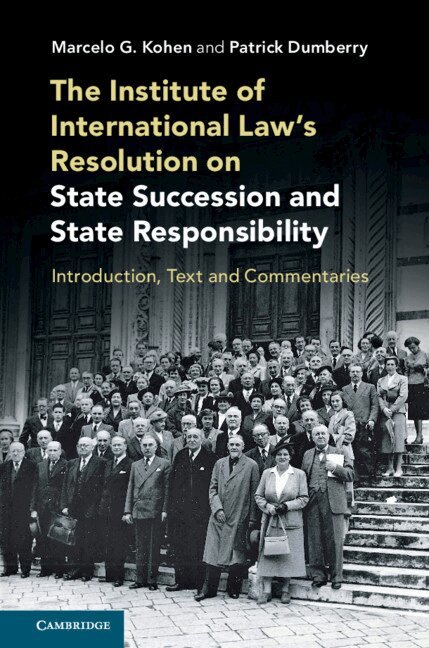
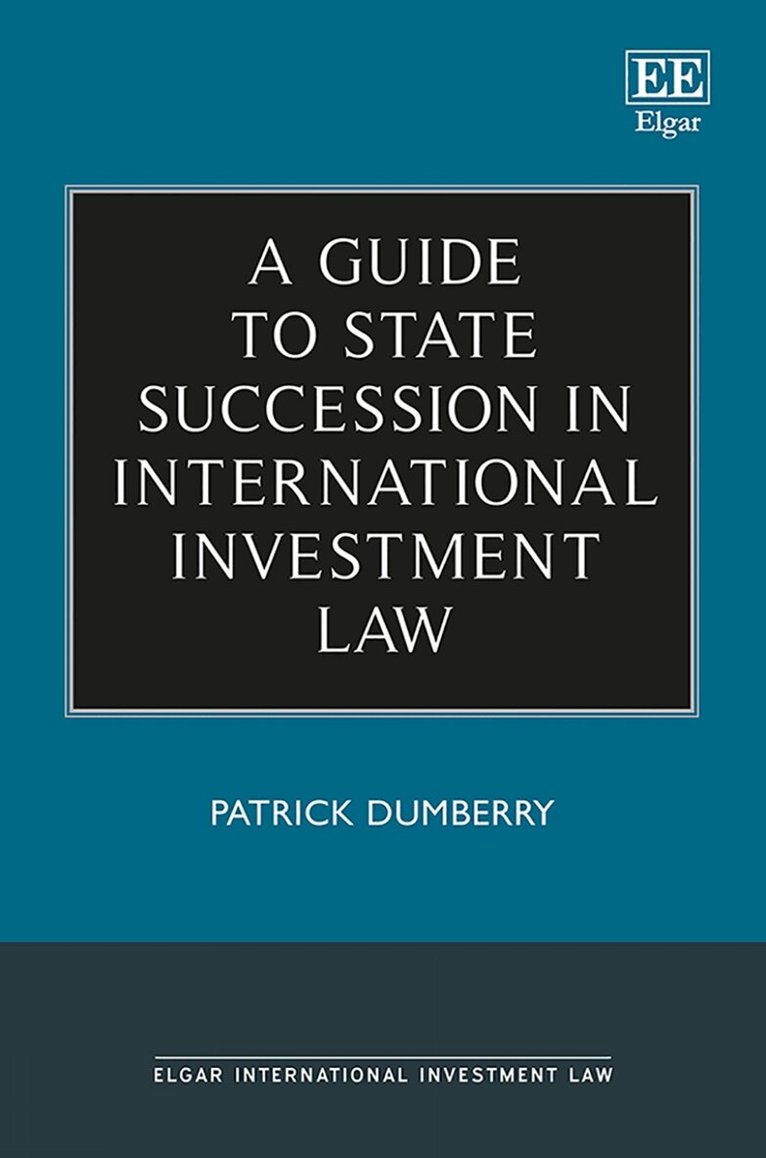
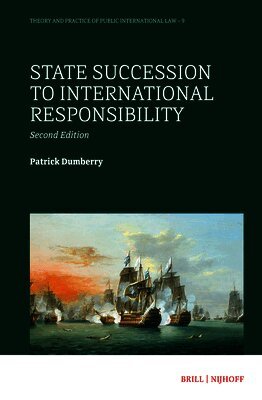
The book examines the legal consequences in the field of investor-State arbitration arising from the disappearance or the creation of a State, or from a transfer of territory between States. Specifically, it analyses whether a successor State is bound by the investment treaties (bilateral and multilateral) and the State contracts which had been signed by the predecessor State before the event of succession.
Key features include:•
Much-needed examination of the practice of States in the context of succession to bilateral, multilateral treaties and State contracts• comprehensive and up-to-date analysis of international arbitration cases involving issues of State succession• practical guidance on the application of Rules of State succession in investment arbitration cases, including when succession occurs during arbitral proceedings • assessment of the theoretical reasoning behind previously unexplored issues in State succession.Actors who are called upon to apply Rules of State succession in investment arbitration cases will find this book a valuable source of practical guidance. Researchers in the field of international investment law will also find this to be a compelling text, with strong theoretical foundations.
1 133 kr
Skickas inom 7-10 vardagar
Second Edition
2 503 kr
Skickas inom 7-10 vardagar
2 923 kr
Läs direkt efter köp
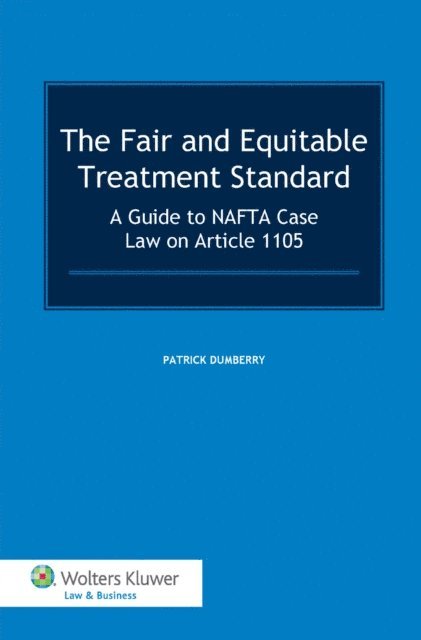
Since the entry into force of the North American Free Trade Agreement (NAFTA) in 1994, several arbitral tribunals have rendered awards dealing with claims of breach of Article 1105. Some of these awards have been very controversial and have had a tremendous impact on the development of the concept of fair and equitable treatment (FET) and the evolution of international investment law. Yet, in spite of the fundamental importance of these awards, no comprehensive study had been undertaken to determine the meaning and the content of the FET standard under NAFTA Article 1105. This book''s systematic analysis of the provision and its case law fills this analytical gap. Because Article 1105 is in many ways different from typical FET clauses contained within most investment treaties, the author examines the particular parameters under which it must be interpreted. He also analyzes how these specific features have influenced NAFTA tribunals'' interpretation of the provision, and how their assessments differ from awards rendered by other tribunals outside NAFTA. Among the issues treated in the course of the analysis are the following:
• the origin, development, nature and content of the concept of the ''minimum standard of treatment'' and its interaction with the FET standard;• the specific parameters under which Article 1105 must be interpreted, including contextual elements such as subsequent agreement and practice between the NAFTA Parties on matters of interpretation;• the context in which the Free Trade Commission issued its Note of Interpretation in 2001 and how NAFTA tribunals have applied it;• whether or not the concepts of legitimate expectations, transparency, arbitrary conduct, discriminatory conduct, good faith, denial of justice, and due process have been considered by NAFTA tribunals as specific elements of protection to be accorded to investors under Article 1105;• the many facets of these elements and the threshold of severity that NAFTA tribunals have required for finding a breach of Article 1105;• the interaction between Article 1105 and other NAFTA provisions on national treatment, Most-Favored-Nation treatment, and expropriation; and• how NAFTA tribunals have assessed damages for breach of Article 1105.This comprehensive guide to NAFTA case law on Article 1105 is an important contribution to the on-going controversial debate about the scope and content of the FET standard under international law. It will be of great interest to counsel for investors and States as well as to arbitrators, academics and anyone interested in investor-State arbitration.
2 796 kr
Skickas inom 7-10 vardagar
2 381 kr
Läs direkt efter köp
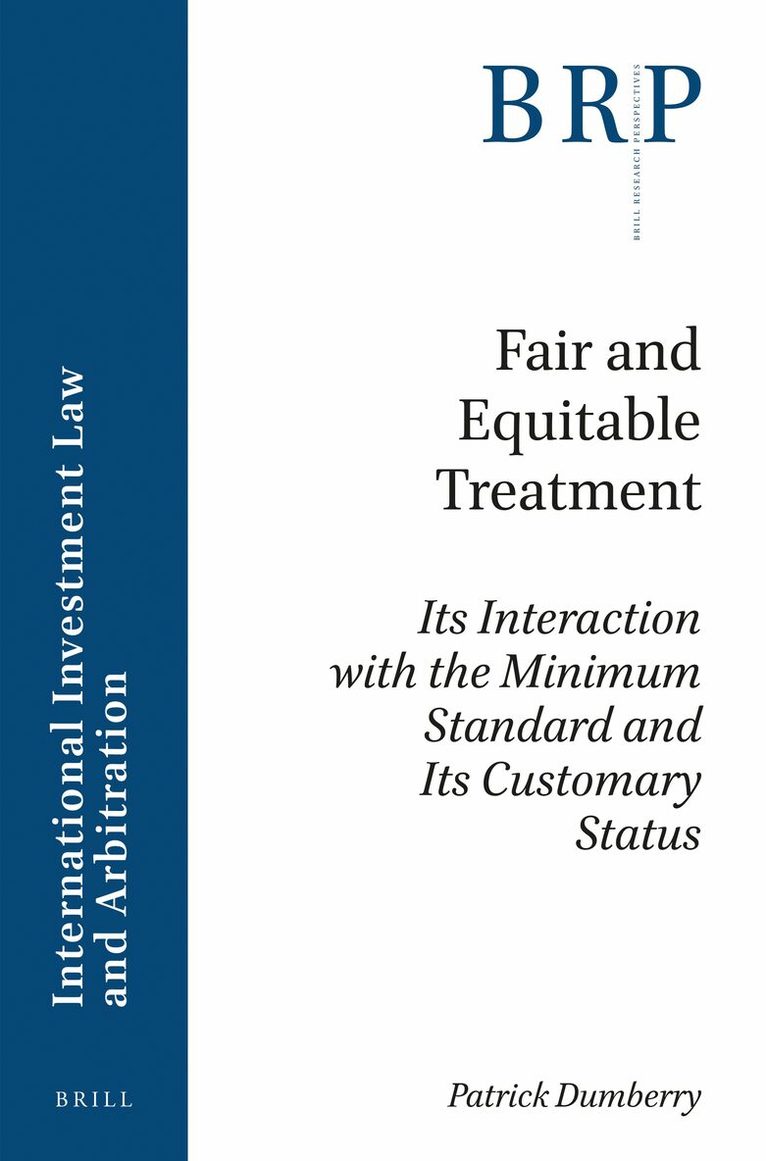
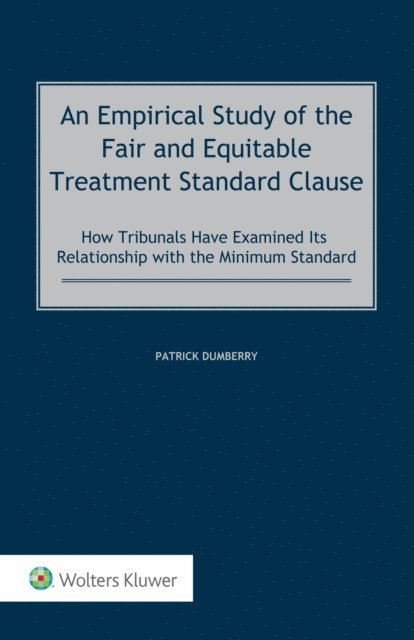
Although the vast majority of investment treaties include a fair and equitable treatment (FET) clause, a considerable degree of variation in the actual content of the clause remains. In this important book by a well-known authority in international investment law analyses how tribunals have concretely interpreted FET clauses in relation to the minimum standard of treatment (MST), with detailed reference to all publicly available awards dealing with the provision rendered by arbitral tribunals in the past 25 years.
This first comprehensive survey of case law since the 2012 UNCTAD Report highlights the following important trends:
tribunals have interpreted the status of a FET clause and its relationship with the MST differently depending on the specific wording of each provision;
how a tribunal analyses the status of a clause has a direct impact on the interpretation (broad or narrow) it gives to the content of the standard, including whether or not it includes protecting investors’ legitimate expectations;
the way a tribunal analyses this issue has, in turn, a direct impact on how it addresses matters of liability and compensation; and
the success rate of claims filed under ‘stand-alone’ FET clauses (containing no mention of ‘international law’ or any other standard) and those referring to ‘international law’ is much higher compared to clauses expressly linked to the MST.
This book is the first to provide solid empirical evidence showing that the scope of the FET protection under a treaty very much depends on the type of clause being applied by a tribunal. The author’s thorough analysis will provide arbitrators and counsel with useful guidelines to assess how the clause has been interpreted by tribunals. It will also offer States and other stakeholders an in-depth analysis of some of the pitfalls and benefits that are associated with each different type of FET clause.
2 365 kr
Läs direkt efter köp
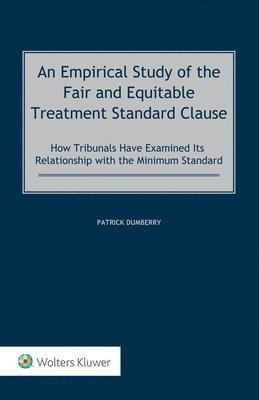
Although the vast majority of investment treaties include a fair and equitable treatment (FET) clause, a considerable degree of variation in the actual content of the clause remains. In this important book by a well-known authority in international investment law analyses how tribunals have concretely interpreted FET clauses in relation to the minimum standard of treatment (MST), with detailed reference to all publicly available awards dealing with the provision rendered by arbitral tribunals in the past 25 years.
This first comprehensive survey of case law since the 2012 UNCTAD Report highlights the following important trends:
tribunals have interpreted the status of a FET clause and its relationship with the MST differently depending on the specific wording of each provision;
how a tribunal analyses the status of a clause has a direct impact on the interpretation (broad or narrow) it gives to the content of the standard, including whether or not it includes protecting investors’ legitimate expectations;
the way a tribunal analyses this issue has, in turn, a direct impact on how it addresses matters of liability and compensation; and
the success rate of claims filed under ‘stand-alone’ FET clauses (containing no mention of ‘international law’ or any other standard) and those referring to ‘international law’ is much higher compared to clauses expressly linked to the MST.
This book is the first to provide solid empirical evidence showing that the scope of the FET protection under a treaty very much depends on the type of clause being applied by a tribunal. The author’s thorough analysis will provide arbitrators and counsel with useful guidelines to assess how the clause has been interpreted by tribunals. It will also offer States and other stakeholders an in-depth analysis of some of the pitfalls and benefits that are associated with each different type of FET clause.