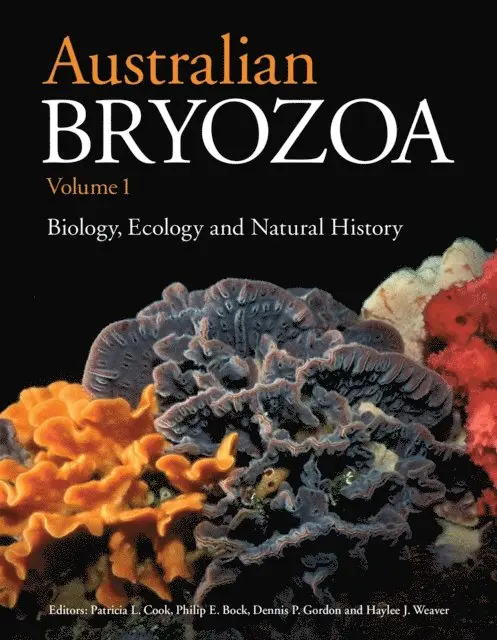
Bryozoans are aquatic animals that form colonies of connected individuals. They take a variety of forms: some are bushy and moss-like, some are flat and encrusting and others resemble lace. Bryozoans are mostly marine, with species found in all oceans from sublittoral to abyssal depths, but freshwater species also exist. Some bryozoans are of concern as marine-fouling organisms and invasive species, while others show promise as sources of anticancer, antiviral and antifouling substances.Written by experts in the field, Australian Bryozoa Volume 1: Biology, Ecology and Natural History is the first of two volumes describing Australia’s 1200 known species of bryozoans, the richest diversity of bryozoans of any country in the world. It contains chapters on the discovery of bryozoans, their morphology, classification and fossil history, their roles in biosecurity and marine benthic environments, and potential uses in biotechnology and ocean acidification. It provides an authoritative reference for biology students, academics and others interested in marine biology.
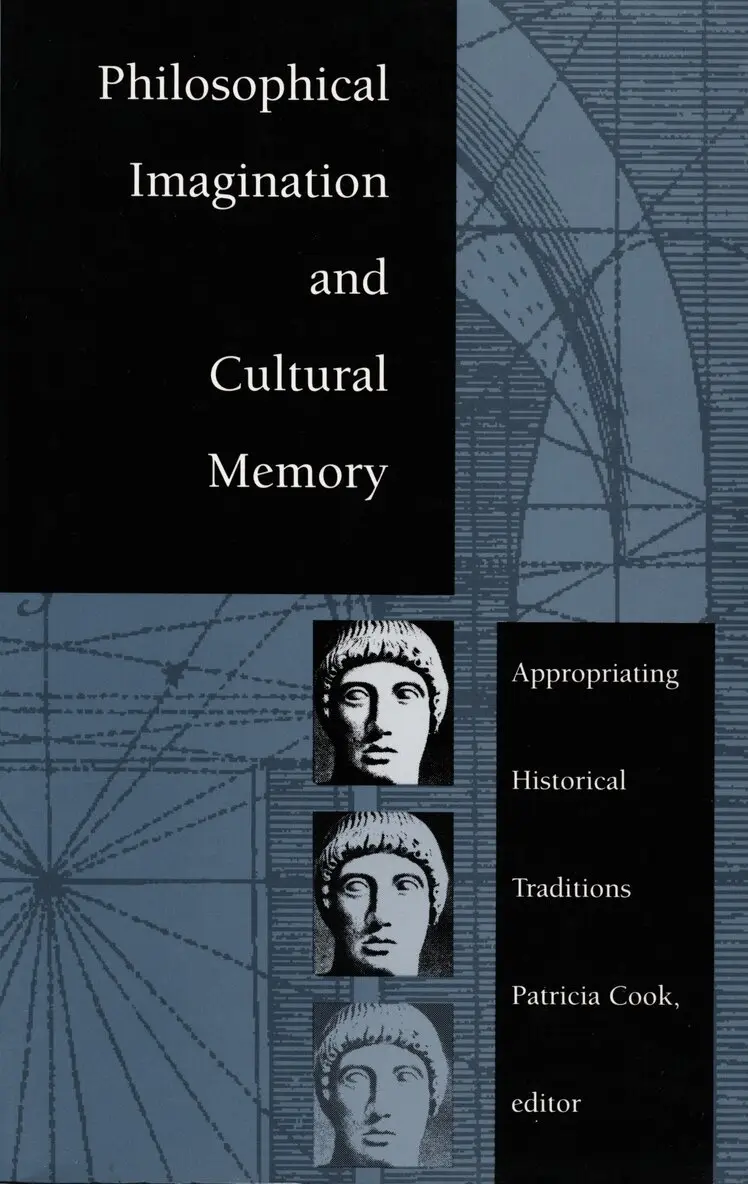
Does philosophy have a future? Postmodern thought, with its rejection of claims to absolute truth or moral objectivity, would seem to put the philosophical enterprise in jeopardy. In this volume some of today's most influential thinkers face the question of philosophy's future and find an answer in its past. Their efforts show how historical traditions are currently being appropriated by philosophy, how some of the most provocative questions confronted by philosophers are given their impetus and direction by cultural memory.Unlike analytic philosophy, a discipline supposedly liberated from any manifestation of cultural memory, the movement represented by these essays demonstrates how the inquiries, narratives, traditions, and events of our cultural past can mediate some of the most interesting exercises of the present-day philosophical imagination. Attesting to the power of historical tradition to enhance and redirect the prospects of philosophy these essays exemplify a new mode of doing philosophy. The product of a National Endowment for the Humanities Summer Institute in 1990, it is the task of this book to show that history can be reclaimed by philosophy and resurrected in postmodernity.Contributors. George Allan, Eva T. H. Brann, Arthur C. Danto, Lynn S. Joy, George L. Kline, George R. Lucas, Jr., Alasdair MacIntyre, Robert C. Neville, John Rickard, Stanley Rosen, J. B. Scheenwind, Donald Phillip Verene
Does philosophy have a future? Postmodern thought, with its rejection of claims to absolute truth or moral objectivity, would seem to put the philosophical enterprise in jeopardy. In this volume some of today's most influential thinkers face the question of philosophy's future and find an answer in its past. Their efforts show how historical traditions are currently being appropriated by philosophy, how some of the most provocative questions confronted by philosophers are given their impetus and direction by cultural memory.Unlike analytic philosophy, a discipline supposedly liberated from any manifestation of cultural memory, the movement represented by these essays demonstrates how the inquiries, narratives, traditions, and events of our cultural past can mediate some of the most interesting exercises of the present-day philosophical imagination. Attesting to the power of historical tradition to enhance and redirect the prospects of philosophy these essays exemplify a new mode of doing philosophy. The product of a National Endowment for the Humanities Summer Institute in 1990, it is the task of this book to show that history can be reclaimed by philosophy and resurrected in postmodernity.Contributors. George Allan, Eva T. H. Brann, Arthur C. Danto, Lynn S. Joy, George L. Kline, George R. Lucas, Jr., Alasdair MacIntyre, Robert C. Neville, John Rickard, Stanley Rosen, J. B. Scheenwind, Donald Phillip Verene