4 924 kr
Skickas inom 7-10 vardagar
4 924 kr
Skickas inom 7-10 vardagar
1 177 kr
Skickas inom 7-10 vardagar
754 kr
Skickas inom 10-15 vardagar
2 489 kr
Skickas inom 10-15 vardagar
883 kr
Läs direkt efter köp
In the organizational context, the word "innovation" is often associated with private sector organizations, which are often perceived as more agile, adaptable, and able to withstand change than government agencies and nonprofit organizations. But the reality is that, while they may struggle, public and nonprofit organizations do innovate. These organizations must find ways to use shrinking resources effectively, improve their performance, and achieve desirable societal outcomes. Innovation in the Public Sector provides alternative frameworks for defining, categorizing, and studying innovation in government and in the nonprofit sector.
Through a diverse collection of international case studies, this book broadens the discussion of innovation in public and nonprofit organizations, demonstrating the hurdles organizations face and examining the technological advances and managerial ingenuity innovators use to achieve their goals, both within and beyond the boundaries of the innovating organization. The chapters shed light on key issues including:
how to conceptualize innovation;
how organizations decide between competing good ideas;
how to implement innovation;
how to contend with challenges to innovation;
how to judge success in innovation
This book provides current and future public managers with the understanding and skills required to manage change and innovation, and is essential reading for all those studying public management, public administration, and public policy.
1 066 kr
Läs direkt efter köp
1 074 kr
Läs direkt efter köp
2 441 kr
Läs direkt efter köp
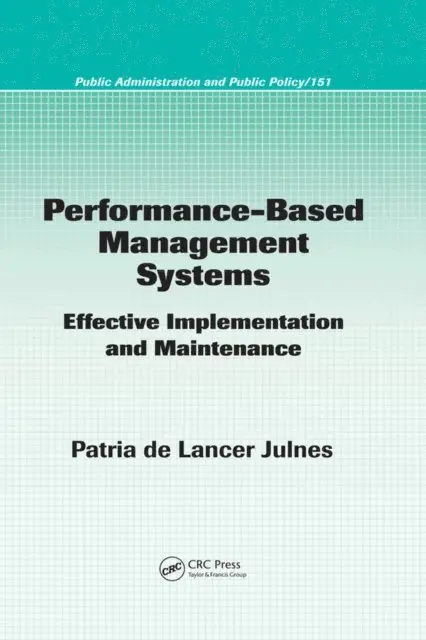
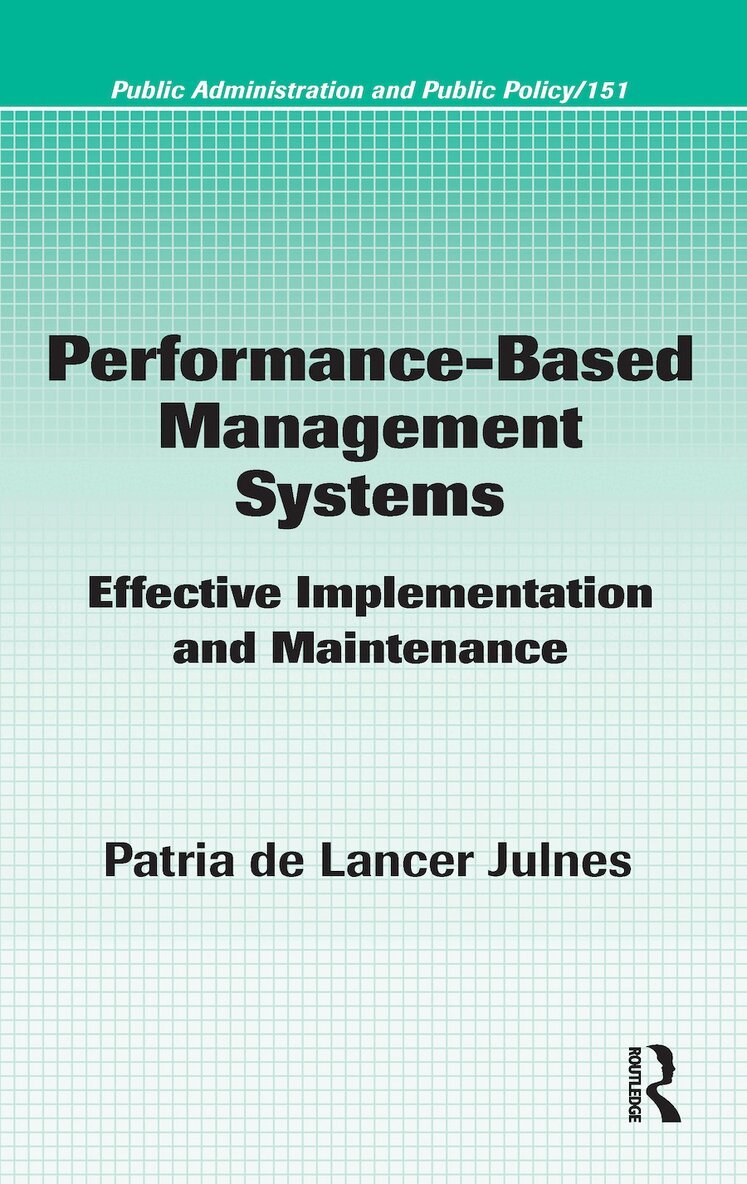
Expectations for performance management systems continue to grow in the public sector. Yet few administrators know how to effectively implement and sustain these systems. Performance-Based Management Systems: Effective Implementation and Maintenance supports practical efforts to build and maintain performance management systems in public organizations, explaining obstacles to measurement efforts and providing guidance on how to overcome them.
The book begins by exploring performance measurement as a key element of performance-based management systems. It discusses its legacy and its limitations and offers competing explanations of the factors that constrain its effective use. Next, it focuses on building theory in support of practice through a mixed methods approach. It examines research reconciling the conflicting explanations for the lack of proper use of performance measurement information. Then it offers new insights for developing a context-sensitive model of performance measurement that can lead to effective practices.
The third part develops these insights into a pragmatic model of performance-based management. It provides a realistic explanation of the contributions of performance measurement and gives advice derived from current practice. The author concludes by highlighting the rationale, methods, and findings of two studies that served as the foundation for this book. She also provides final suggestions of how to move practice and theory forward.
This volume explains why performance measurement is not more widely used in the public sector, and explores how implementation of performance measurement can be improved with insights gained from extant literature on public policy, organizational politics and culture, and knowledge utilization. Mastery of this material will enable practitioners to understand how to effectively implement policies that will positively impact their organizations and their employees.
3 161 kr
Skickas inom 3-6 vardagar
2 199 kr
Skickas inom 10-15 vardagar