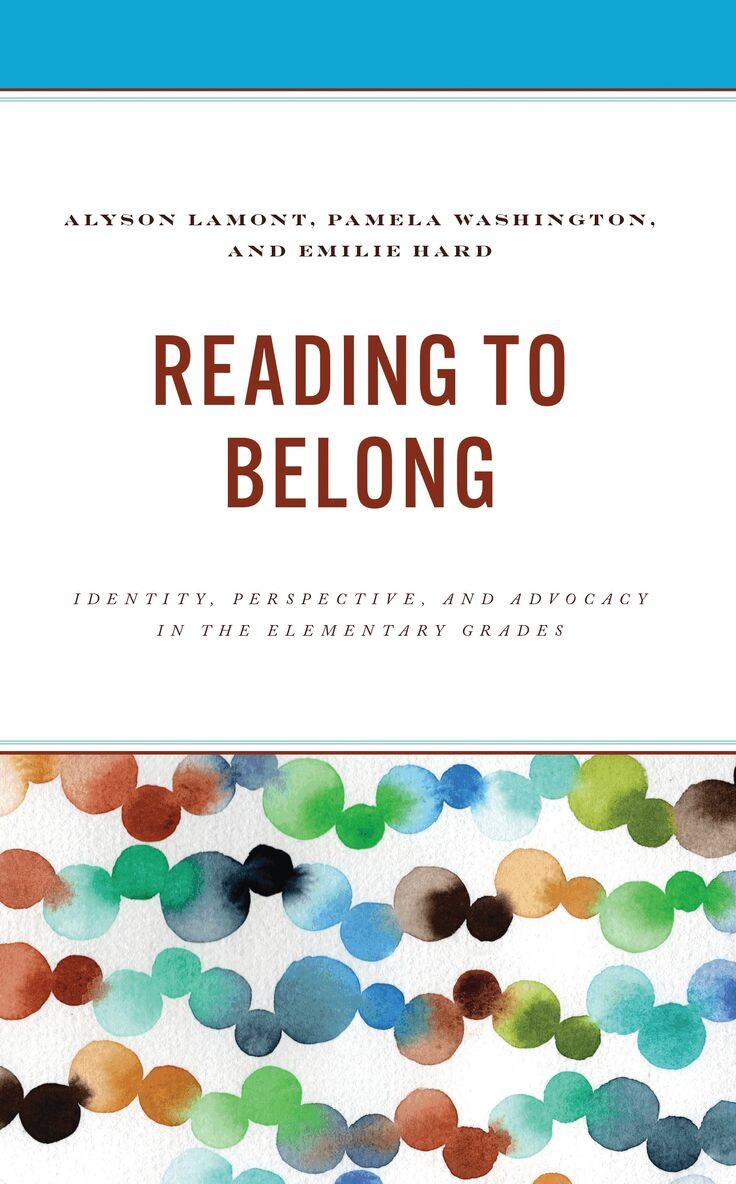
At the present time, schools in many places have found themselves in the midst of a culture war. While interest from teachers in having critical conversations with students is growing, they nonetheless face challenges. These tensions reflect a larger world of social and political unrest, where our nation’s schools are often caught in the middle.This work aims to equip educators with tools to facilitate critical conversations with students - to question what they read, consume, and hear. Reading to Belong: Identity, Perspective and Advocacy in the Elementary Grades bridges the gap between research and practice by sharing snapshots of conversations happening in real classrooms. The language of mirrors and windows anchors discussions as students deepen an understanding of themselves, experience different perspectives, and ultimately use this knowledge to change their world for the better.
At the present time, schools in many places have found themselves in the midst of a culture war. While interest from teachers in having critical conversations with students is growing, they nonetheless face challenges. These tensions reflect a larger world of social and political unrest, where our nation’s schools are often caught in the middle.This work aims to equip educators with tools to facilitate critical conversations with students - to question what they read, consume, and hear. Reading to Belong: Identity, Perspective and Advocacy in the Elementary Grades bridges the gap between research and practice by sharing snapshots of conversations happening in real classrooms. The language of mirrors and windows anchors discussions as students deepen an understanding of themselves, experience different perspectives, and ultimately use this knowledge to change their world for the better.
At the present time, schools in many places have found themselves in the midst of a culture war. While interest from teachers in having critical conversations with students is growing, they nonetheless face challenges. These tensions reflect a larger world of social and political unrest, where our nation’s schools are often caught in the middle.This work aims to equip educators with tools to facilitate critical conversations with students - to question what they read, consume, and hear. Reading to Belong: Identity, Perspective and Advocacy in the Elementary Grades bridges the gap between research and practice by sharing snapshots of conversations happening in real classrooms. The language of mirrors and windows anchors discussions as students deepen an understanding of themselves, experience different perspectives, and ultimately use this knowledge to change their world for the better.
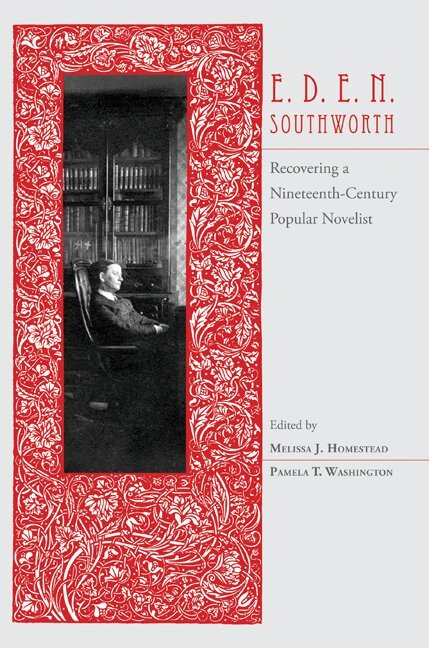
The prolific nineteenth-century writer E. D. E. N. Southworth enjoyed enormous public success in her day—she published nearly fifty novels during her career—but that very popularity, combined with her gender, led to her almost complete neglect by the critical establishment before the emergence of academic feminism. Even now, most scholarship on Southworth focuses on her most famous novel, The Hidden Hand. However, this new book—the first since the 1930s devoted entirely to Southworth—shows the depth of her career beyond that publication and reassesses her place in American literature. Editors Melissa Homestead and Pamela Washington have gathered twelve original essays from both established and emerging scholars that set a new agenda for the study of E. D. E. N. Southworth’s works. Following an introduction by the editors, these articles are divided into four thematic clusters. The first, “Serial Southworth,” treats her fiction in periodical publication contexts. “Southworth’s Genres,” the second grouping, considers her use of a range of genres beyond the sentimental novel and the domestic novel. In the third part, “Intertextual Southworth,” the essays present intensive case studies of Southworth’s engagement with literary traditions such as Greek and Restoration drama and with her contemporaries such as Harriet Beecher Stowe and French novelist George Sand. Southworth’s focus on social issues and reform figures prominently throughout the volume, but the pieces in the fourth section, “Southworth, Marriage, and the Law,” present a sustained inquiry into the ways in which marriage law and the status of women in the nineteenth century engaged her literary imagination. The collection concludes with the first chronological bibliography of Southworth’s fiction organised by serialisation date rather than book publication. For the first time, scholars will be able to trace the publication history of each novel and will be able to access citations for lesser-known and previously unknown works. With its fresh approach, this volume will be of great value to students and scholars of American literature, women’s studies, and popular culture studies.