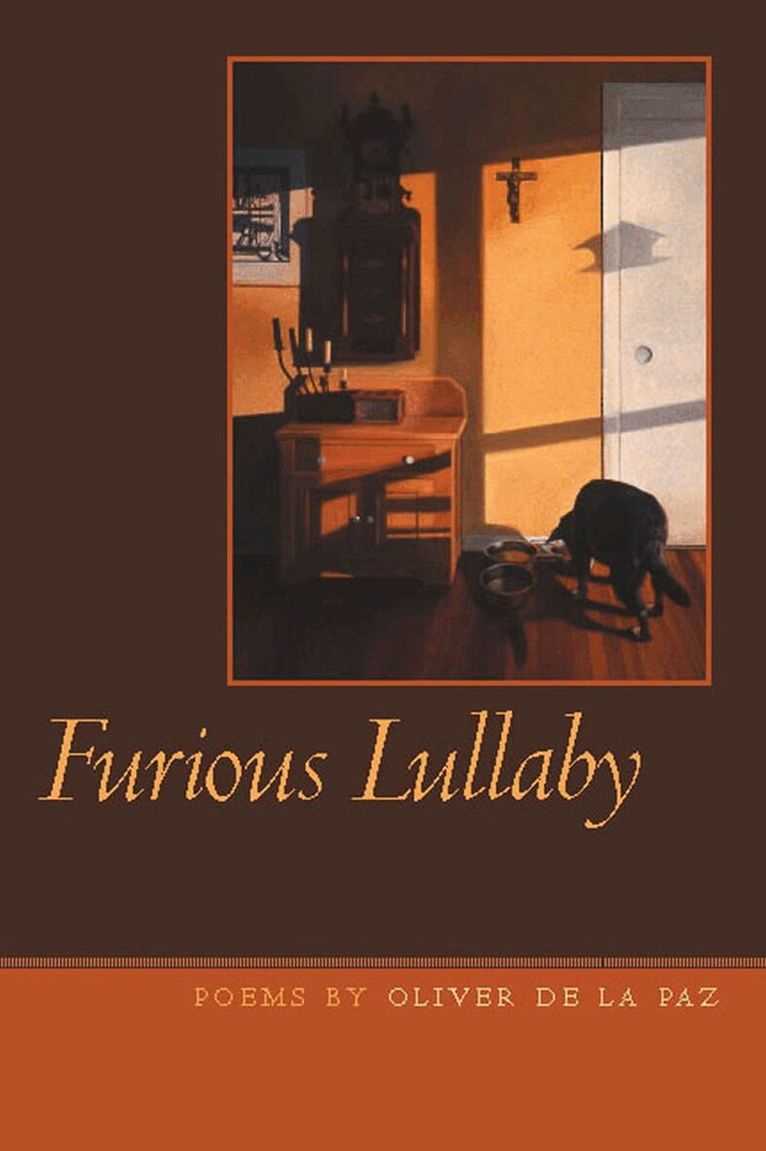
Furious Lullaby is both a celebration of and a eulogy to the body in the twenty-first century. The collection, which examines the larger concepts of salvation and temptation in a world of blossoming strife, includes a series of aubades - dramatic poems culminating with the separation of lovers at dawn. The lovers suffer a metaphysical crisis, seeking to know what is good, what is evil, and how to truly know the difference. Knowing, however, invites the terrible into their world. The Devil, a seductive trickster, haunts the landscape as a voice who dares each inquisitor to learn about mortality, morality, the beautiful, and the unspeakable through direct experience. ""Furious Lullaby"" offers a departure from the lighter prose poetry of de la Paz's ""Names above Houses"" and preserves the author's concern with the nature of human grace.
In 1972, after Ferdinand Marcos declared martial law, Oliver de la Paz’s father, in a last fit of desperation to leave the Philippines, threw his papers at an immigration clerk, hoping to get them stamped. He was prepared to leave, having already quit his job and having exchanged pesos for dollars; but he couldn’t anticipate the challenges of the migratory lifestyle he and his family would soon adopt in America. Their search for a sense of “home” and boundless feelings of deracination are evocatively explored by award-winning poet de la Paz in this formally inventive collection of sonnets.Broken into three parts—“The Implacable West,” “Landscape with Work, Rest, and Silence,” and “Dwelling Music”—The Diaspora Sonnets eloquently invokes the perseverance and bold possibilities of de la Paz’s displaced family as they strove for stability and belonging. In order to establish her medical practice, de la Paz’s mother had to relocate often for residencies. As they moved from state to state his father worked to support the family. Sonnets thus flit from coast to coast, across prairies and deserts, along the way musing on shadowy dreams of a faraway country.The sonnet proves formally malleable as de la Paz breaks and rejoins its tradition throughout this collection, embarking on a broader conversation about what fits and how one adapts—from the restrained use of rhyme in “Diaspora Sonnet in the Summer with the River Water Low” and carefully metered “Diaspora Sonnet Imagining My Father’s Uncertainty and Nothing Else” to the hybridized “Diaspora Sonnet at the Feeders Before the Freeze.” A series of “Chain Migration” poems viscerally punctuate the sonnets, giving witness to the labor and sacrifice of the immigrant experience, as do a series of hauntingly beautiful pantoums.Written with the deft touch of a virtuoso and the compassion of a loving son, The Diaspora Sonnets powerfully captures the peculiar pangs of a diaspora “that has left and is forever leaving.”
In 1972, after Ferdinand Marcos declared martial law, Oliver de la Paz’s father, in a last fit of desperation to leave the Philippines, threw his papers at an immigration clerk, hoping to get them stamped. He was prepared to leave, having already quit his job and having exchanged pesos for dollars; but he couldn’t anticipate the challenges of the migratory lifestyle he and his family would soon adopt in America. Their search for a sense of “home” and boundless feelings of deracination are evocatively explored by award-winning poet de la Paz in this formally inventive collection of sonnets.Broken into three parts—“The Implacable West”, “Landscape with Work, Rest, and Silence” and “Dwelling Music”—The Diaspora Sonnets eloquently invokes the perseverance and bold possibilities of de la Paz’s displaced family as they strove for stability and belonging. In order to establish her medical practice, de la Paz’s mother had to relocate often for residencies. As they moved from state to state his father worked to support the family. Sonnets thus flit from coast to coast, across prairies and deserts, along the way musing on shadowy dreams of a faraway country.Written with the deft touch of a virtuoso and the compassion of a loving son, The Diaspora Sonnets powerfully captures the peculiar pangs of a diaspora “that has left and is forever leaving.”
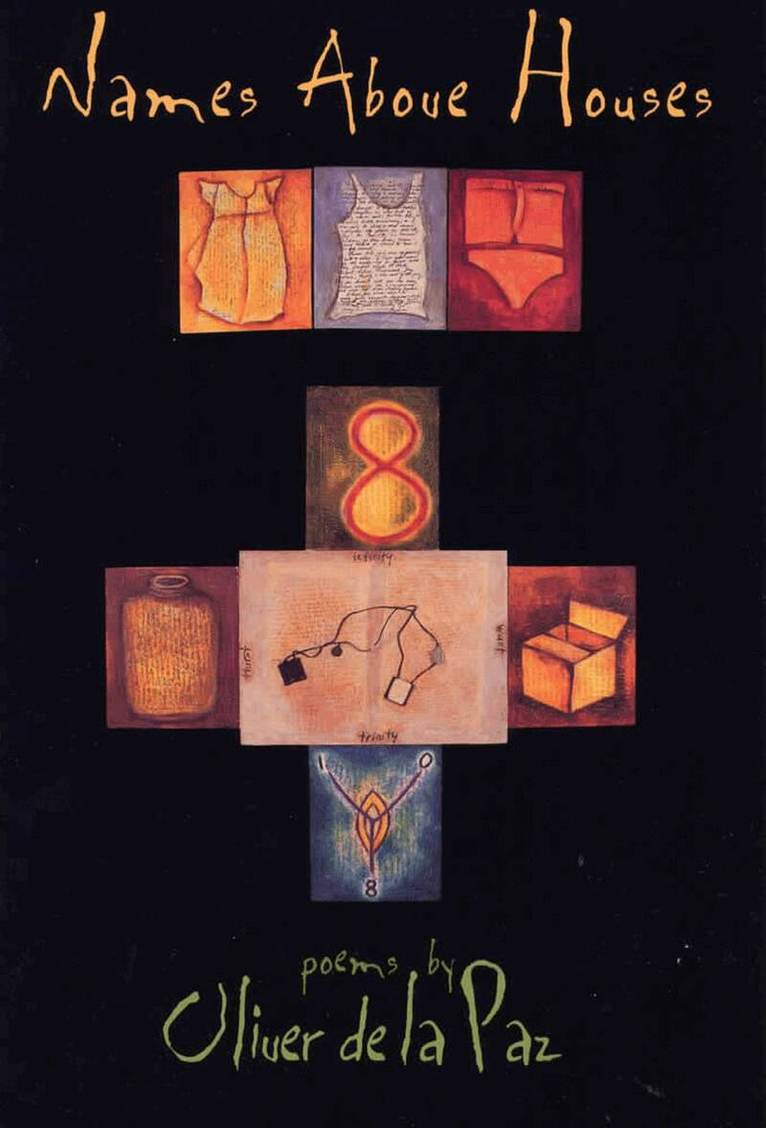
In Names above Houses, Oliver de la Paz uses both prose and verse poems to create the magical realm of Fidelito Recto - a boy who wants to fly - and his family of Filipino immigrants. Fidelito's mother, Maria Elena, tries to keep her son grounded while struggling with her own moorings. Meanwhile, Domingo, Fidelito's fisherman father, is always at sea, even when among them. From the archipelago of the Philippines to San Francisco, horizontal and vertical movements shape moments of displacement and belonging for this marginalized family. Fidelito approaches life with a sense of wonder, finding magic in the mundane and becoming increasingly uncertain whether he is in the sky or whether his feet are planted firmly on the ground.