2 455 kr
Skickas inom 10-15 vardagar
2 455 kr
Skickas inom 10-15 vardagar
619 kr
Skickas inom 10-15 vardagar
1 064 kr
Skickas inom 10-15 vardagar
889 kr
Skickas inom 10-15 vardagar
1 878 kr
Läs direkt efter köp
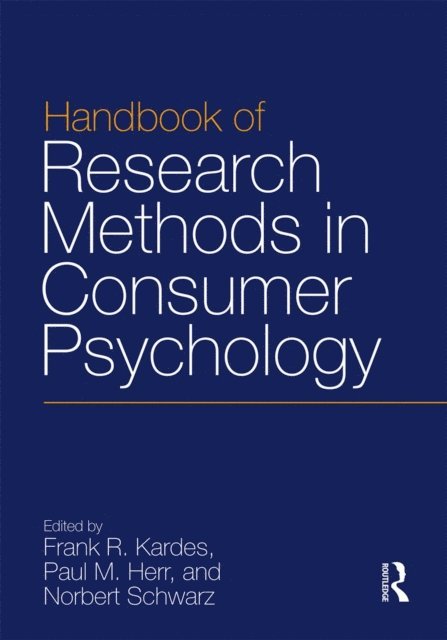
What impact can various research methods have on consumer psychology? How can they help us understand the workings of the consumer mind? And how can the field of consumer psychology best utilize these methods? In the Handbook of Research Methods in Consumer Psychology, leading consumer psychologists summarize key aspects of the research process and explain how different methods enrich understanding of how consumers process information to form judgments and opinions and to make consumption-related decisions.
Kardes, Herr, and Schwarz provide an in-depth analysis of the scientific research methods needed to understand consumption-related judgments and decisions. The book is split into five parts, demonstrating the breadth of the volume: classic approaches, contemporary approaches, online research methods, data analysis, and philosophy of science. A variety of leading researchers give insight into a wide range of topics, reflecting both long-standing debate and more recent developments in the field to encourage discussion and the advancement of consumer research.
The Handbook of Research Methods in Consumer Psychology is essential reading for researchers, students, and professionals interested in consumer psychology and behavior.
2 866 kr
Läs direkt efter köp
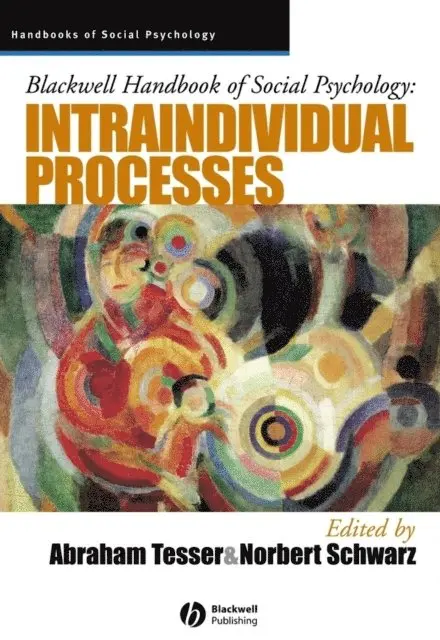
This volume on intraindividual processes is one of a set of four handbooks in the social psychology field and covers social cognition, attitudes, and attribution theory.
Includes contributions by academics and other experts from around the world to ensure a truly international perspective. Provides a comprehensive overview of classic and current research and likely future trends. Fully referenced chapters and bibliographies allow easy access to further study. Now available in full text online via xreferplus, the award-winning reference library on the web from xrefer.For more information, visit www.xreferplus.com2 469 kr
Skickas inom 7-10 vardagar
2 190 kr
Skickas inom 7-10 vardagar
801 kr
Skickas inom 7-10 vardagar
1 685 kr
Skickas inom 10-15 vardagar
1 480 kr
Skickas inom 10-15 vardagar
3 708 kr
Skickas inom 10-15 vardagar
1 573 kr
Skickas inom 10-15 vardagar
The Application of Cognitive Processes to Survey Methodology
862 kr
Skickas inom 7-10 vardagar
2 821 kr
Läs direkt efter köp
2 884 kr
Läs direkt efter köp
1 021 kr
Läs direkt efter köp
1 036 kr
Läs direkt efter köp
568 kr
Skickas inom 10-15 vardagar
2 419 kr
Skickas inom 10-15 vardagar
606 kr
Läs direkt efter köp
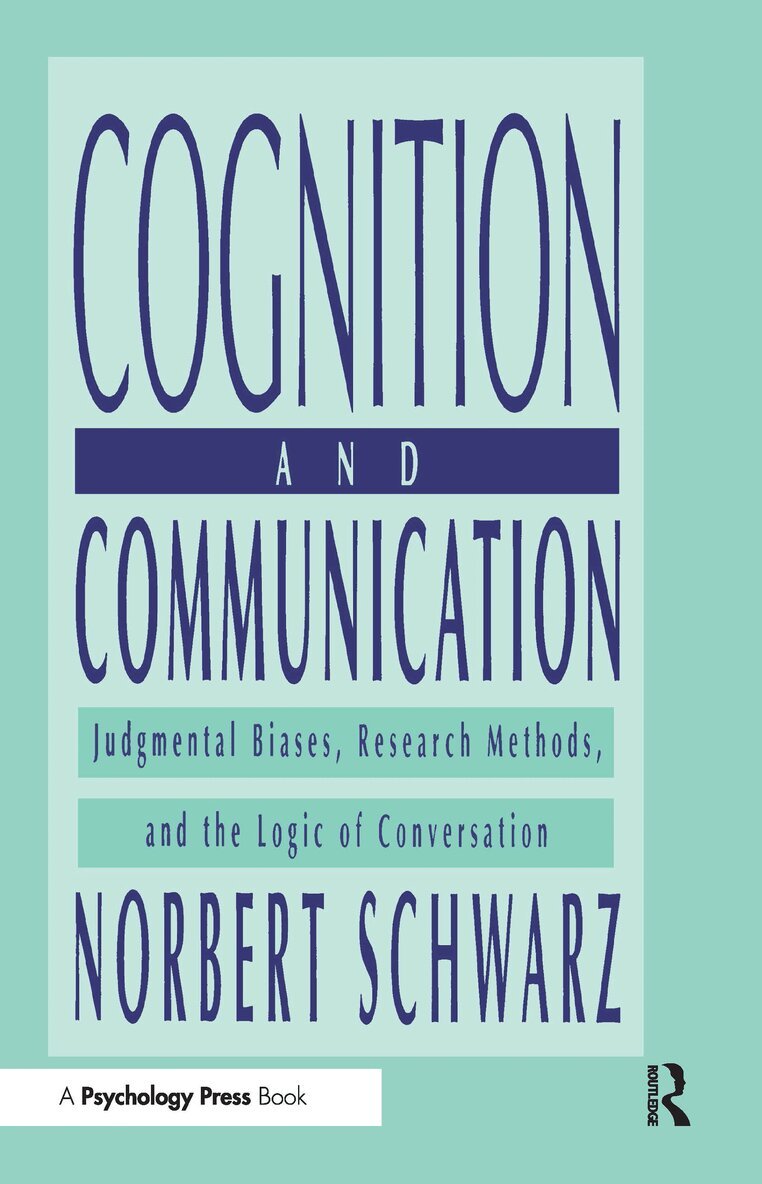
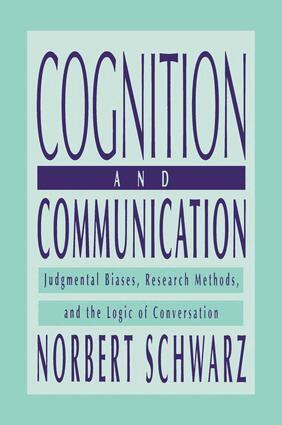
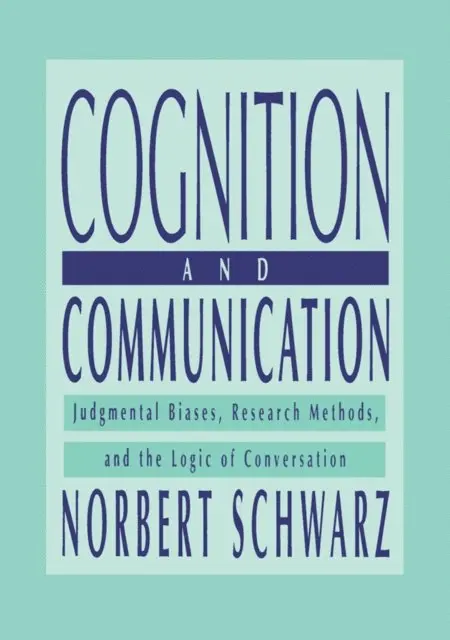
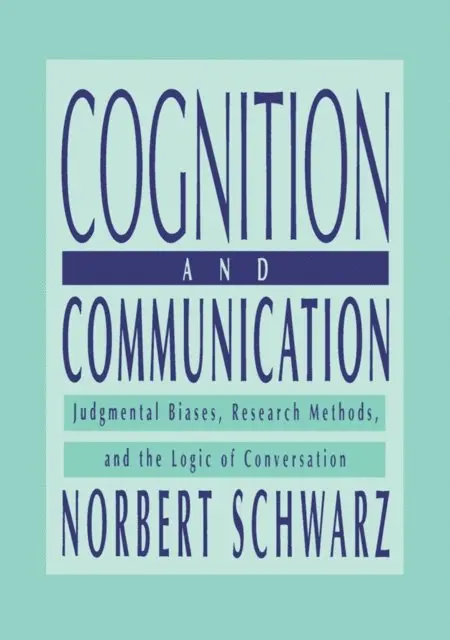
Psychological research into human cognition and judgment reveals a wide range of biases and shortcomings. Whether we form impressions of other people, recall episodes from memory, report our attitudes in an opinion poll, or make important decisions, we often get it wrong. The errors made are not trivial and often seem to violate common sense and basic logic. A closer look at the underlying processes, however, suggests that many of the well known fallacies do not necessarily reflect inherent shortcomings of human judgment. Rather, they partially reflect that research participants bring the tacit assumptions that govern the conduct of conversation in daily life to the research situation. According to these assumptions, communicated information comes with a guarantee of relevance and listeners are entitled to assume that the speaker tries to be informative, truthful, relevant, and clear. Moreover, listeners interpret the speakers'' utterances on the assumption that they are trying to live up to these ideals. This book introduces social science researchers to the "logic of conversation" developed by Paul Grice, a philosopher of language, who proposed the cooperative principle and a set of maxims on which conversationalists implicitly rely. The author applies this framework to a wide range of topics, including research on person perception, decision making, and the emergence of context effects in attitude measurement and public opinion research. Experimental studies reveal that the biases generally seen in such research are, in part, a function of violations of Gricean conversational norms. The author discusses implications for the design of experiments and questionnaires and addresses the socially contextualized nature of human judgment.
1 837 kr
Läs direkt efter köp
What impact can various research methods have on consumer psychology? How can they help us understand the workings of the consumer mind? And how can the field of consumer psychology best utilize these methods? In the Handbook of Research Methods in Consumer Psychology, leading consumer psychologists summarize key aspects of the research process and explain how different methods enrich understanding of how consumers process information to form judgments and opinions and to make consumption-related decisions.
Kardes, Herr, and Schwarz provide an in-depth analysis of the scientific research methods needed to understand consumption-related judgments and decisions. The book is split into five parts, demonstrating the breadth of the volume: classic approaches, contemporary approaches, online research methods, data analysis, and philosophy of science. A variety of leading researchers give insight into a wide range of topics, reflecting both long-standing debate and more recent developments in the field to encourage discussion and the advancement of consumer research.
The Handbook of Research Methods in Consumer Psychology is essential reading for researchers, students, and professionals interested in consumer psychology and behavior.
708 kr
Läs direkt efter köp
713 kr
Läs direkt efter köp
1 377 kr
Läs direkt efter köp
528 kr
Skickas inom 10-15 vardagar
528 kr
Skickas inom 10-15 vardagar
708 kr
Skickas inom 7-10 vardagar
459 kr
Skickas inom 3-6 vardagar