1 409 kr
Skickas inom 11-20 vardagar
1 409 kr
Skickas inom 11-20 vardagar
1 385 kr
Läs direkt efter köp
2 842 kr
Läs direkt efter köp
1 982 kr
Skickas inom 11-20 vardagar
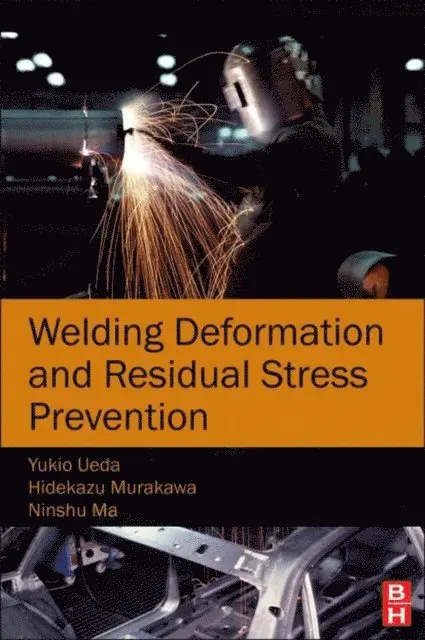
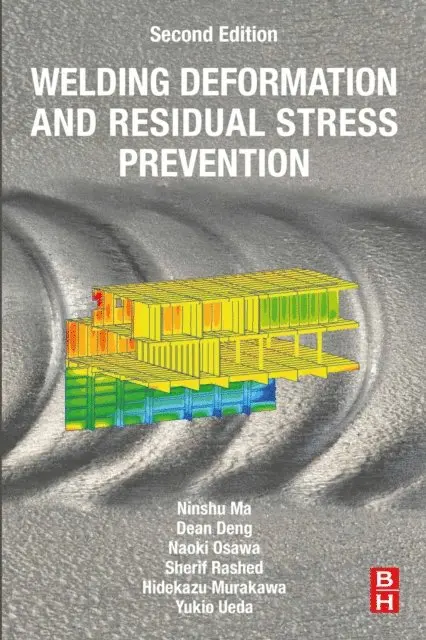
Welding Deformation and Residual Stress Prevention, Second Edition provides readers with both fundamental theoretical knowledge about welding deformation and stress as well as unique computational approaches for predicting and mitigating the effects of deformation and residual stress on materials. This second edition has been updated to include new techniques and applications, outlining advanced finite element methods such as implicit scheme, explicit scheme, and hybrid scheme, and coupling analysis among thermal-metallurgy-mechanics. Non-destructive measurement methods for residual stresses are introduced, such as X-ray diffraction, the indentation technique, the neutron diffraction method, and various synchrotron X-ray diffraction techniques.
Destructive measurement techniques are covered as well, such as block cutting for releasing residual stress, blind hole drilling, deep hole drilling, the slit cutting method, sectional contour method, and general inherent strain method. Various industrial applications of the material behavior and computational approaches are featured throughout.
Focuses on the underlying theory, practical implementation, analysis and application of measurement techniques for welding deformation and residual stress Includes strategies for mitigation and control of deformation and stress Discusses cutting-edge computational methods for determining welding heat source, thermal process, phase transformation, welding thermal deformation, thermal stress, and residual states Outlines both non-destructive and destructive techniques for measuring residual stress Includes access to a companion site with code, simulation videos and other materials2 020 kr
Kommande
1 853 kr
Skickas inom 10-15 vardagar
949 kr
Läs direkt efter köp
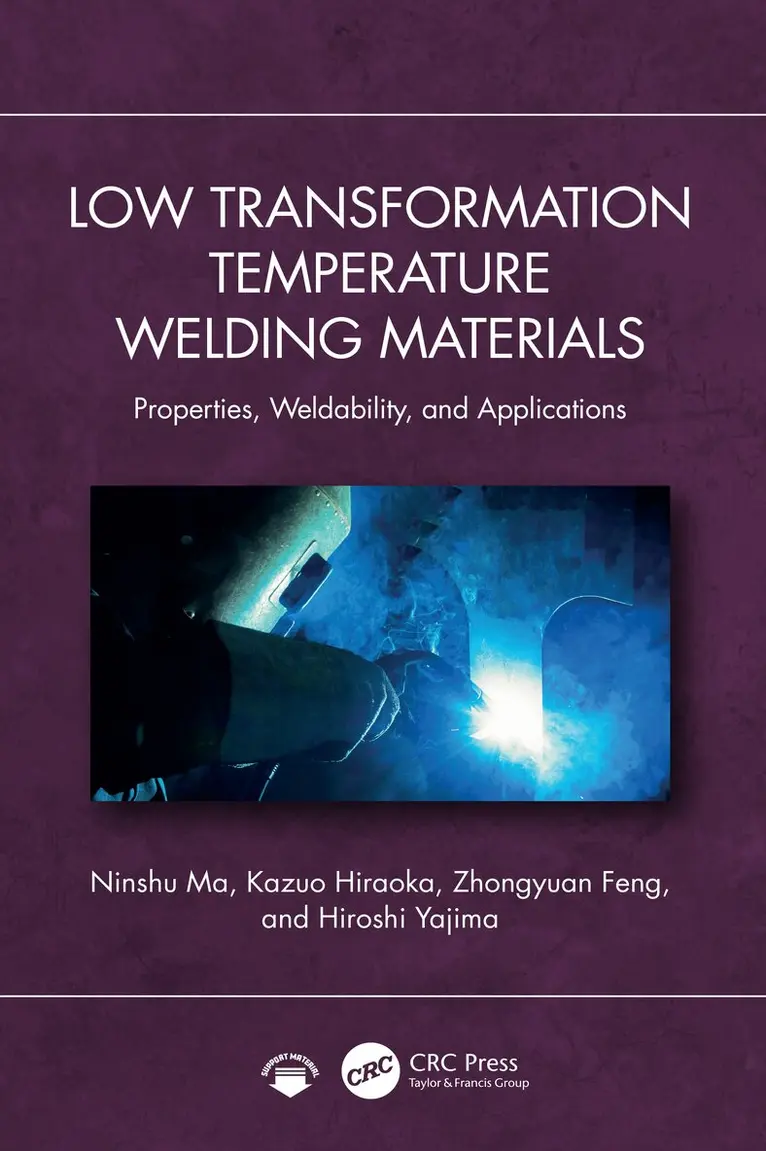
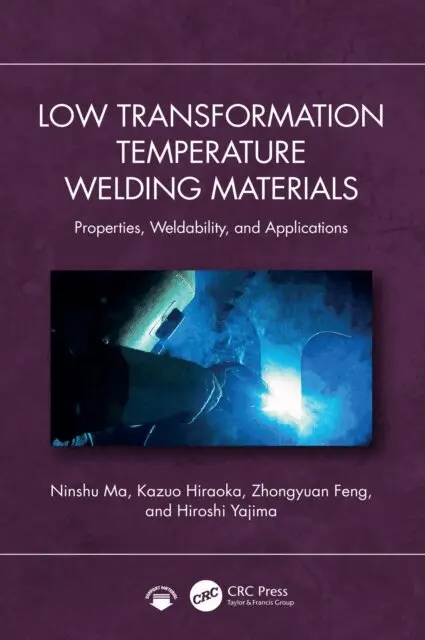
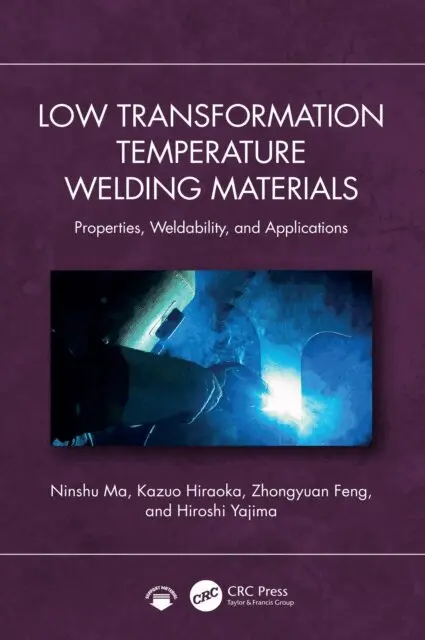
This valuable reference for advanced students and practicing engineers provides a comprehensive overview of low transformation temperature (LTT) welding materials, detailing their design, properties, and weldability, and demonstrating their applications in preventing fatigue and improving corrosion performance in welded structures.
Through this book, readers will gain a comprehensive understanding of how LTT actively controls welding residual stress to improve the fatigue life of welded structures and raise corrosion resistance. This book first provides a review of LTT welding materials, addressing the design of chemical compositions for LTT welding materials, the properties and weldability of LTT welding materials, compressive residual stress, and stress concentration, while providing practical application examples of LTT welding materials for preventing fatigue cracking. The authors provide experimental and numerically simulated data, photos, graphs, and tables to illustrate the information within this book and facilitate readers’ understanding. Last, this book discusses practical applications such as the successful prevention of fatigue cracks at the toe of fillet welds (such as boxed fillet welds in ship structures) and surface coating using wire-arc additive manufacturing to improve corrosion performance. These application descriptions are supported by an appendix that supplies digital data of LTT material properties and finite element mesh data for butt and fillet welds. This practical information will allow readers to apply this knowledge in real-world scenarios and also develop and extend the number of applications for LTT welding materials, contributing to improved corrosion performance in welded structures.
Upper undergraduate and postgraduate students will find this a valuable resource for their learning as it provides additional information to supplement course materials. Practitioners will also benefit from the practical information including simulation and real-world data that will benefit their daily work.